Spring is here and so is warm weather apparel at our AAAP store. Out goes the hoodies and in come the t-shirts and the like. Visit https://aaap1962.logosoftwear.com/ or you can just go to the AAAP’s main website, and click on the “Membership” tab, and “Merchandise” is the first option. Either way you get there, you will need the password, which is: SiderealTimes. If you have a special request (e.g., you want a color you don’t see on the AAAP store), email Rich Sherman at rjsherman@hotmail.com and we will do our best to get you whatever you need.
Also, stay tuned to the Discord app and our next edition of Sidereal Times as we are adding a second vendor. We will have many more items, from water bottles and pennants, to backpacks and beach towels, and additional apparel items like puffer jackets and socks.
As many visual astronomers do, I happen to like Albireo, the Binary star in the Constellation Cygnus. Albireo A and B have two incredibly bold, blue and gold colors that make it simple to explain to observatory visitors how stars at different stages of life portray different colors, all related to their fusion temperature. To bring the analogy closer to home, I often pair my Albireo explanation with the different colors and temperatures found within a candle flame.
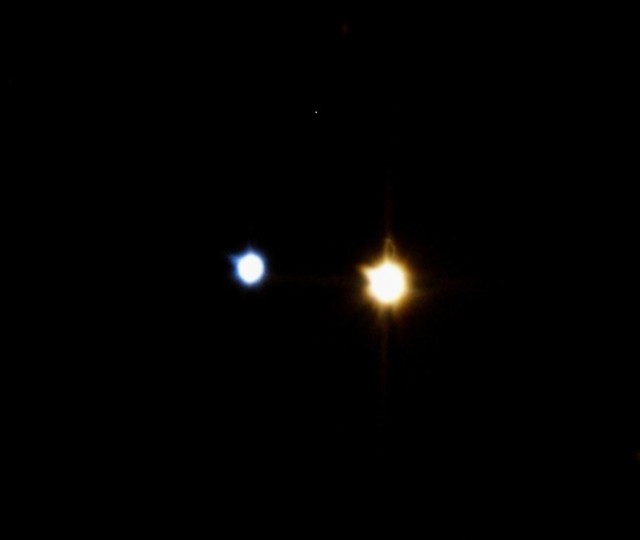
Visually, under stupid high power, Beta1 CygnI and Beta2 CygnI (aka, Albireo A and B) stare back at you like two eyes, sort of like the eyes in NGC 457, the Owl Cluster in Cassiopeia (another visual favorite of mine). But I wondered if I could get a good EAA (electronically assisted astronomy) photograph of the Cygeye duo that really showed their true colors. So, on March 4, 2023, at 1217, I set out to do so.
I attached my Celestron 8” SCT onto the clubs eYeOptron AZMP mount. I ran the scope at its native focal length of f/10. At the back of the scope, I mounted my SkeYelight Express, UltraStar Color camera. This combination would give me a FOV of 0.25 degrees by 0.19 degrees. I used a general light pollution filter to cut down on the New Jersey dayglow. I took n000 subs at n0.0 seconds each to not blow out the colors in each sub. I stacked the images in PixeYeSight and used the Star Eliminator plug-out so Albireo A and B would shine through. Here is my final image:
Not a bad image for sooo much work. But what caught my I was the indistinct white dot at the top center of the image. It couldn’t be a star since I had used the PixOutsight Star Eliminator plug-In. Since it was still dark and flat out, I decided to drill down to see if I could EAA image that pale white thing. Given the narrow FOV I needed just for Albireo A/B, I knew I had to bring out the big camera guns to resolve that tiny object.
I called in a favor from A-I Associates Matossian. They loaned me their OPTOS, P2000Dtx camera. After a bunch of off-the wall adapters and filter thread changes, I managed to get the binocular imager attached to my SkeYe-watcher 8” Quattro f/4, Imaging Newtonian. Thank God the iOptron AZMP mount was up to the task, thanks to its new Teflon clutch washer!
In no time biased, I had my light frames. Post processing, however, took much longer than the blink of the eye. Initial clipping was done on my eYePad. Some touch up work was done with the spray paint feature in Microsoft Paint 3D. Finally, a little bit of overlay work was done in GIMP. Here are the final two images from that brief imaging session. I am not sure, but I think I discovered some unknown beYenary retina nebula!
by Rich Sherman, the self-appointed co-chair of the Extreme Southern Princeton chapter of the AAAP.
On a warm and extremely buggy night in Big Cypress National Preserve in late March, Mike DiMario and I had the opportunity to chat with a couple of other astrophotographers that were set up a few yards from us. During our conversation, I learned about Dr. Mario Motta who is a trustee of the American Medical Association (AMA). He is also a board-certified cardiologist and clinical professor of medicine at Tufts University. Dr. Motta is also one of us: he is a long-time amateur astronomer, and is known for having built a 32″ f/6 telescope with five corrector lenses.
His website has a section on street lighting (https://www.mariomottamd.com/street-lighting/) where he references the peer-reviewed pivotal 2012 study that he co-authored, “Light Pollution: Adverse Health Effects of Nighttime Lighting.” This research paper discusses higher cancer rates, especially endocrine-based carcinomas as a result of circadian rhythm disruption. He also mentions General Electric which affirmed his research, and Apple which adjusted its nighttime iPhone display following the published paper.
If you are like me, you probably get a lot of blank stares whenever you talk about lighting issues. However, this web page offers lots of evidence that lighting really does matter to safety and health. Dr. Motta also provides several links for additional reading on the topic—from National Geographic to PBS, and much more.
Perhaps we can get Dr. Motta as one of our guest speakers…? In the meantime, I suggest we share the link to Dr. Motta’s website—educating ourselves and others can only help.
I teach electives to 8th graders at Link Community Charter School in Newark. Ten students are lucky enough to be going to the Island School in the Bahamas for a week of enrichment at the end of April and I am working with them on various topics so they will be better prepared for the trip.
Island School on Eleuthera in the Bahamas
One thing I have done with them is to compare the sky in Newark versus the Bahamas to show them the differences they will see if they look up in the day or night. I used Stellarium software as it can be adjusted for the school’s location and view any part of the sky on any day or time.
The first thing we discussed is the apparent altitude of the north star at both locations, which is equal to your latitude. I rounded Newark to 40 degrees north and the Island School to 25 degrees north, which is a 15 degree difference. If you set Stellarium to a time at night and then jump between Newark and the Bahamas you can easily see the north star move up and down on the screen between 25 and 40 degrees.
Another thing we discussed is the difference is constellations you can see in both locations. Since the north star is lower in the Bahamas, as the stars circle it, some of the constellations that are always visible in Newark, like Cassiopeia, will dip below the northern horizon in the Bahamas. If you look south the constellations are about 15 degrees higher than in Newark, so some will be visible that you can’t see in Newark, like Telescopium.
I gave the students two low tech planisheres, one manufactured for each location, which are excellent for showing what I just discussed. These are dual plastic disks that can be spun and set to any date and time and show the stars that are overhead at that setting. The north star is the central rivet that everything twirls about and you can quickly compare how far above the horizon it is at both locations by holding the two planispheres next to each other; the 15 degree difference is immediately visible.
Also, an interesting thing about a planisphere is that if you turn the outer disk one full revolution you can see all the stars that will ever be visible for its range of latitudes at any time of the year, at any time of day. Of course if the time you set is when the sun is out its light overwhelms the stars and they are not visible, while a nighttime setting will show visible stars.
This is interesting because I have worked with a lot people from the general population who don’t truly understand why we see different stars at different seasons. The truth is that the earth is always pointing to the same place in space and the exact same stars are circling across the sky every day, all year long at any one location. It is only the fact that at different seasons the dark night hours occur when different stars are overhead and again this is easily seen and understood by looking at the planishpere. Of course there are many stars that are visible all year round.
The other thing I wanted to explain to the students is the difference in the sun’s path across the sky in Newark versus the Bahamas, specifically its maximum sun angle. The sun is highest in the sky each day at solar noon when its azimuth is 180 degrees (toward the south). The highest maximum solar angle occurs around June 21st and the lowest maximum around December 21st.
The formula for finding the highest altitude on these two dates is 90 minus your latitude plus or minus 23.5. So in Newark the sun will reach an altitude of 72 degrees (90 minus 40 plus 23) on June 21st, which is the highest you will ever see it in there. In the Bahamas the highest the sun will ever get is 88 degrees (90-25+23), which is almost directly overhead. That formula (subtracting 23 degrees) shows that the highest the sun gets on December 21st is 27 degrees in Newark and 42 degrees in the Bahamas.
Using Stellarium software we found the highest the sun will get on April 30th, when the students will be at the Island School, is 79 degrees, and if they were home in Newark it would be 64 degrees, which is a noticeable amount.
The other things we discussed are what planets and artificial satellites will be visible at the Island School when they will be there (April 30 – May 6th). We looked on web sites and found that the Hubble Telescope will be visible along with some planets, notably Venus. The beauty of Stellarium is that in our class we could set the date and location to where they will be there and see exactly what the sky will look like then, including the planets and the Hubble moving quickly across the sky. If they bring a laptop running Stellarium outside during the actual viewing they can use it to zoom in on what they are looking at (like Venus) and see a simulated telescopic view.
When the students return May 7th, I’ll get a report from them as to what they actually saw.
As a final thought, when I was 10 in 1957 and living in Albuquerque my father brought me outside to watch Sputnik I travel across the sky. At the time it was the only artificial satellite and now there are many thousands so that on any given night you will probably see at least one.
We heard in the last couple of lectures how the data from the James Webb telescope is processed by visual specialists using tools like specialized algorithms and Photoshop to come up with the stunning images of the universe. A grand intersection of science and art. The fact that so much processing is done before the images are produced is due to what our eyes are geared to see. To overcome the limitations of human sight.
That brings us to the question of what is sight, what does it mean to “see” ? At a high level, light emitted by an object or light reflected off an object is received by our eyes and the image of the object is perceived by our brain. Light is a small part of the spectrum of electromagnetic waves. The spectrum comprises radio waves, microwaves, infrared waves, light, ultraviolet waves, x-rays and gamma rays. Radio waves oscillate at the lowest frequencies while gamma rays do so at the highest frequencies. Different colors represent different frequencies of oscillation. Other than light, the rest of the spectrum is invisible to human eyes. In fact it is a boon to mankind that we cannot see other forms of radiation. Else, the radio waves all around us going from our cell phones to the cell towers would block our vision and we would not be able to “see” beyond a few feet due to the ambient haze.
All bodies in our universe emit radiation. The type of radiation depends on two factors. One factor is how hot the body is. Hot bodies like the Sun emit visible light, largely yellow. Hotter bodies than the Sun emit blue light. Colder bodies than the Sun emit red light. Still colder bodies like Earth emit infrared light. Infrared light is basically heat, which we feel but cannot see unless we wear the special night vision glasses.
Second factor which governs the type of radiation is if the body is moving away from us or towards us and at what speed. Our universe is expanding, which means the galaxies are moving away from each other very rapidly. Due to “Doppler effect”, the radiation from receding objects drops in frequency. The waves get stretched or are “red shifted”. Faster the object is receding from us, the more red shifted it is. As Edwin Hubble discovered, the further an object is, the faster it is moving from us. Most of the light from distant objects is so red shifted that it falls in the infrared region by the time it reaches us. The James Webb space telescope operates in the infrared region – both near and mid, as opposed to the Hubble space telescope which is visible plus near infrared region. Due to this factor and the bigger size of the mirror, James Webb can see farther than Hubble. Seeing further means looking backwards in time.
Now back to the eyes. Ants can see ultraviolet light.Some birds, fish and reptiles can detect ultraviolet light. There are some photo receptors in the eyes which consist of proteins called “opsin” which can absorb a photon. There are different types of such pigments. Humans are trichromatic meaning that they can see three colors – red, blue and green. Every other color is synthesized from these three colors. Birds are quadchromatic, which means they can see four colors as primary colors. That could be the reason some birds can see ultraviolet light. Also, in human beings, our lenses block out the ultraviolet light. It is reported that the French painter Claude Monet lost his eye lens at the age of 82. He then started seeing ultraviolet light. It is supposed to be perceived as whitish blue. His later paintings of water lilies show this kind of a hue.
Another feature of the distant objects is that the radiation from them is very feeble, having traveled millions and billions of light years in its journey. More radiation needs to be collected over a period of minutes or hours before any sense can be made out. Eyes are very poor at staring at some object for a longer time to collect enough light to form a sensible image. Cameras contained within the James Webb telescope can collect and tabulate the data received.
The collected data is manipulated so that it is shifted to the visible spectrum to show colors which humans can perceive. What is the utility of “photoshopping” such data to produce artistic images ? Because the basic data collected is good for doing research and drawing conclusions. My 2 cents is that the artistic touch is for the purposes of public outreach. When billions of government dollars are spent on complex scientific instruments, we cannot just throw a table of numbers or a graph to educate the taxpayers. Besides, scientists who spend most of their lifetimes on such missions need some visuals to feel good about. Increasing sophistication of each generation of such images represents the progress being made in development of more complex scientific instruments.
At some point in the future, when the universe might stop expanding, we might see light from distant objects without any manipulation ! But Earth-like planets will still emit feeble infrared radiation.
by David Ackerman, AAAP member, astro-imagers subgroup
Since the Comet, I have not had time and clear skies coincide so it is a relief this mid-March weekend, that the recent New Moon allowed a peek at the Flaming Star Nebula (IC405) as well as IC410 and IC417, all taken with OSC camera as it sunk into the light pollution of the western horizon. A total of 6h of 300s light frames using William Optics Z73 (430mm, F/5.9) with ZWO ASI6200MC camera on iOptron GEM45 mount using KStars automation, APP stacking followed by PixInsight and Photoshop for post-processing.
Optics: William Optics Z73 (430mm, F/5.9) Sensor: ZWO ASI6200MC (OSC)Mount: iOptron GEM45 Exposure: 6h of 300s light frames during New Moon, skies 20.1 asec/mag^2 Software: KStars, Astro Pixel Processor, PixInsight, Photoshop
As for me, I’m a new member of AAAP and Astro-Imagers sub-group having joined in Feb 2023. I am also new to astrophotography having started in early 2022. I am a physicist with a fairly broad background including optics, instrumentation and image sensor design — so I have enjoyed the technical challenges of astrophotography. I am also a member of Gallery 14 in Hopewell, a fine art photography gallery and have enjoyed the artistic challenges of producing astro images. But mainly, I am looking forward to meeting fellow Astro-Imagers, trading ideas and methods and sharing the wonders of this interesting pursuit.
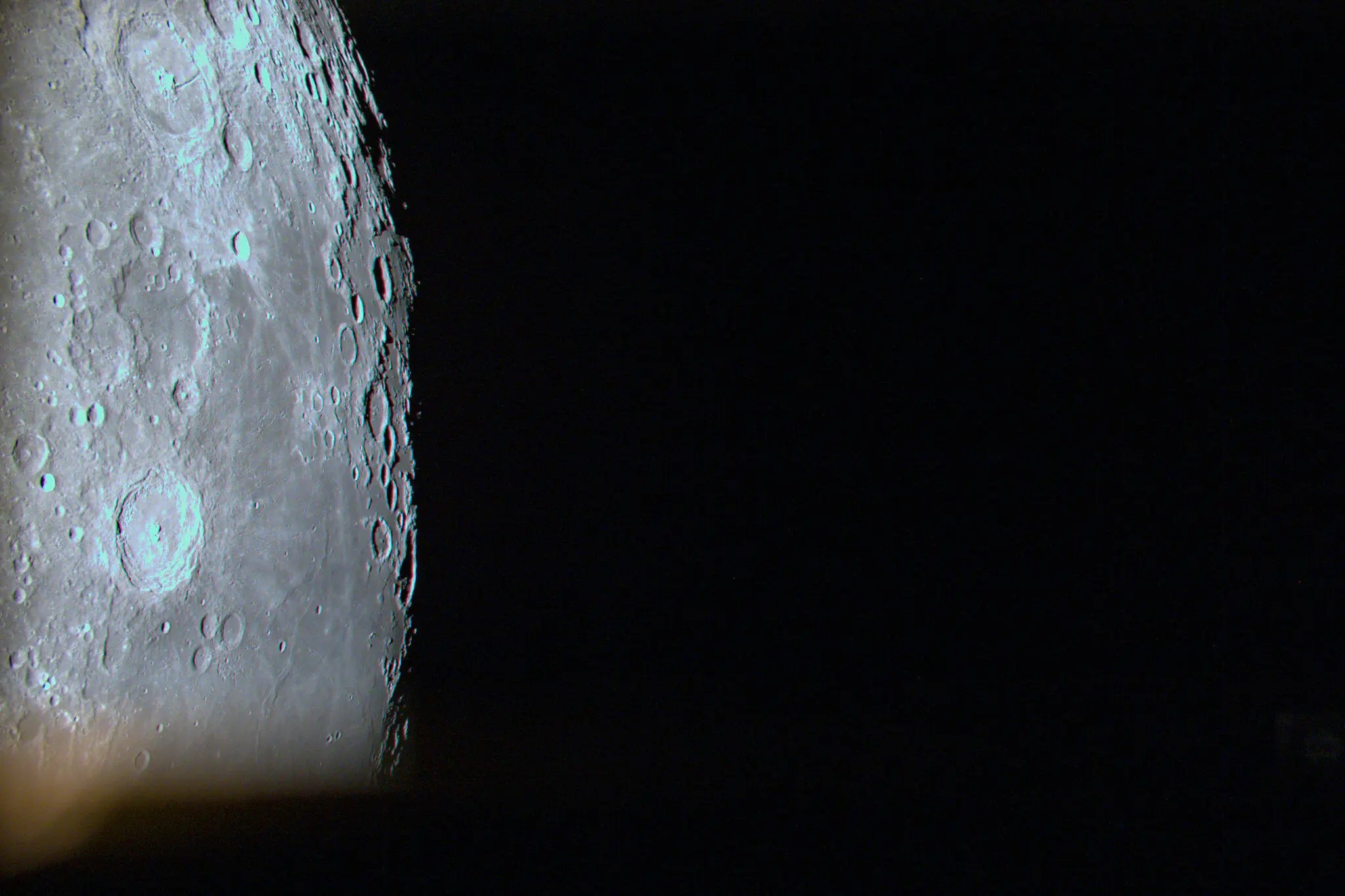
I’m not sure how many months I’m going to write about cloudy nights but at least I had a moment with the Waxing Crescent Moon recently during the day at Sandy Hook on 3/26/23.
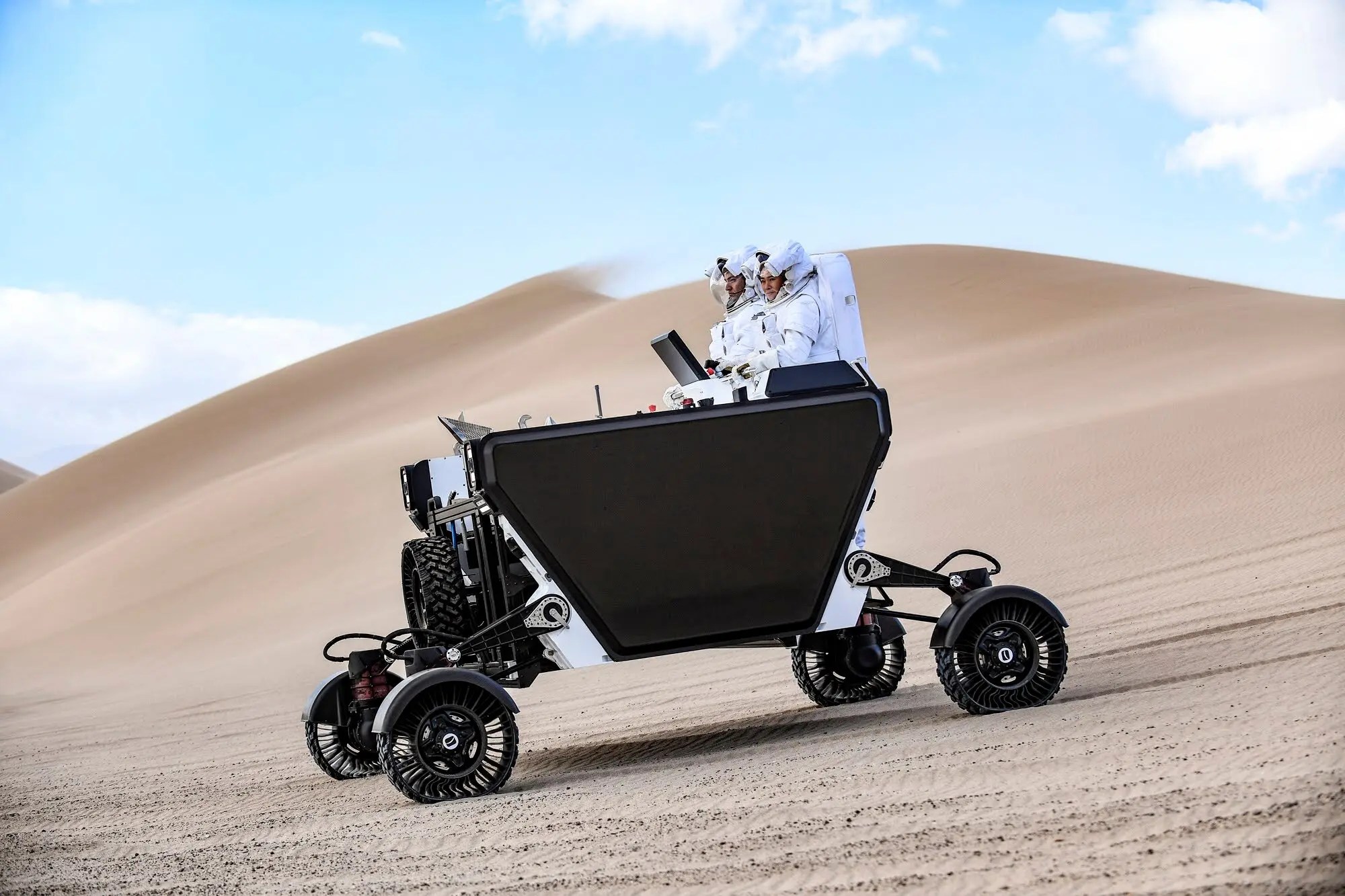
A Big Rover Aims to Be Like ‘U.P.S. for the Moon’ A rover the size of a Jeep Wrangler is heading to the moon, and it’s going to need a big ride to get there. Astrolab Inc., the tiny start-up that is building the rover, chose the biggest ride possible: Starship, the new giant spacecraft under development by Elon Musk’s SpaceX rocket company…more
-NYT
April Space Events: Artemis Astronauts, a Journey to Jupiter and More If you’re looking for space news in April, you won’t have to wait long. On Monday, NASA will introduce the four astronauts who will travel on the Artemis II mission. The Artemis program — a successor to the Apollo missions of the 1960s and ’70s — aims to return Americans to the moon…more
-BBC
Space scientists reveal brightest gamma explosion ever Scientists have revealed how Nasa satellites detected the brightest gamma ray explosion in space. The gamma-ray burst (GRB) occurred two billion light-years from Earth and illuminated much of the galaxy. Images of the rare and powerful cosmic phenomenon show a halo and “bullseye” like shapes…more
-NYT
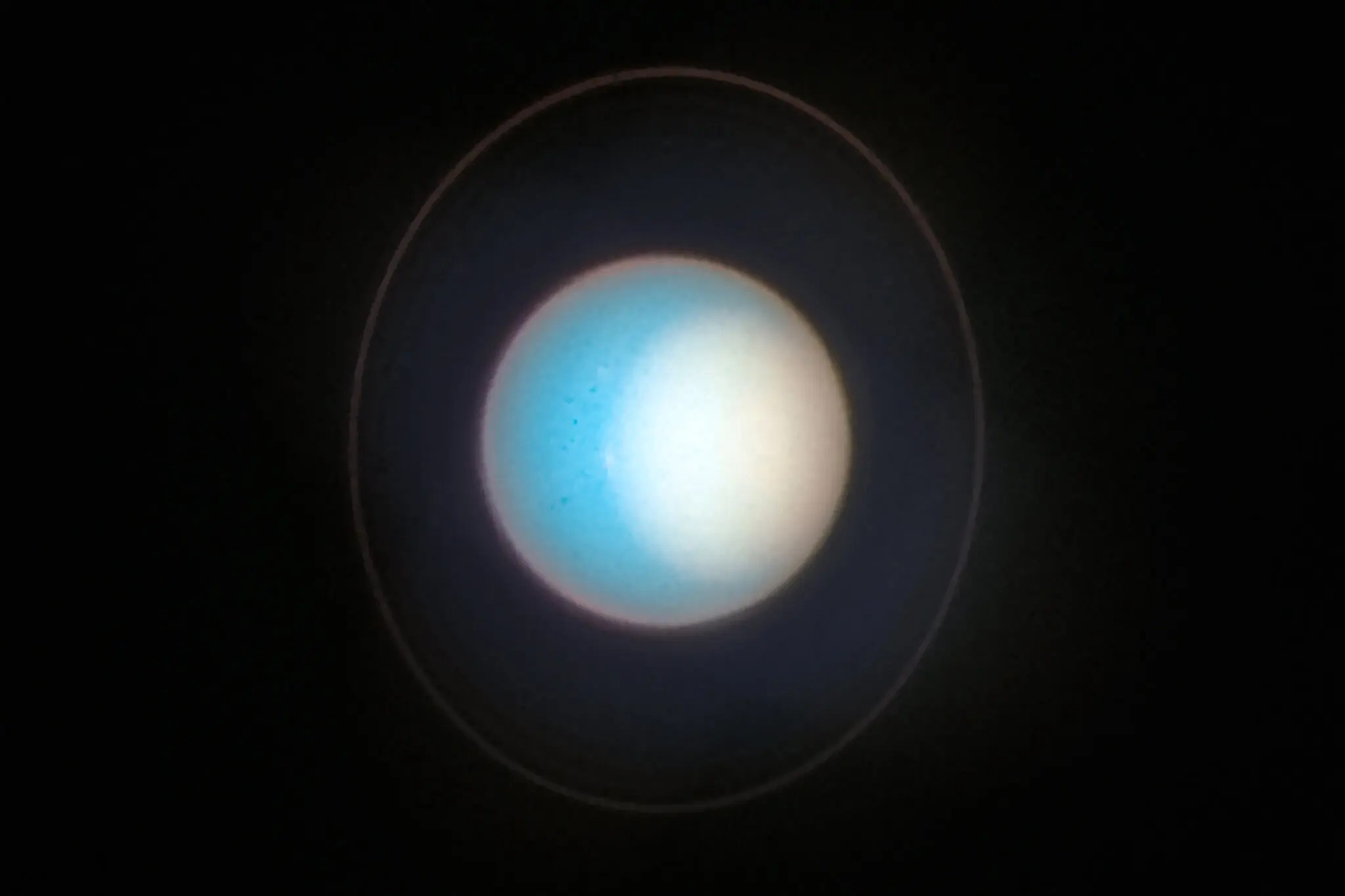
A Paler Uranus Emerges in the Latest Hubble Telescope Image With the passage of the vernal equinox a few days ago, we in the Northern Hemisphere can look forward to the warmer days of spring while those in the Southern Hemisphere will begin to feel the chill of autumn. The seasons change on other planets too, none more so than Uranus…more
-BBC
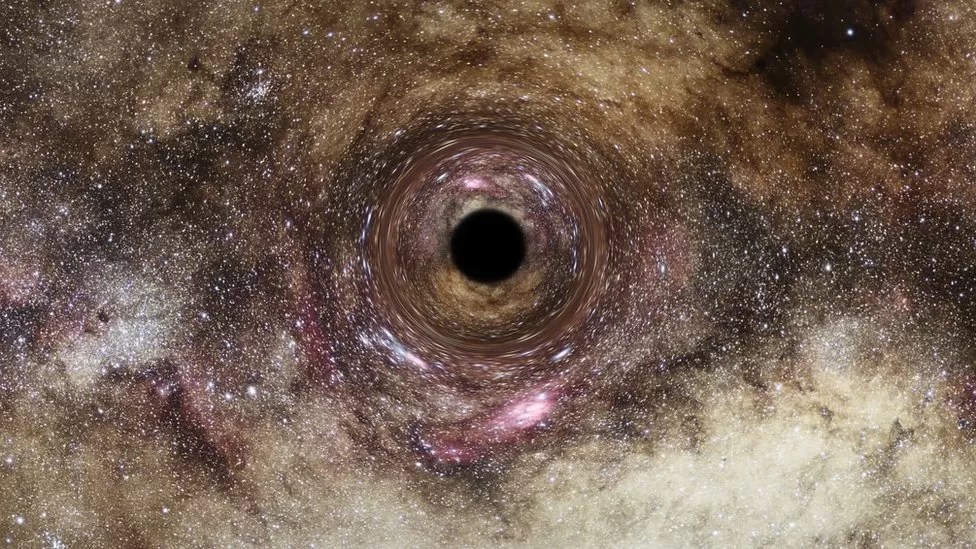
‘Ultramassive’ black hole discovered by Durham astronomers Astronomers say they have found one of the universe’s largest black holes to date using a new technique. Scientists at Durham University discovered the “ultramassive” black hole by observing its pull on passing light, called gravitational lensing. Dr James Nightingale who led the study said…more
-BBC
Massive asteroid passes between Earth and Moon The object, named 2023 DZ2, was discovered a month ago. As predicted by scientists, it passed within 175,000km of the Earth on Saturday after flying past the Moon. It is rare for such a huge asteroid – estimated to be between 40 and 90m in diameter – to come so close to the planet…more
-BBC
Photographers’ joy over northern lights in south of England An aurora is formed by a solar flare erupting on the Sun, sending charged particles towards the Earth that interact with our atmosphere, but it is seldom seen in southern England.The BBC spoke to some of the people who captured the phenomenon on camera to find out how they did it…more
-Nature
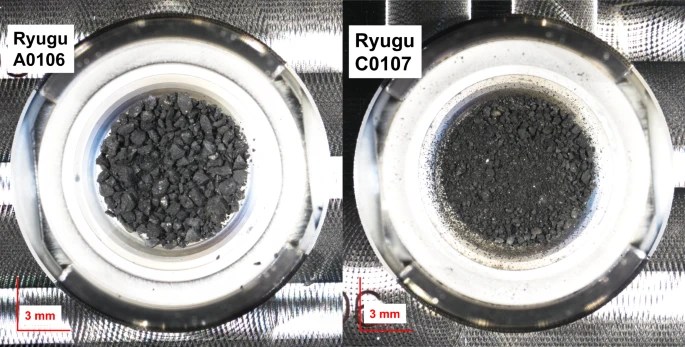
Uracil in the carbonaceous asteroid (162173) Ryugu The pristine sample from the near-Earth carbonaceous asteroid (162173) Ryugu collected by the Hayabusa2 spacecraft enabled us to analyze the pristine extraterrestrial material without uncontrolled exposure to the Earth’s atmosphere and biosphere…more
-NYT
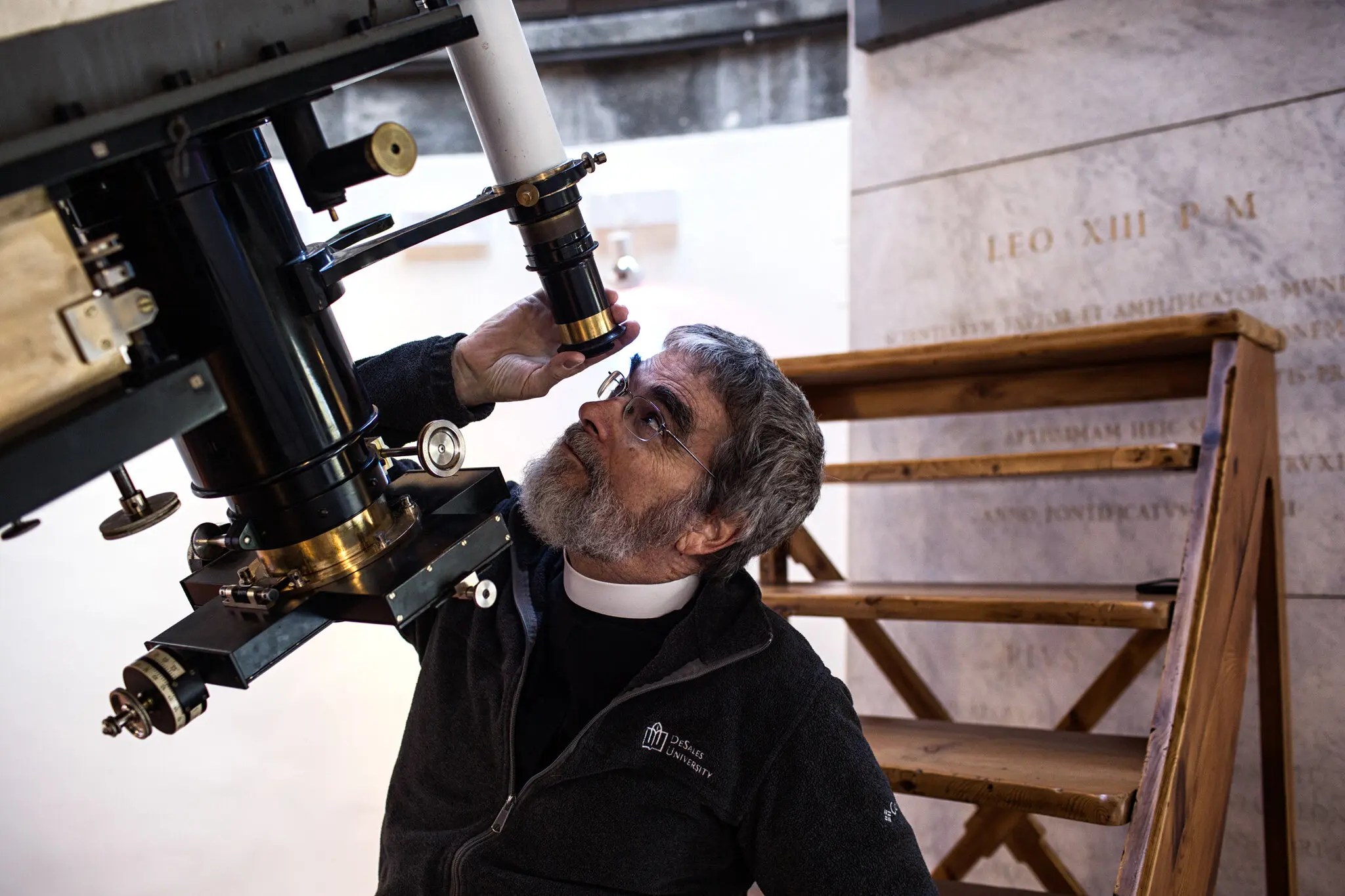
Centuries of Stargazing Leave Jesuit Names Written in the Heavens Centuries after the Holy See muzzled Roman Catholic stargazers for questioning the centrality of the Earth in the cosmos, Jesuit astronomers from the Vatican’s in-house observatory are increasingly writing their names in the heavens. The Vatican, run by Pope Francis, the first Jesuit pope in history…more
-BBC
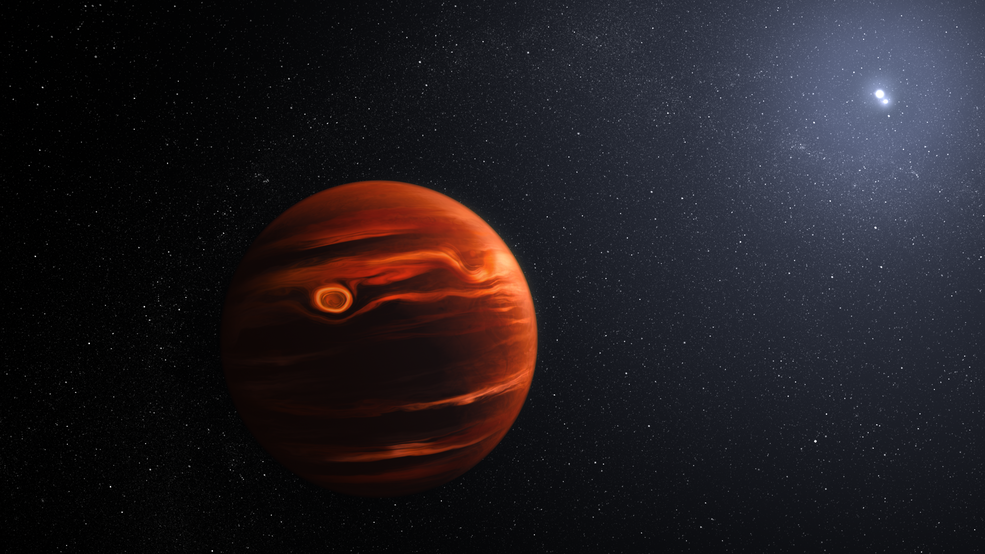
NASA’s Webb Spots Swirling, Gritty Clouds on Remote Planet Researchers observing with NASA’s James Webb Space Telescope have pinpointed silicate cloud features in a distant planet’s atmosphere. The atmosphere is constantly rising, mixing, and moving during its 22-hour day, bringing hotter material up and pushing colder material down. The resulting brightness changes are so dramatic…more
by Rex Parker, PhD director@princetonastronomers.org
Spring Is Coming! We’ll convene at Peyton Hall on the Princeton campus for our monthly get-together on Tues March 14 (7:30pm). If you just can’t make it physically, this will again be a hybrid meeting via Zoom (link sent by e-mail to members, also on the website). The huge campus construction project across the street continues and the old parking lots are gone forever. So the University wants us to park (free) in the new garage at 148 FitzRandolph Rd, off of Faculty Rd. That means a 15 minute walk around the football stadium to Peyton once you park your car. Our guest speaker will be Joseph DePasquale from the Space Telescope Science Institute in Maryland. For more information on the presentation and for the walking route map to Peyton Hall, see Victor’s article below
Our tradition each month is for a member to give an Un-journal Club, a brief informal and fun presentation to begin the second half of the meeting. “Un-journal” means this is not grad school, you don’t need scholarly journal-like topics, just what you care about in astronomy. PowerPoint slides, JPEG’s, astro-images, travel pictures, book reviews, your imagination is the limit (bring a USB memory stick). To get onto the schedule for an upcoming meeting, please contact me or program chair Victor Davis (program@princetonastronomy.org).
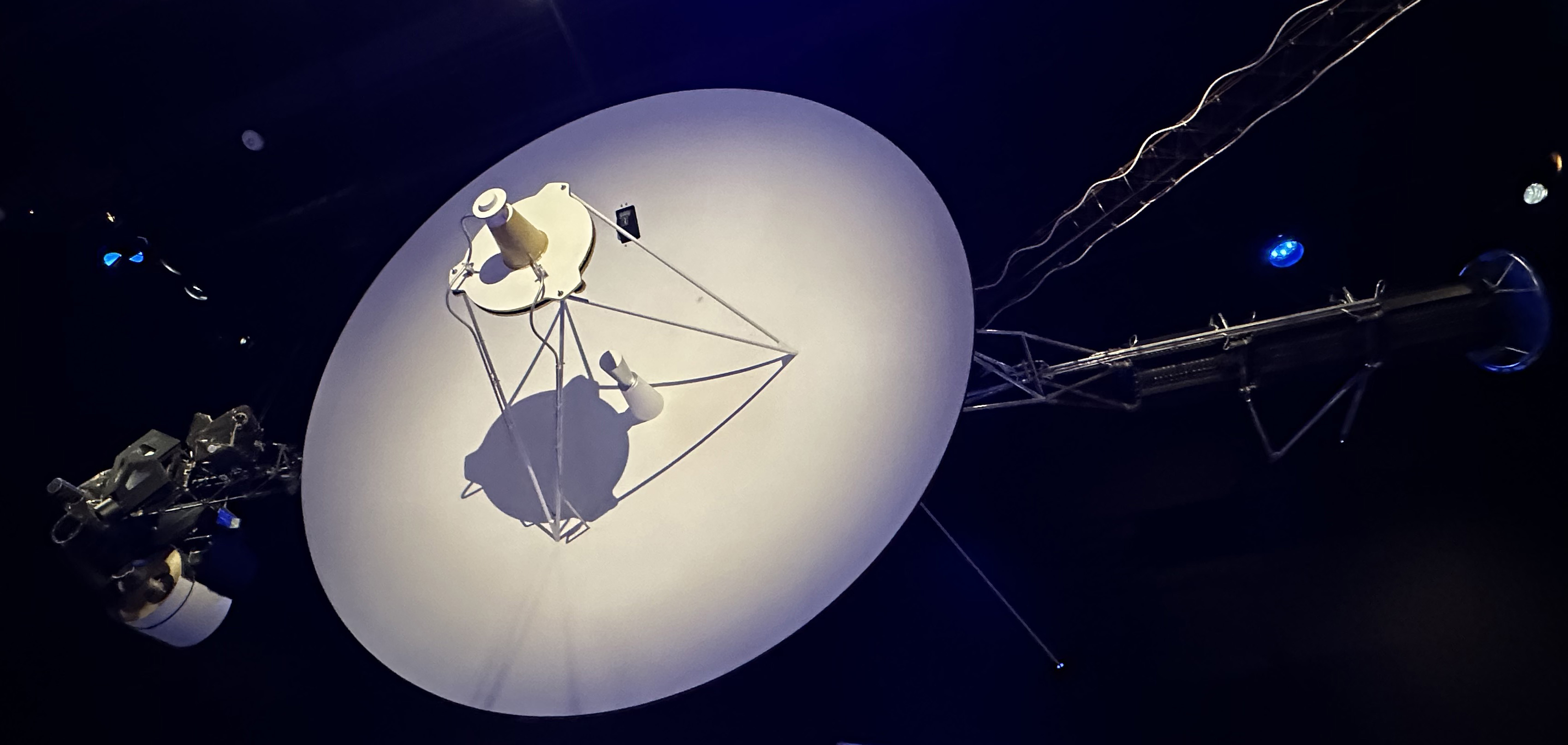
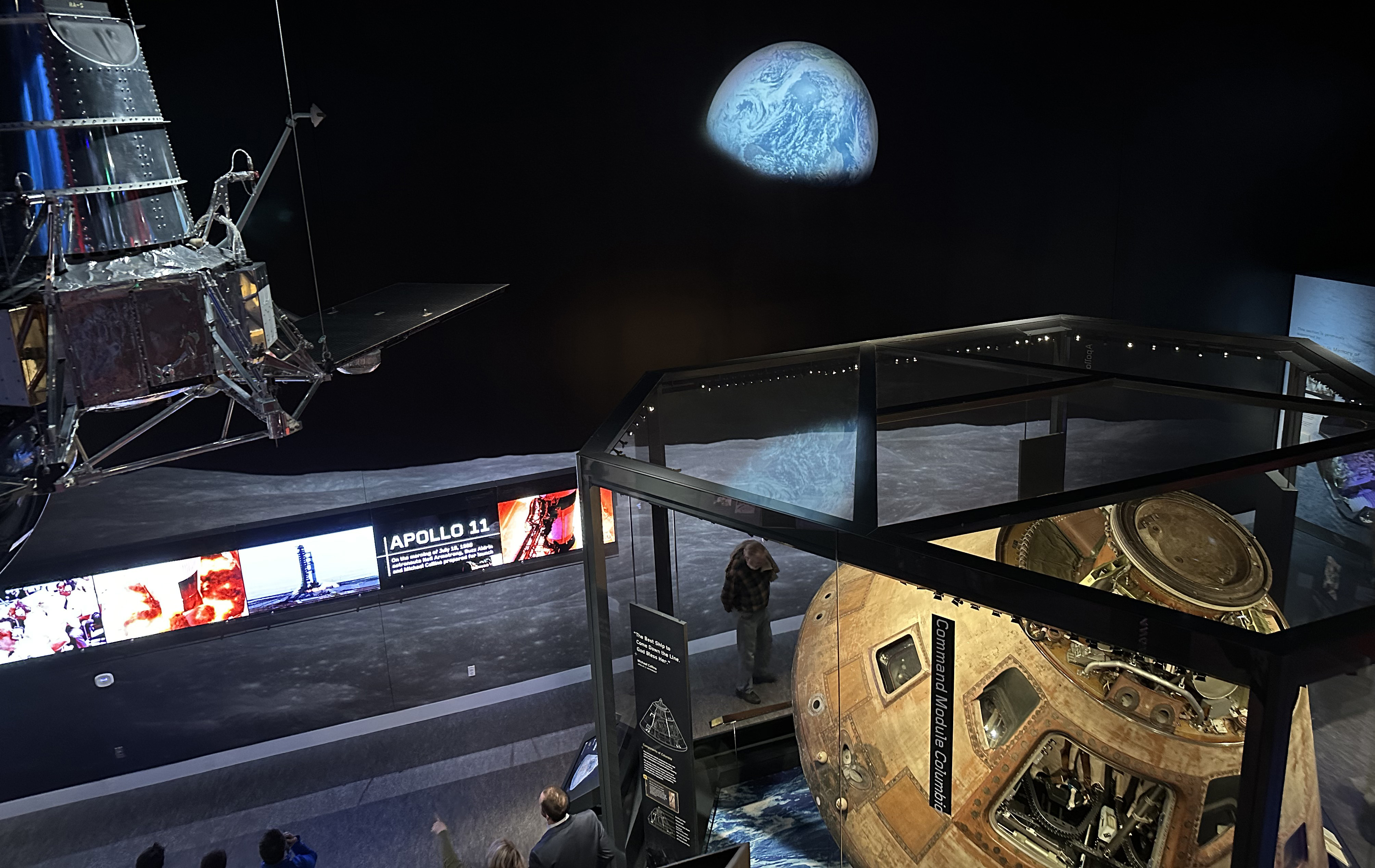
Going into the Field. We’re open to ideas for mini-tour destinations for AAAP members now that we are mostly all travelling in high gear again. It’s been about 8 years since our private tour of PPPL in Princeton. Later in 2015 a group of members made an unforgettable field trip to D.C. to see the Smithsonian Air & Space Museum and the US Naval Observatory in Washington D.C. This week I visited Air & Space again. Though some of the iconic craft were on display, more than half of the exhibits were closed for major renovation, putting this on hold as a AAAP destination for a couple years. If you have an idea for a field trip please send me a note.
Voyager and Columbia/Apollo 11 at Smithsonian Air & Space
Seeing the “Invisible” Deep Sky. It was Alfred Lord Tennyson who wrote, “I must lose myself in action, lest I wither in despair”. Lest you despair utterly that the famed Messier objects are forever lost in the glare of skyglow, consider this. AAAP has the latest technology for members to pursue electronically-assisted astronomy (EAA) at Washington Crossing Observatory. This technique is revolutionizing the field and has generated great excitement among amateur astronomers around the world. It is especially important in regions like ours because it is capable of restoring visibility of deep sky objects that are otherwise lost in light polluted skies.
Standing in the middle of the continuum between eyepiece and long-exposure astrophotography, EAA renders images in near real-time with markedly greater sensitivity than the eyepiece. High resolution images are acquired in seconds of sensor exposure and immediately rendered as color (RGB) images on the monitor. Software swiftly stacks and averages multiple frames to display images with increased signal/noise. Color is markedly enhanced for deep sky images compared to eyepieces especially for nebulae because the camera sensors have far greater color sensitivity than the vision of the human eye in low light. Yet visual astronomy is not entirely forgotten at the Observatory, as the historic Hastings refractor and exceptional Takahashi Mewlon 250 offer outstanding eyepiece observing.
The current telescope and mount equipment owned by AAAP and installed at the Observatory are listed below. Please contact the Observatory Chair (observatory@princetonastronomy.org) or me if you’d like to visit the observatory this spring and learn how to use the equipment. It’s a privilege of your membership in AAAP.
Member benefits. Are you a recent member and wondering what the club is all about? Here’s a brief summary of AAAP member benefits.
AAAP has a 60 year history of enhancing member and public astronomy learning and appreciation from the theoretical, astrophysical, observational, and educational perspectives.
We are informally affiliated with Princeton University’s Astrophysical Sciences Department, who generously allow us access to the auditorium in Peyton Hall for monthly meetings.
Members are exposed to deep astronomy learning opportunities, including presentations by professional astronomers and physicists at our monthly meetings on the Princeton campus. Guest speakers include professors and post-docs from Princeton Astrophysics Dept, IAS, Rutgers, and other area scientific institutions.
Members may observe at our well-equipped Observatory (see equipment list below) in Washington Crossing State Park, NJ any timer a Keyholder is present. Members have the opportunity to be trained to become a Keyholder, allowing 24/7 access to the Observatory. Learn more about the telescopes and training opportunities by contacting observatory@princetonastronomy.org.
Outreach is a big part of our mission. Keyholders participate in public astronomy sessions at the Observatory , held each week from April through October. In addition to the Observatory events, members participate in a wide variety of educational astronomy experiences with schools, youth, and adults in the area.
Members have direct exposure to learning observing techniques, telescopes, astrophotography, and other hardware and software from other experienced astronomer members. Members also have access to club-sponsored field trips.
Members have occasional opportunities to buy at great prices used telescopes, mounts, and other equipment which the club may acquire through donations.
Some of the telescope equipment for member use at the AAAP Observatory
Paramount-ME #1, robotic equatorial mount
Mount run with TheSkyX planetarium and control software under Win10 computer.
Numerous 2-inch and 1-1/4-inch eyepieces for these telescopes.
Starlight Xpress Ultrastar Colour CCD camera.
Starlight Live and SharpCap software cameras.
Verizon FiOS is available inside the Observatory.
24”-32” monitors for viewing the telescope images
Paramount-ME #2, robotic equatorial mount
Mount run with TheSkyX planetarium and control software under Win10 computer.
Hastings-Byrne 61/4-inch refractor, f/14.6, FL=2310mm. This fine historic instrument is a great planetary telescope, dating to 1879 with the original air-spaced doublet lens and steel tube intact.
Takahashi Mewlon-250, D=250mm (10-inch) Dall-Kirkham reflector telescope, with -inch TMB Optical dielectric-diagonal and Feathertouch 2-inch Crayford focuser.
Numerous 2-inch and 1-1/4-inch eyepieces including Panoptic 27 mm and 41 mm for the M250.
ZWO ASI 294 Pro color CMOS camera
ZWO ASI Studio, Starlight Live, and SharpCap software set up for EAA cameras
Welcome to Peyton Hall The March, 2023 meeting of the AAAP will take place IN PERSON on Tuesday, March 14th at 7:30 PM. As usual, the meeting is open to AAAP members and the public.
Hybrid Meeting You may choose to attend the meeting in person or participate via Zoom or YouTube as we’ve been doing for the past few years. (See How to Participate below for details). Participants who choose to participate virtually will be able to log in to the meeting as early as 7:00 pm to chat informally with others who log in early. We’ve had some security concerns during a past broadcast, so we’re re-instituting the Zoom waiting room. Please be patient for the host to recognize you and grant you entry into the meeting. Be aware that you must unmute yourself to be heard by other participants.
For the Q&A session, you may ask your question using Zoom’s chat feature or you may unmute yourself and ask your question directly to the speaker. To address background noise issues, we are going to follow the rules in the table below regarding audio. If you are not speaking, please remember to mute yourself. You are encouraged, but not required, to turn your video on.
Getting to Peyton Hall The parking lots across the street (Ivy Lane) from Peyton Hall are now construction sites, unavailable for parking. We’ve been advised by the administration of the astrophysics department that we should park in the new enclosed parking garage off Fitzrandolph street and walk around the stadium and athletic fields. Here’s a map of the campus and walking routes from the parking garage to Peyton Hall. The map shows the recently completed East Garage. Not shown is an access road Sweet Gum that connects from Faculty Road to an entrance at the lower left corner of the garage. Stadium Road connects from Fitzrandolph Road to another entrance at the opposite corner (and higher level) of the garage. It’s about a 10-15 minute walk from the parking garage to Peyton Hall.
Featured Speaker: Joseph DePasquale Senior Science Visuals Developer Space Telescope Science Institute (STScI) j.depasquale@stsci.edu
Unfolding the Infrared Universe with the James Webb Space Telescope The universe is filled with beauty beyond even our wildest imaginations. Sophisticated observatories such as the James Webb Space Telescope help us peer into that sublime reality, and it is to the great fortune of humanity that these instruments of science produce data that captures the essence of the natural beauty of the cosmos.
However, without a careful eye toward revealing that beauty, the data would remain black and white snapshots for scientific analysis rather than admiration. Astronomical image processors blend the artistic visual principles of composition, color and tonality with the scientific knowledge of how these observatories operate and the objects they study to compose images that capture the imagination and inspire the viewer to learn more about our universe.
This past January, Joe’s colleague Alyssa Pagan gave us a fascinating overview of the tools and processes for turning JWST raw data into the jaw-dropping visuals we see in the media. In this talk, Senior Science Visuals Developer Joseph DePasquale will focus on exciting new results from the James Webb Space Telescope, providing some background on the observatory itself as well as the art and science of the image processing that reveals the inherent beauty of the infrared universe.
Joseph DePasquale Joe DePasquale is the Senior Science Visuals Developer in the Office of Public Outreach at the Space Telescope Science Institute in Baltimore. Joe’s work requires a unique blend of science and art to bring data from the Hubble and James Webb Space Telescopes to life in high quality, colorful views of the cosmos. Prior to joining STScI in 2017, Joe was the Science Imager for NASA’s Chandra X-ray Observatory at the Smithsonian Astrophysical Observatory where he worked for 16 years following his undergraduate training in Astronomy & Astrophysics at Villanova University. Joe has an extensive background in astronomy, fine art, and photography giving him a unique skill set well suited to the task of bringing raw observatory data to life in richly detailed imagery.
AAAP webcast: This month’s AAAP meeting, beginning with Rex’s opening remarks and ending at the beginning of the business meeting, will be webcast live on YouTube and recorded for subsequent public access on AAAP’s YouTube channel. Be aware that your interactions during this segment, including questions to our guest speaker, may be recorded for posterity.
Join YouTube Live to listen to the speaker John Church using the link below –
This session will be recorded and saved on YouTube. Send me an email at program@princetonastronomy.org if you have any concerns
“Meet the Speaker” dinner at Winberie’s Place: Winberie’s Bar and Restaurant, 1 Palmer Square East, Princeton, NJ Time: 5:45 PM Please contact me if you plan to attend. victor.davis@verizon.net or at program@princetonastronomy.org (908) 581-1780 cell
Using Zoom: While we are social distancing, the AAAP Board has chosen to use Zoom for our meetings, based on our belief that many members have already used Zoom and have found it easy to use. One of its great features is you can choose whether you want to install the software on your computer or use it within your browser.
Please make sure you have Zoom installed on your computer. You do not need a Zoom account or to create one to join the meeting. Nor are you required to use a webcam.
Please see below for the link to the meeting, or visit our website.
There is no “Unjournal Club” presentation scheduled this month. As you may know, guest speakers receive a baseball cap with the AAAP logo embroidered upon it as a “thank you” for making a presentation to us. We’re expanding the hat giveaway to members who contribute an “Unjournal Club” presentation to encourage participation.
We hope to make these short presentations a regular feature of our monthly meetings. We’d like to know what members are doing or what members are thinking about in the broad range of topics encompassed by astronomy. A brief ten-minute (or so) presentation is a good way to introduce yourself and the topics you care about to other club members. If you are interested in presenting a topic of interest, please contact either director@princetonastronomy.org or program@princetonastronomy.org.
A look ahead at future guest speakers:
April 11, 2023
Ira Polans, former Program Chair of AAAPIra will speak briefly on The Anasazi of the Southwest: Chaco Canyon and the Sun Dagger and then introduce the film The Sun Dagger, narrated by Robert Redford. The film tells the story of its exciting discovery in the 1970s by Washington artist Anna Sofaer and its subsequent investigation. It also examines the life and culture of the Anasazi (Ancestral Puebloan) Indians who built the calendar and thrived in the arid canyon environment a thousand years ago. Since then the sun dagger has marked the seasonal solstices and equinoxes in vivid symbolic images of light and shadow on stone. Join us to learn more about this fascinating discovery!
NOTE: This film is solely for in-person viewing, as copyright restrictions will not permit broadcasting it on the internet. This meeting will not be a hybrid meeting.
May 9, 2023
Alain Maury, Astronomer and discoverer of comets and asteroids. Alain Maury operates a time-sharing observatory near San Pedro de Atacama, Chile. He’s also an active observer and discoverer or co-discoverer of several dozen comets and asteroids, several of which (i.e. 3780 Maury) were named in his honor. He’ll talk about his observatory, its operation, and his numerous astronomical activities.
June 13, 2023
Bill Murray, AAAP’s Outreach Director and staffer at NJ State Museum planetarium Bill will give his traditional planetarium show at the New Jersey State Museum in Trenton.
Summer Hiatus
Later this fall
Gary Rendsburg, Distinguished Professor of Jewish Studies and History at Rutgers Prof. Rendsburg will talk about “The Jewish Calendar,” with emphasis on its astronomical connections to lunar months, intercalated month to adjust to the solar year, festival days, and new moon observances.
As always, members’ comments and suggestions are gratefully accepted and much appreciated.














 Amateur Astronomers Association of Princeton