The Night Sky: Key to Experiencing and Preserving Earth’s Beauty

By Razvan Dominic Ionescu

Wanting to see the Milky Way again, and to reconnect with a childhood memory, in August 2019 I took my family on a trip to one of the darkest spots on the East Coast of the United States. It was a vacation destination, purposely chosen to be as remote as possible from civilization and the built environment, and yet – for convenience’s sake – within driving distance of our home, in suburban Philadelphia.

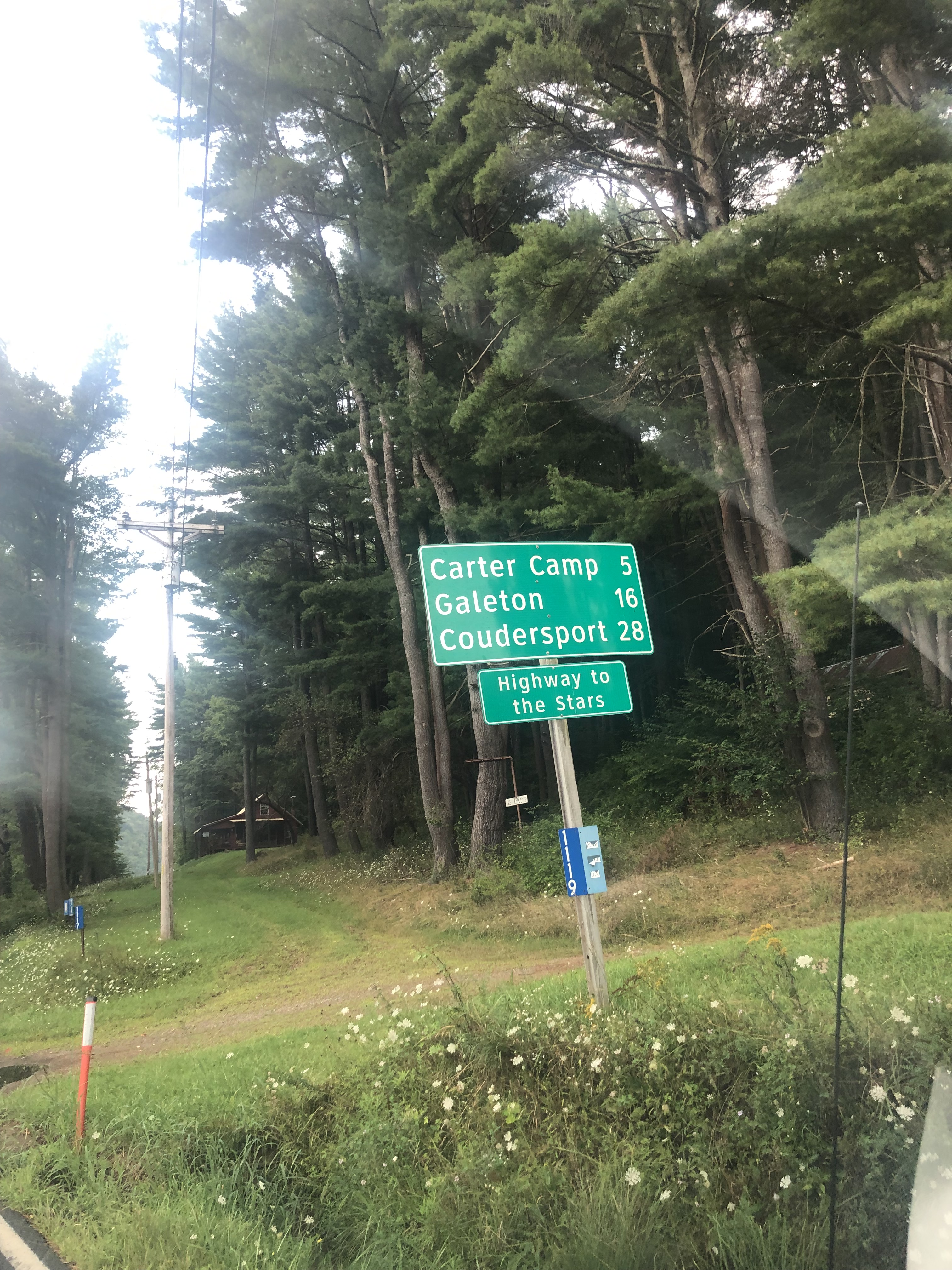
We embarked our five kids in our minivan, and took what remains to this day a most memorable trip to the heart of Pennsylvania: Galeton, Potter County, and  Cherry Springs State Park – the first nighttime observation park in the Commonwealth of Pennsylvania. Through Airbnb.com we rented a farmhouse, sitting on a large property and surrounded by natural beauty that is rare to find on the East Coast. Accessible through a one-mile, uphill, unpaved path from the main road, the farmhouse sat on 130 acres of farmland, a few miles from Galeton borough.

I will never forget how beautifully quiet the entire hill around our house was, and the serenity brought about by the complete absence of noise coming from man-made machinery. The area was as remote as you can imagine from highways and airports, and as a result, even airplanes flying overhead were so far that you could not actually hear them. It was deeply humbling and relaxing to only hear the sounds of nature and nearby farm animals: no trucks, cars, roads, highways, or anything we have become so accustomed to in our busy, bustling lives.

Why Potter County?
With a population of 16,000 (half what it was in 1900), Potter County is the fifth-least populous county in Pennsylvania, and has only one traffic light.  I grew up spending summers in the Carpathian mountains, marveling at the beauty of the sky at night and the Milky Way in particular. I was longing for those moments and seeing the natural beauty of the night sky again, and Potter County delivered.

The night sky, with its twinkling stars, shimmering constellations, and distant galaxies, has captivated human beings since the dawn of time. Ancient civilizations found inspiration in the heavens, using the stars for navigation, timekeeping, and even to guide their spirituality. Today, the night sky remains hard to match and one of the most profound connections we have with the universe beyond Earth, reminding us of our small place within it. However, as human activity has grown, the beauty of this celestial landscape is increasingly obscured by light pollution, robbing us of a fundamental aspect of the planet’s natural splendor.

The Night Sky as Part of Earth’s Beauty
While we often speak of Earth’s beauty in terms of its landscapes—majestic mountains, sweeping oceans, and lush forests—the night sky is equally a part of this planetary wonder. When we gaze upward on a clear night, we are not only admiring distant stars but are also participating in a shared, universal experience.

This experience is awe-inspiring and creates a deep appreciation for the natural world and for the remarkable, yet delicate, balance that allows life to flourish on Earth. The view above is a reminder of our planet’s uniqueness within the cosmos.

The night sky offers more than just aesthetic beauty. It allows for reflection, awe, and perspective – all part of a rich life. The light of stars that have traveled millions of years to reach us highlights the vastness of the universe, providing a humbling reminder of the intricate and interconnected systems that sustain life on Earth. In many ways, the ability to see the night sky is symbolic of a healthy relationship with our environment. Just as clear, unpolluted air and clean rivers are vital to human well-being, so too is the ability to experience the unblemished beauty of the night.

The Impact of Light Pollution
Unfortunately, as cities grow and artificial lights illuminate more of our surroundings, light pollution hinders our view of the night sky. This excessive use of artificial lighting masks the stars, creating a permanent glow that prevents many people from seeing the Milky Way or even the most familiar constellations. In fact, it’s estimated that about 80% of people in North America can no longer see the Milky Way due to light pollution.

Light pollution doesn’t just obscure our view of the stars—it also has ecological and health impacts. Many animals rely on the natural cycles of day and night for migration, hunting, and reproduction. For example, sea turtles, which navigate by the moon, often become disoriented due to artificial lights on beaches. Birds that migrate at night are also thrown off course by city lights, sometimes flying into buildings or changing their migration patterns altogether. The disruption of these natural rhythms highlights how human-created pollution, even in the form of light, can affect Earth’s ecosystems.

On a personal level, light pollution also disconnects us from one of our most ancient experiences as inhabitants of this planet. The stars remind us of the larger universe, offering an opportunity for quiet contemplation, wonder, and inspiration. Without the night sky, a piece of our collective human heritage is lost, and with it, the sense of belonging to something far greater than ourselves.

Caring for the Night Sky and the Planet
Caring about the night sky may seem like a trivial pursuit. After all, we have so many bigger, more real problems in our every day lives! Yet upon reflection, appreciating the beautifully silent and awe-inspiring night sky is only a sign of our care for the Earth itself. Being able to look up at the stars and experience their beauty is part of the joy of living on this planet. In the same way we work to preserve the forests, oceans, and wildlife, we should also work to reduce light pollution.

Efforts to mitigate light pollution are already underway in many parts of the world. Some cities are installing shielded streetlights that direct light downward, where it’s needed, rather than allowing it to scatter upward into the atmosphere. Others are adopting “dark sky” policies that limit unnecessary lighting and encourage the use of low-intensity bulbs. These efforts reflect a growing recognition that protecting the night sky is just as important as preserving other aspects of our environment.

By reducing light pollution, we can restore our connection to the stars and to the natural rhythms of our planet. The night sky is a reminder that Earth, though singular and unique, is part of a much larger cosmic story. As we work to protect the beauty of our planet—from its forests and oceans to its skies—we affirm our place within that story, recognizing the night sky as an essential piece of Earth’s beauty.

As Above So Below
The night sky is not a separate entity but an integral part of the beauty of our one planet Earth. Gazing at the stars invites us to reflect on our place in the universe, fostering a sense of humility and wonder. However, as light pollution increasingly blots out the stars, we are reminded of the broader consequences of our actions on the environment. By caring for the night sky, we are also caring for the planet, ourselves, and acknowledging the profound importance of preserving the natural world in all its forms—both terrestrial and celestial.

Unfortunately, until we eliminate or substantially reduce light pollution near our dwellings, we must travel to far-away places to be reminded of the true beauty of the night sky. And in our case, we made the most of it in Cherry Springs State Park not only by seeing the Milky Way every cloudless night, but we also took a stargazing tour with former State Park astronomer Greg Snowman. It did not disappoint: we saw Saturn’s rings, Jupiter’s moons, constellations, far-away nebulas, galaxies, and our children fell asleep under the stars. It was an amazing experience, and one I look forward to reliving, hopefully one day without having to travel so far away.

A member of AAAP since 2021, Razvan is a finance professional who regularly volunteers to clean up litter in his community and when traveling. He recently launched the website www.OneBeautifulPlanet.org, to share his journey in public service, environmental education, and track action toward a cleaner, healthier world.

Posted in October 2024, Sidereal Times | Tagged | Leave a comment

Waves in the Cosmic Sea

by S. Prasad Ganti

BAO (Baryon Acoustic Oscillation) is a mouthful of an acronym. It interested me because of its relation to our baby Universe. That was a time when our Universe was less than 380,000 years old. With no stars or planets or galaxies. It was just an extremely hot cosmic sea with a soup of baryons (electrons, protons, neutrons) and light trapped within. This article is a summary gathered from the NASA and ESA websites, laced by my 2 cents. 

Further cooling of our universe resulted in the formation of atoms and chemistry took over to create elements like Hydrogen, Helium etc. But the dynamics of the infantile cosmic sea were different and we still have relics from such an ancient past. The first one we know is the CMB (Cosmic Microwave Background) radiation. This noise from the formative years of the Universe can be detected everywhere in the microwave frequencies. 

Starting from the first discovery in the horn antenna of Bell Labs in Holmdel, NJ, to the space based detectors COBE (Cosmic Background Explorer), WMAP (Wilkinson Microwave Anisotropy Probe) and Planck, the picture of the early universe became very sharp. It largely shows a uniform universe with some minor ripples. These ripples got amplified with the expansion of space and became clumps which became stars and galaxies. 

Second relic is the lesser known and esoteric BAO. In the cosmic sea, gravity tried its magic to pull the particles together. Each time this happened, the temperature increased further making it even hotter. The heat caused the particles to repel each other. A tug of war ensued between the two competing forces – attraction caused by gravity and repulsion caused by the heat. This tug of war caused the back and forth motion resulting in oscillations. Gravity won for some of the time and as it weakened, heat started taking over for some time. This oscillation caused the BAO.       

Now we know about Baryons and oscillations. What does acoustic mean in this context? There was no sound or Bose speakers in the early universe ! The matter and air as we know was yet to be formed. I could not find a satisfactory answer to this question. I am surmising that acoustic is taken in its broader sense as it refers to the behavior of plasma. Plasma is a soup of charged particles which have been ripped off from its neutral atoms. 

We know that BAO occurred in the distant past because the relics or imprints of those oscillations are still found in the present day universe. They are the frozen ripples, not a currently flowing one. Something like the finding of dinosaur footprints. These imprints were noticed for the first time in 2005 in the large-scale picture of the universe. Sloan Digital Sky Survey was the first such big picture in which patterns of BAO were found. Similarly such imprints were found in 2dF Galaxy Redshift Survey.

The imprints are in the form of distances between galaxies today. We are likely to find another galaxy within 500 million light years. Not slightly nearer nor farther. This is discounting the local clusters where Andromeda, our neighbor, is only about 2 million light years away. It occurred to me how 500 million light years can be part of a wave. It is too large to be a wavelength. But then the early universe was a lot smaller and the wave got stretched out with the expansion of the universe. What is 500 million light years today could have been a mile or a few inches in those times. Thus, BAO is also used to study the expansion of the universe and the related topic of dark energy. More studies are taking place and more discoveries are in store.

Posted in October 2024, Sidereal Times | Tagged , , | Leave a comment

Harvest Moon Eclipsed!

by Lisa Fanning

Lunar eclipse photo from 9/17/24 Harvest Moon 

Left: 9:31 PM ET partial penumbra eclipsed moon
Right: 10:44 PM ET maximum eclipse (partial umbral)
iPhone 13 through Swarovski Optik Spotting Scope.

Posted in October 2024, Sidereal Times | Tagged , | Leave a comment

Startling Preliminary Results on Dark Energy

By Rich Sherman

“Perhaps, says DESI’s scientists, the density [of dark energy] is changing over time…. If the findings prove true, it would catapult cosmology into a crisis.” –The Economist

Every now and then there is an article that makes you stop. In June, The Economist published an article about startling preliminary results from the Dark Energy Spectroscopic Instrument (“DESI”) at Kitt Peak National Observatory. The preliminary results were published at the 2024 American Physical Society’s annual meeting. The data shows that dark energy has NOT been a constant—it became denser until about five billion years ago and is now weakening. If accurate, this creates great problems for the standard model of cosmology, for Einstein’s Theory of Relativity, and for the expected fate of the universe (bringing the possibility of the Big Crunch or the Big Rip back into the fray). 

In a club filled with scientists, doctorates and people with technical backgrounds, I would enjoy covering this topic at a future AAAP meeting. 

Source: The Economist

Posted in October 2024, Sidereal Times | 1 Comment

Snippets

compiled by Arlene & David Kaplan

-NYT

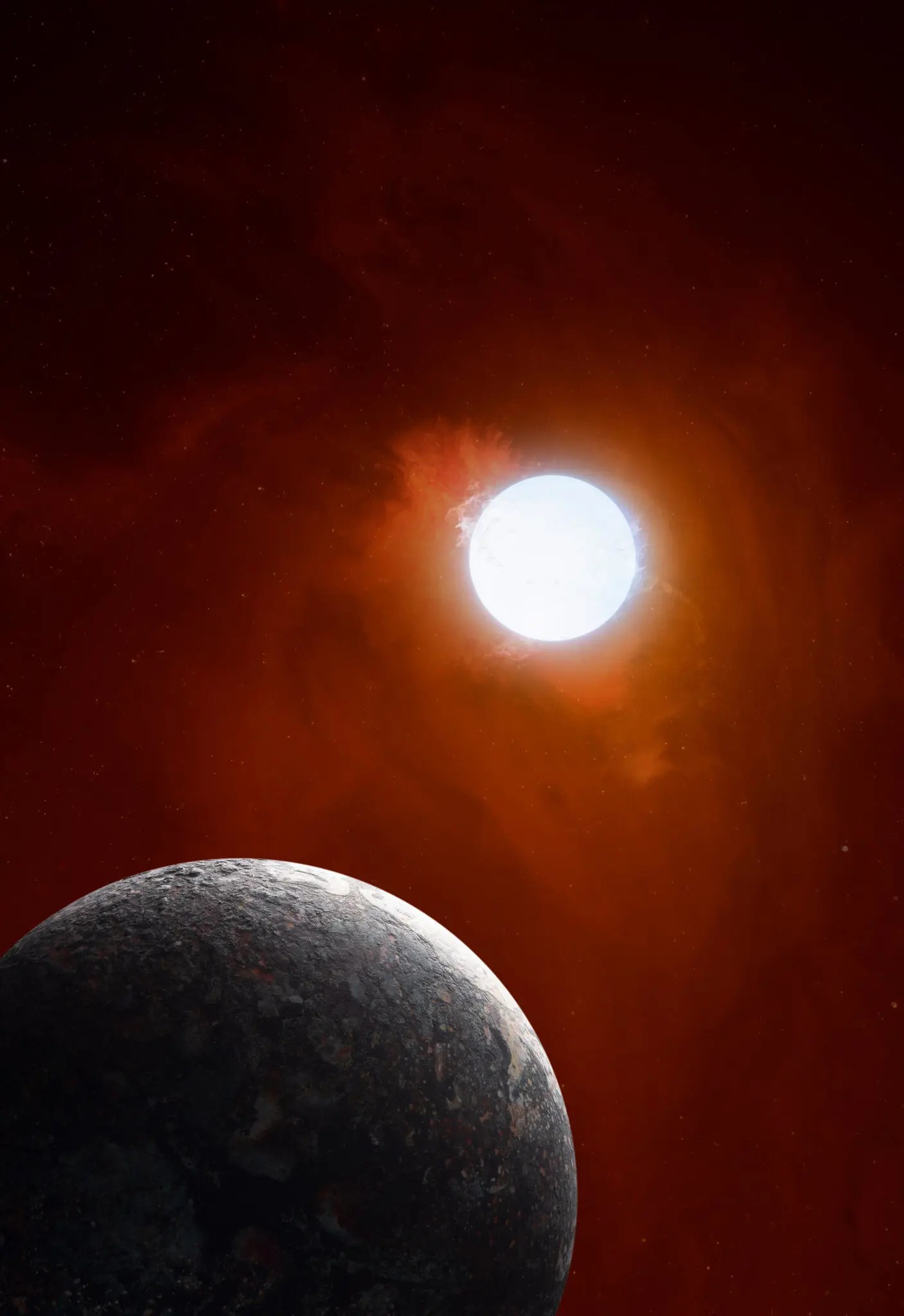
The Sun Will Destroy the Earth One Day, Right? Maybe Not. In six billion years the sun will expand into a red giant. That process should consume Mercury, and maybe Venus. For a long time we have thought it might incinerate Earth, too. But perhaps all is not doomed for planet Earth (although it may be a world that will have long since become uninhabitable)….more

-Sciencealert.com
-phys.org

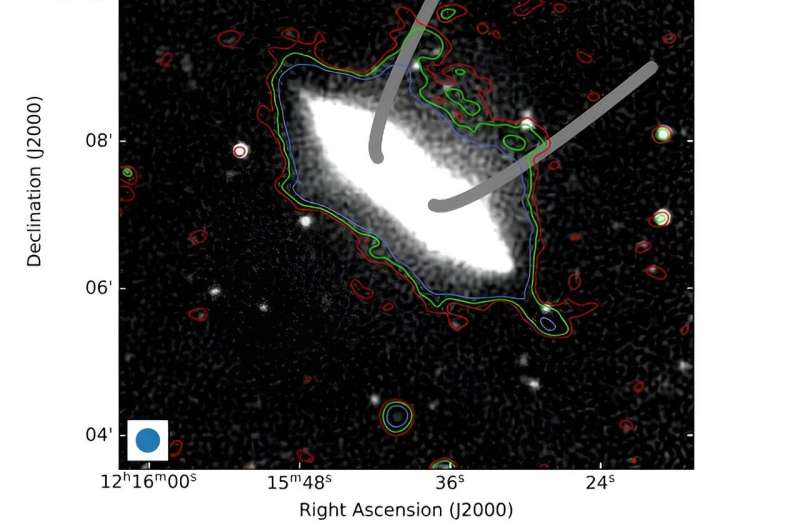
Large radio bubble detected in galaxy NGC 4217 An international team of astronomers has performed radio observations of a star-forming galaxy known as NGC 4217. The observational campaign detected a large radio bubble in the galaxy’s halo. The finding was reported in a paper published September 23 on the pre-print server arXiv…..more

-petapixel.com

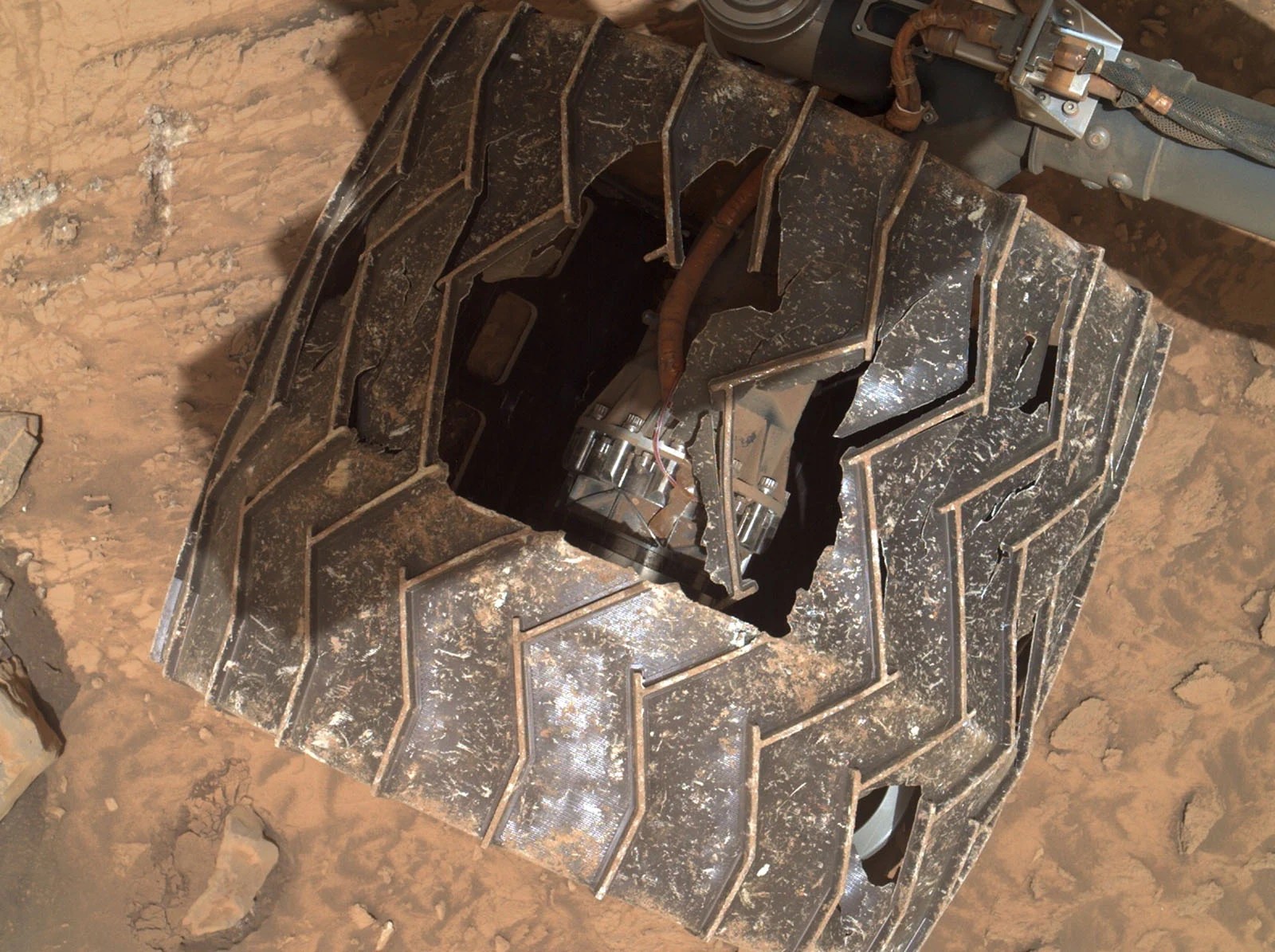
There’s a Large Hole in the Wheel of NASA’s Mars Curiosity Rover Twelve years of rolling around on Mars has apparently taken its toll on NASA’s Curiosity rover after photographs showed a large hole in the middle of one of its wheels. Curiosity landed on Mars on August 5, 2012, and was expected to last for two years …more

-NYT

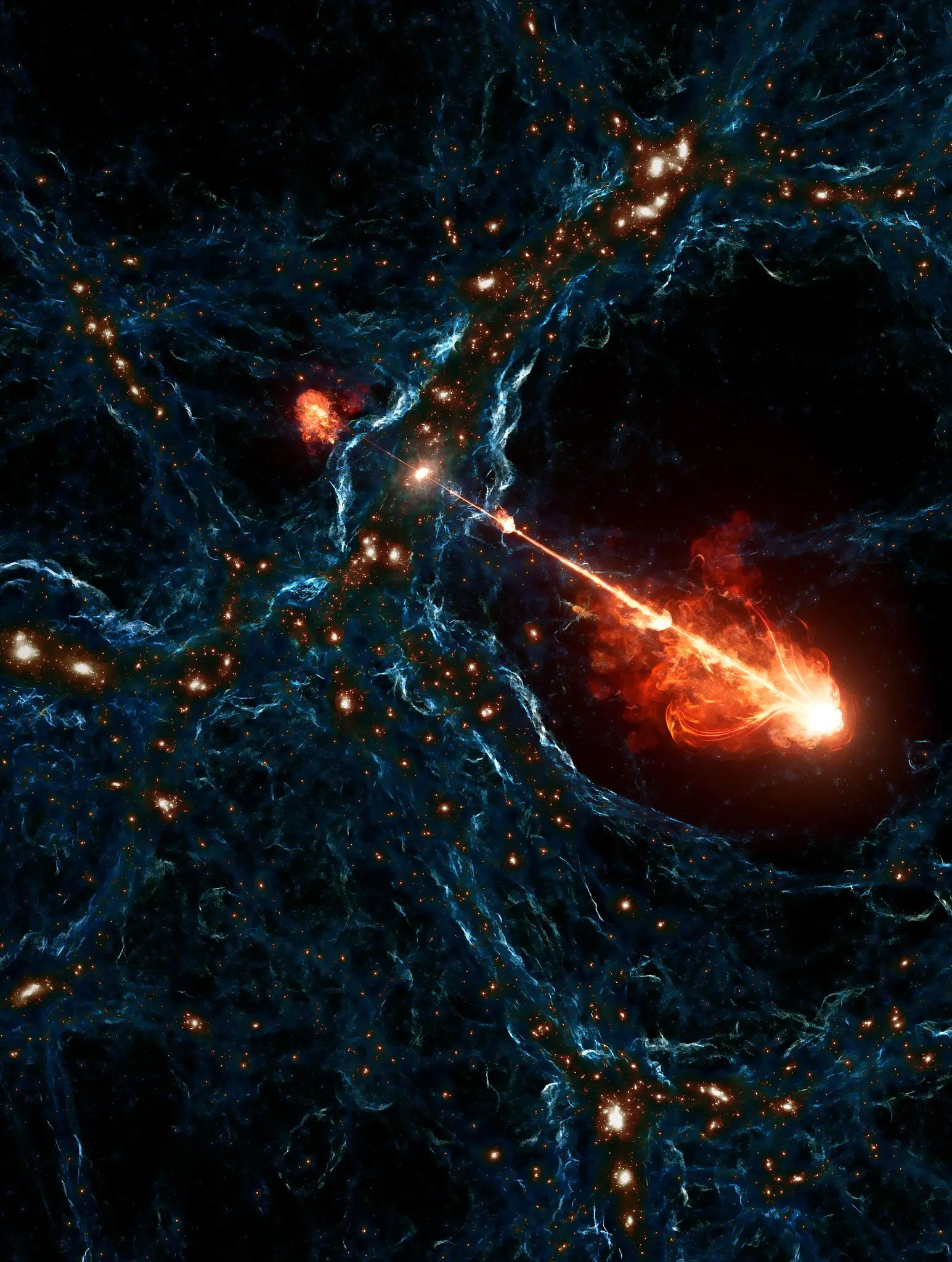
This Black Hole Has a Cosmic Wingspan Who knew a dragon’s tongue could be so long?Astronomers announced last week that they had discovered a black hole spitting energy across 23 million light-years of intergalactic space. Two jets, shooting in opposite directions, compose the biggest lightning bolt ever seen in the sky…more

-NASA

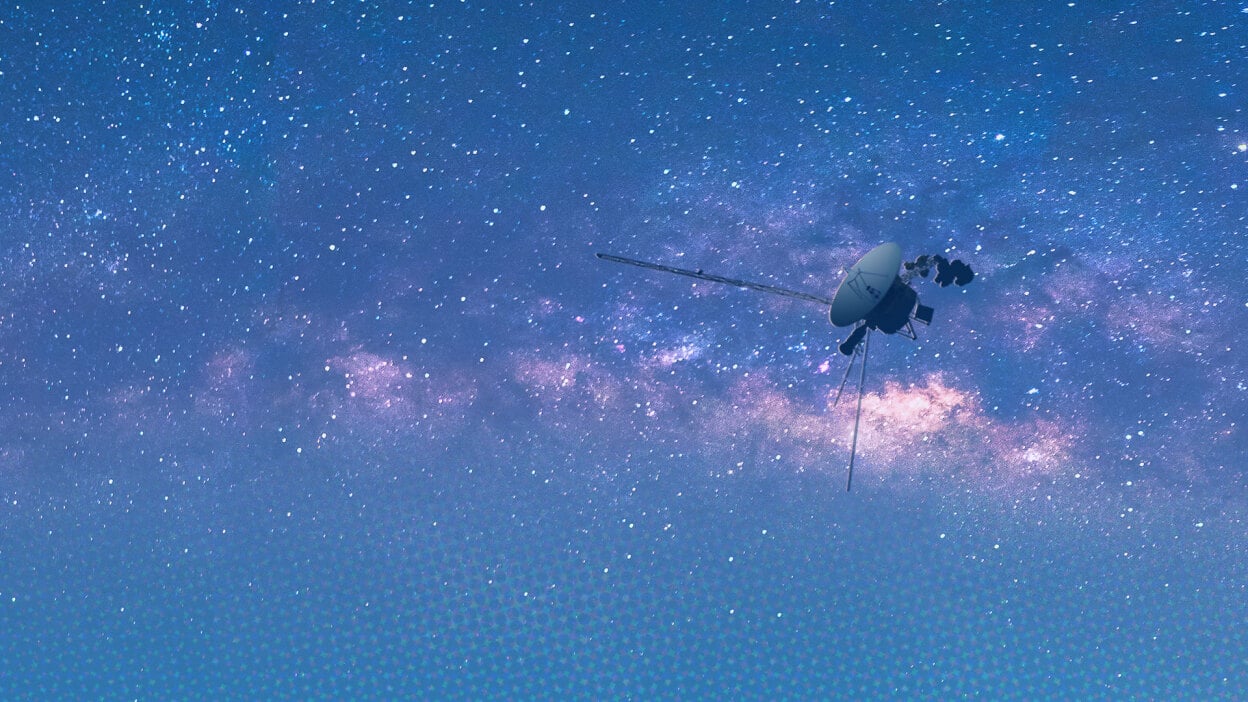
NASA scientist viewed first Voyager images. What he saw gave him chills. In 1979, Alan Cummings, a scientist working on NASA’s unprecedented Voyager mission, entered a Caltech room in Pasadena, California, and saw an unusual, alien world projected on a screen. The brand-new image, just beamed back from space, revealed a place like no other ever seen. It was a moon teeming with vibrant volcanoes. …more

-newsweek

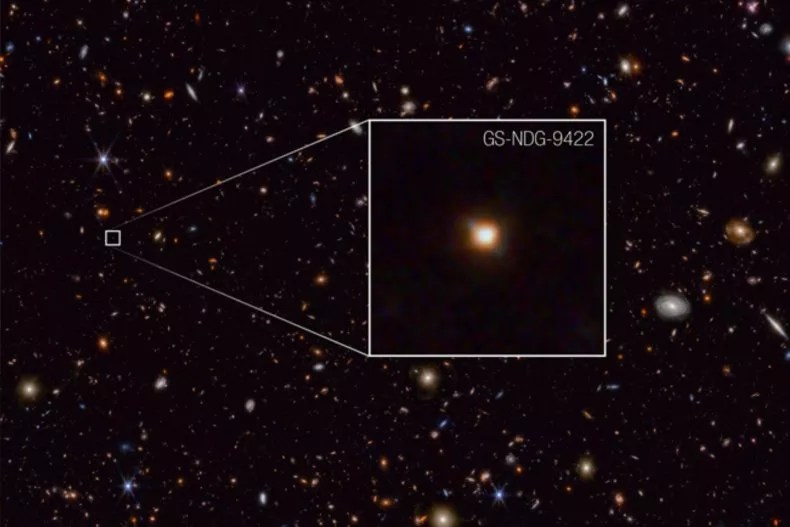
‘Weird’ Ancient Galaxy Discovered by James Webb Space Telescope A”totally new phenomenon” has been discovered by astronomers in a strange galaxy from the dawn of time. This galaxy, named GS-NDG-9422 (9422), was discovered by the James Webb Space Telescope to have an unusual light signature suggesting that its gas shines brighter than its stars…more

-NASA

NASA’s Webb telescope peers into the boundary between day and night on a distant world Researchers using NASA’s James Webb Space Telescope have glimpsed tantalizing new details about what it’s like at the boundary of a tidally locked planet—that is, one where half of the planet is always exposed to its star, while the other is always shrouded in darkness…more

-uchicago.edu

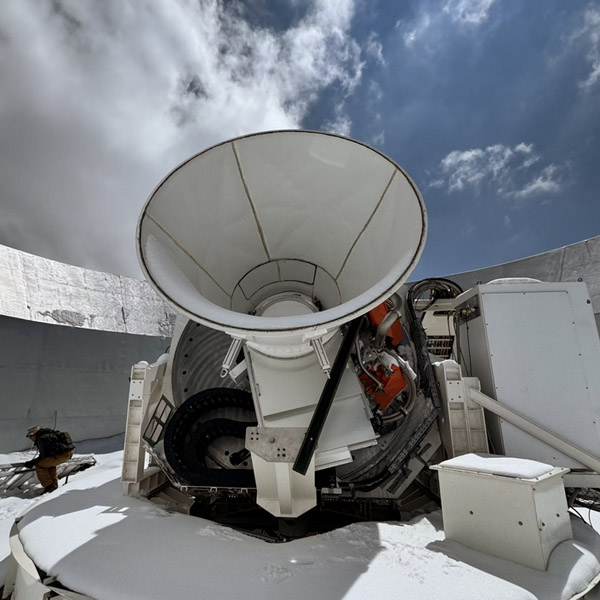
Simons Observatory Begins Hunt for Echoes of the Big Bang in Universe’s Oldest Light The hunt is on. From a vantage point high in the Chilean Andes, cosmologists with the Simons Observatory have begun searching for evidence of what happened in the minuscule fraction of a second that followed the Big Bang…more

-uchicago.edu

“Scientists find an unusual star that hints at a new way stars can die” Scientists have found a star unlike any other one recorded—which may change our picture of how stars die. This unusual star, 13,000 light-years away, has an elemental makeup that suggests it was formed in the aftermath of a more massive star exploding in a way that no existing theory seems to explain. According to everything else we know, the original star should have turned…more

-uchicago.edu

New Webb Telescope data suggests our model of the universe may hold up after all We know many things about our universe, but astronomers are still debating exactly how fast it is expanding. In fact, over the past two decades, two major ways to measure this number—known as the “Hubble constant” —have come up with different answers, leading some to wonder if there was something missing from our model of how the universe works….more

Posted in October 2024, Sidereal Times | Tagged , | Leave a comment

From The Director

by Rex Parker, PhD director@princetonastronomers.org

Not so long ago, back in the fall of 1962 in the early years of the space race, AAAP filed for legal incorporation as a non-profit organization. We have met nearly every month (Sept-June) without fail ever since.  I hope to see you at the meeting in Peyton Hall Sept 10Whether by Zoom or in person, these meetings are the essence of the club and we urge all new and experienced members to participate. There are amazing advances happening in amateur astronomy that we can sort out together.  For this season we will continue Zooming the monthly meetings live from Peyton Hall. We have some exciting programs lined up and hope you will join us on Sept 10 at 7:30pm for the kick-off of the new season in Peyton Hall. 

Posted in September 2024, Sidereal Times | Tagged , | Leave a comment

From The Program Chair

by Victor Davis, Program Chair

September Meeting
The September, 2024 meeting of the AAAP will take place in Peyton Hall on the campus of Princeton University on Tuesday, September 10th at 7:30 PM. As usual, the meeting is open to AAAP members and the public. Participants can join the meeting in-person at Peyton Hall or log in to the Zoom session as early as 7:00 pm to chat informally before the meeting begins. The evening’s guest speaker is Neta Bahcall, Eugene Higgins Professor of Astrophysics at Princeton University.

Options for Attending the Meeting
You may choose to attend the meeting in person or participate via Zoom or YouTube as we’ve been doing for the past few years. (See How to Participate below for details). Due to security concerns, if you log in before the host has set up internet connectivity in Peyton Hall, you may need to wait in the Waiting Room for a few minutes until the host is prepared to admit you into the meeting. You’ll need to unmute yourself to make comments or ask questions. It’s polite, though not required, for you to enable your camera so other participants can see you. A week or so after the meeting, the video of the lecture and Q&A will be posted on AAAP’s public YouTube channel.

There will be no “meet the speaker” dinner for this monthly meeting.


Here’s the anticipated agenda for September, 2024’s monthly meeting of the AAAP:

(Times are approximate)

Getting to Peyton Hall
The parking lots across the street (Ivy Lane) from Peyton Hall are now construction sites, unavailable for parking. We’ve been advised by the administration of the astrophysics department that we should park in the new enclosed parking garage off Fitzrandolph street and walk around the stadium and athletic fields. Here’s a map of the campus and walking routes from the parking garage to Peyton Hall. The map shows the recently completed East Garage. Not shown is an access road Sweet Gum that connects from Faculty Road to an entrance at the lower left corner of the garage. Stadium Road connects from Fitzrandolph Road to another entrance at the opposite corner (and higher level) of the garage. It’s about a 10-15 minute walk from the parking garage to Peyton Hall.

neta@astro.princeton.edu
“Lighting Up the Dark: Where is the Dark Matter?”

Lighting Up the Dark: Where is the Dark Matter?
Gravitational lensing and other phenomena help to show the distribution of mass within galaxies and throughout the universe, revealing the connection between the dark and bright sides of the Universe. We’ve discovered that – at galactic scales – the observed mass distribution extends considerably beyond the dimensions we observe in luminous objects. This trend changes dramatically at scales larger than a few hundred kiloparsecs, where mass, light, and stars trace each other remarkably well. Contrary to earlier expectations, it seems that most of the dark matter in the universe may be located in large halos (~300 Kpc in extent) enveloping and surrounding galaxies as opposed to being found on larger scales throughout galaxy groups, clusters, and other large-scale structures.

How can stars, which represent only about one percent of the total mass of the universe, follow the total mass so well? Where are the rest of the baryons? How is dark matter distributed in the universe, and how does it relate to the underlying distribution of light, stars, and baryons? Prof. Bahcall will discuss the connection between baryons, stars, and mass at large scales, and the implications for galaxy formation, the mass-density of the universe, and cosmology.

Neta Bahcall
Neta A. Bahcall is the Eugene Higgins Professor of Astrophysics at Princeton University. She is Director of the Undergraduate Program in Astrophysics, and past Director of the Council on Science and Technology of Princeton University.

Prof. Bahcall was born in Israel. She earned her PhD from Tel-Aviv University, working in Nuclear Astrophysics under the direction of Prof. William A. Fowler of Caltech. She was the first Head of the Science Program Selection Office and Chief of the General Observer Branch at the Space Telescope Science Institute (STScI) in Baltimore. Prof. Bahcall is a Distinguished Lecturer at various universities and has served on editorial boards of many organizations. She’s an elected member of the National Academy of Sciences, and past-chair of its astronomy section. She has won prestigious awards for her distinguished career in astronomical research. Prof. Bahcall married renowned astrophysicist John N. Bahcall in 1966, and has three children.

Prof. Bahcall’s research work focuses on questions such as: What is the large-scale structure of the universe? How did structure form and evolve? How much dark matter exists in the universe and how is it distributed? What is the nature of dark energy? What is the ultimate fate of our universe? Prof. Bahcall and colleagues’ determination of properties such as the cluster correlation function, the cluster mass function and its evolution, the mass-to-light function from galaxies to superclusters, the geometrical shapes of clusters and of large-scale structure have provided powerful constraints on cosmology, including one of the first determinations of the mass-density of the universe and the amplitude of mass fluctuations. Prof. Bahcall works closely with students and postdoctoral fellows; their work is summarized in more than 300 scientific publications.

How to Participate (Links)

Zoom link here
Meeting ID: 824 7644 0572
Passcode: 104329

YouTube Live link here

Date Featured SpeakerTopic
October 8,
2024
Paul Halpern
phalpern@sju.edu
Prof. Halpern, Professor of Physics at Saint Joseph University in Philadelphia, and author of several popular science books, will discuss his recent book, “The Allure of the Multiverse.” Copies of the book will be on sale at the meeting, and the author will be pleased to sign them. Michael DiMario reviewed this book in the current (September 2024) issue of Sidereal Times.
November 12,
2024
Manuel Cuesta
mecuesta@princeton.edu


Dr. Manuel Cuesta, a Postdoctoral Research Associate in Princeton University’s Department of Astrophysics, will discuss his work on the Parker Solar Probe and other heliophysics projects.
December 10,
2024
Rebecca Boyle
rebecca.b.boyle@gmail.com

Rebecca Boyle, science writer, essayist, and Contributing Editor to Scientific American, will discuss her new book, “Our Moon: How Earth’s Celestial Companion Transformed the Planet, Guided Evolution, and Made Us Who We Are.”  Suggested by Ira Polans.

As always, members’ comments and suggestions are gratefully accepted and much appreciated.

victor.davis@verizon.net
program@princetonastronomers
(908) 581-1780 cell

Posted in September 2024, Sidereal Times | Tagged , , , , , , | Leave a comment

Book Review

by Rich Sherman

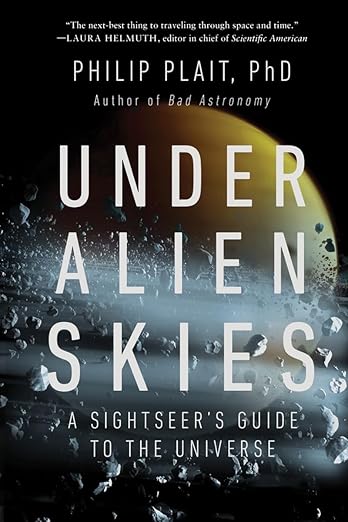
Title: Under Alien Skies

Author: Philip Plait Ph.D. 

Publisher: W. W. Norton & Company

Publication Date: May 2024

Grade:  B+

Hardback $16.04, Paperback $16.38 on Amazon

Total Pages: 336

This is a fun book. The author takes us on a journey around the heavens to tell us what it would be like to visit planets and moons and other objects in space. Dr. Plait makes the science relatable by describing what we would experience and sense on a visit to these bodies—from the difficulty of ambulation on low gravity objects (e.g., the Moon), to the challenge of insomnia living on a planet which orbits multiple stars, to the beautiful blue sunsets on Mars. I enjoyed the book, especially the first half, when we visit the Moon and Mars, Saturn, and Pluto. There are lots of humorous quips which are nice additions to the book. The second half gets a bit slow, as we visit other bodies and eventually slip into a black hole (ouch). At $16 for the hardback, it is hard to go wrong with picking up a copy. I just wished “Under Alien Skies” was about 50 pages shorter. 

Posted in September 2024, Sidereal Times | Tagged , , , | Leave a comment

Flavors of Gravitational Waves

by S. Prasad Ganti

In 2015, gravity waves were detected by LIGO (Laser Interferometer Gravitational-wave Observatory) from the locations at Louisiana and Washington states. This proved one of the significant predictions of Einstein’s General theory of relativity. Generated by very violent incidents like the merger of black holes or neutron stars, the fabric of space gets stretched and compressed, resulting in gravitational waves. Although a great achievement using the most sophisticated and intelligently engineered detectors, it is just the beginning. We just detected one of the many possible flavors of gravitational waves. Other flavors need different kinds of detectors. 

Just like electromagnetic waves have different flavors depending on frequency – some in form light which we can see, some  in form of heat (infrared) which we feel, some biting our skin (ultraviolet), some passing through our bodies but stopped by bones (X-rays) etc., we have different flavors of gravitational waves, depending on the frequency of the waves. The following picture courtesy of “Nature” illustrates the different flavors. Unlike the electromagnetic waves which range from a few hertz to several gigahertz, the gravitational waves top out at megahertz, but extend to very low frequencies, which are difficult to imagine.  

Waves in the water result from a disturbance, like throwing a stone in a pond or the effect of the moon’s gravitational pull on the earth’s seas and oceans. Similarly electromagnetic waves are disturbances of related electrical and magnetic fields in space. Gravity waves are a result of disturbances resulting from very heavy bodies like neutron stars and black holes colliding with each other. 

The frequency of the gravitational waves is determined by the nature of the violent phenomena in the universe. The waves we have detected so far are from the merger of black holes and neutron stars. Fortunately they are far away from us and have occurred long back in the past. We are just detecting them now due to the vast distances involved.  As the picture above shows, we have covered a very small part of the overall spectrum of the frequencies. 

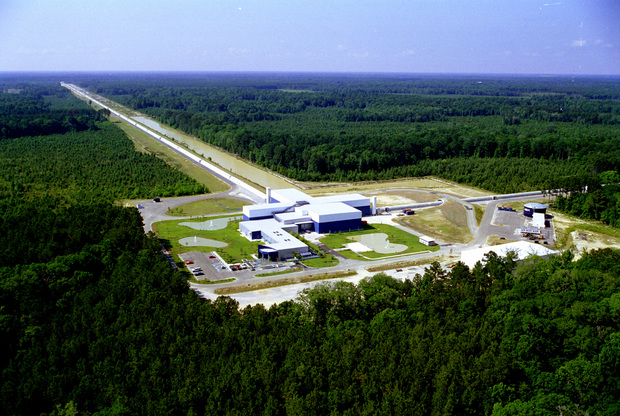
LIGO (Laser Interference Gravitational Observatory) has 2 centers, one in Louisiana and another in Washington state, which has two arms each of 2.5 miles in length and are perpendicular to each other. Laser beams are fired from the common point across the 2 arms. They get reflected back by a mirror at the ends of each of the 2 arms. In case of gravity waves in the vicinity, there will be a slight difference between the timing of the return of the 2 laser beams back to their starting points. The whole setup is very carefully engineered to eliminate the difference from other things like local vibrations. If the returning laser beams are out of sync, they form a wave pattern due to interference. This pattern represents the gravity wave. Shown below is the picture of the Livingston, Louisiana LIGO facility, courtesy Caltech LIGO. 

A third LIGO detector called Virgo is located in Italy. Another one called Kagra is operational in Japan. The next one called LIGO-India is coming up  in India. Multiple detectors confirm the same event and rule out any local influences on each detector. 

Next detector will be a space based one called LISA (laser Interferometer Space Antenna). It will be used to detect lower frequency gravitational waves. It is still in the design phase and is expected to be in place by the mid 2030s. There will be 3 spacecraft in space, about a million and half miles from each other. Each spacecraft simultaneously transmits its own laser signal while receiving signals from each of the other two in the constellation. The incoming and outgoing beams are combined to form an interference pattern. These three such patterns are transmitted to the earth where a signal analysis is done in the computers to detect the presence or absence of gravitational waves. 

Gravitational waves are not continuously transmitted signals like light from stars. They are observed for a few seconds to a few minutes for each violent event taking place in the universe.

 Going further down the spectrum to lower frequencies, another technique called Pulsar Timing Arrays (PTA) will be used. They do not use any laser beams or interference patterns. Instead they use radio signals received from Pulsars, which are rotating neutron stars. These signals are very precise, very narrow and steadily being   transmitted towards the earth. In fact, there are many Pulsars in the Universe. Only those whose pencil-like beams are directed towards the earth can be observed. Any presence of gravitational waves will cause some irregularities in the pulses. Otherwise these pulses are very precise like the atomic clocks on the earth.  

For this detection to work, the existing radio telescopes like the Greenbank, FAST (China), GMRT (India) and Parkes (Australia) are being roped in. Very fine tuned and precise radio receivers are used to receive the pulses. All the known sources of noise and errors are filtered out. The calibration process itself takes a year or more. And all the participating radio telescopes form an array. In the future, gravitational waves may be found using this technique. The array is getting ready to be used. 

Lower down the spectrum scale, the gravitational waves may be found in the patterns of CMB (Cosmic Microwave Background) radiation. Which is basically an afterglow from the birth of the Universe at the time of the Big Bang. Since the waves may be stretched in one direction rather than the other, the radiation would be polarized. No such detections have been made yet. But the future looks promising.  

These exciting technologies will tell us more about the different flavors of the gravitational waves. Multi messenger astronomy which includes gravitational waves is really important. There are some limitations of the electromagnetic radiation which could not have escaped the first 400,000 years after the Big Bang when the cosmic fog consisting of electrons and quarks prevailed. No other telescope can view these conditions. Gravity would have escaped those conditions and could be detected using gravitational wave detectors. The next chapter of such discoveries is awaiting us.

Posted in September 2024, Sidereal Times | Tagged , | Leave a comment