For many reasons I’m sure, I have been unable to observe any comet, either visually or with photography, with the naked eye, binoculars, iPhone cameras, DSLRs, telescopes with eyepieces, or telescopes with cameras. This condition has prevailed for decades. Recently everybody reports seeing C-2023 A3, and some show me pictures they took on their phones quite effortlessly, even neighbors who are virtually never astronomers. It truly makes me feel as if I were the victim of some nefarious “no comets for you!” curse.
Tonight I took my little ZWO Seestar S50 to a school in nearby Robbinsville to support a AAAP outreach event for a Girl Scout troop. Not too cold yet, and fairly decent skies, I was hopeful to share some of the DSOs (Deep Sky Objects) it captures so handily. I have not yet worked out why it has trouble with the first target and needs manual pointing, but from then it’s spot on. After struggling a bit trying for Venus as it slipped into the trees, Saturn was centered on the screen, and I figured what the heck, why not take one more stab at that #*$& comet?
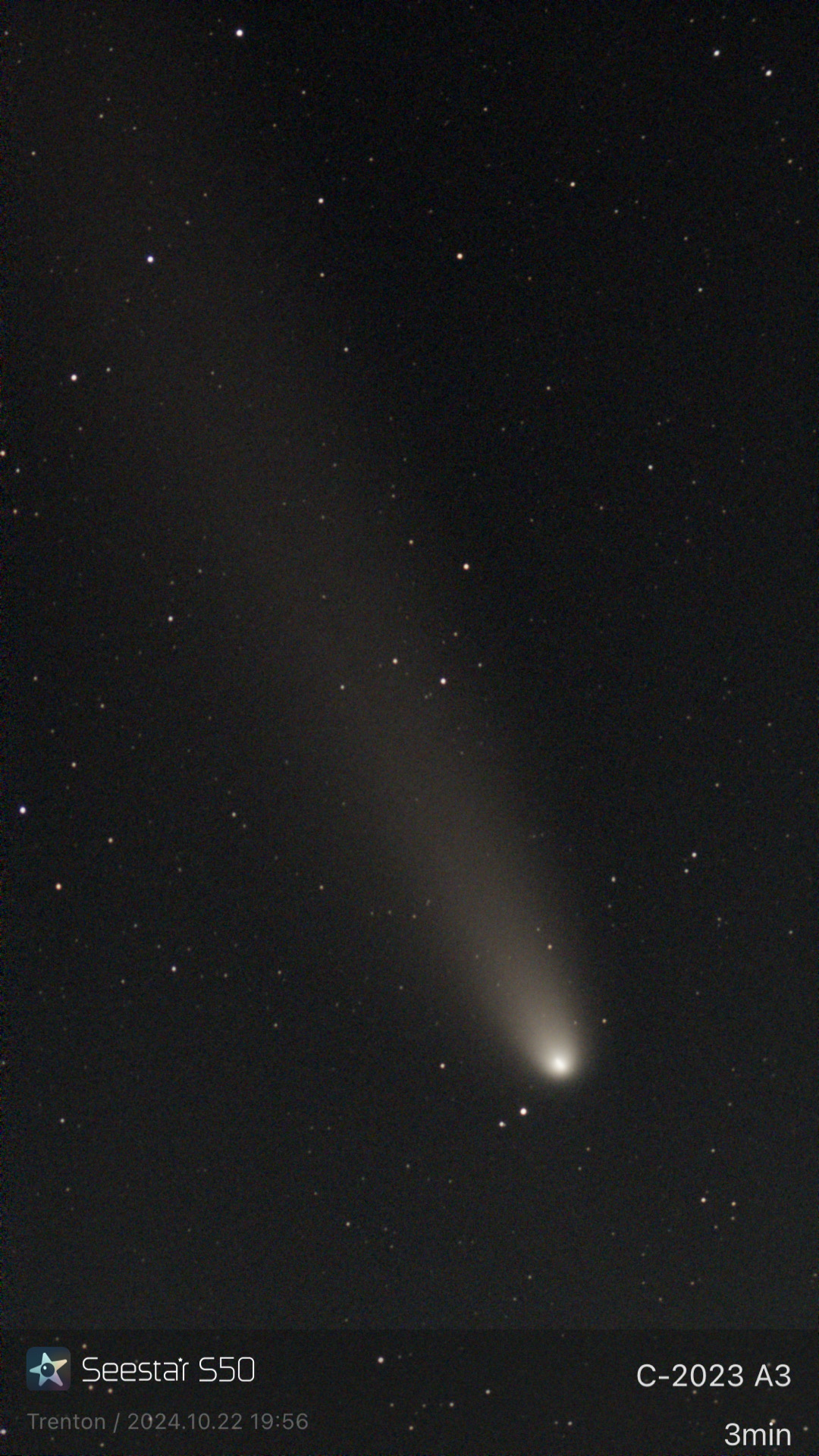
And there it was, blooming from a tiny speck as the 10 second images stacked in what ZWO calls “enhancing.” It was a popular spectacle, on both my iPhone and iPad, when intently searching the night sky clearly showed a big, fat nuthin’.
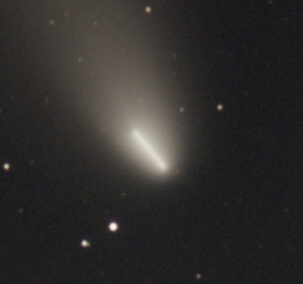
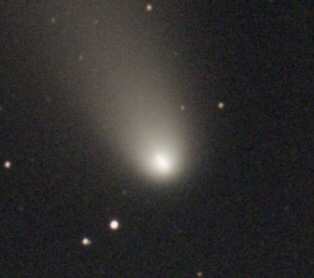
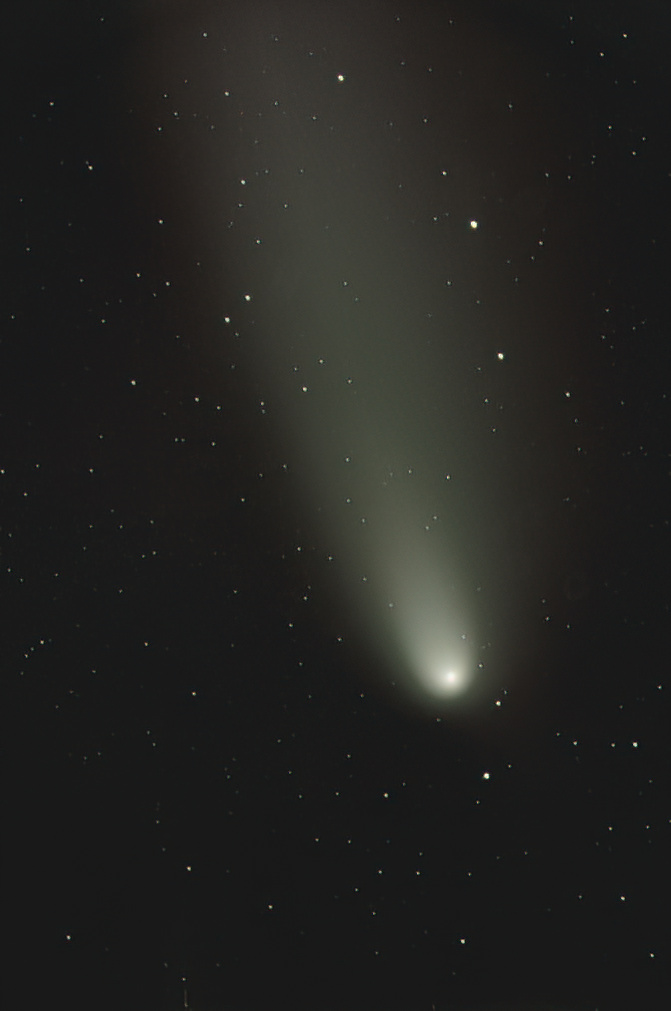
The view was reframed, moving the core down from center to better show the tail, and the stack restarted. While the tail did intensify as the images accumulated, I noticed that the core “extended” into a bar. My first thought was field rotation, that bane of alt-az mounts with longer exposures. What little I understand about it seems to involve a degrading of the edges of the field, not this growing bar, with the stars in the background staying pretty circular, at least by EAA (Electronically Assisted Astronomy) standards. Those far more capable at this stuff can chime in, but I conclude that the bar shows the movement of the comet away from us over the duration of the total exposure. Instead of a fault with the image, it’s actually some neat and, to me, unexpected evidence.
The smaller pictures on the side are enlargements of the core at 3, 6, and 13 minutes of exposure. Even the 3 minute one is less than round.
The leaders and parents were more excited than the scouts about what the five of us were able to show them, but I’m convinced that the best rewards of the night came to me.
As you can see, anyone can do it. Grab whatever binoculars or telescope you have, and bring your enthusiasm to an outreach event.
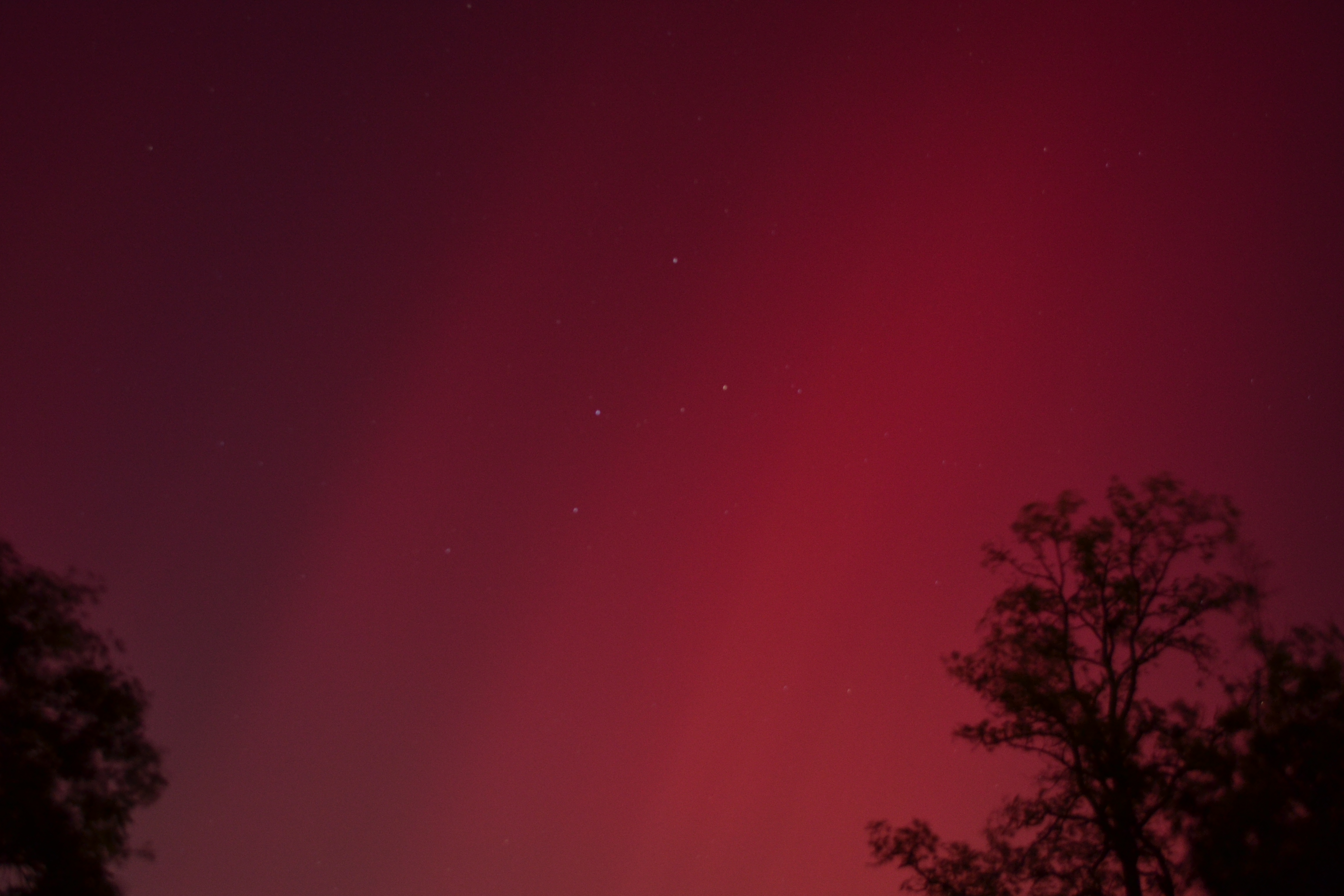
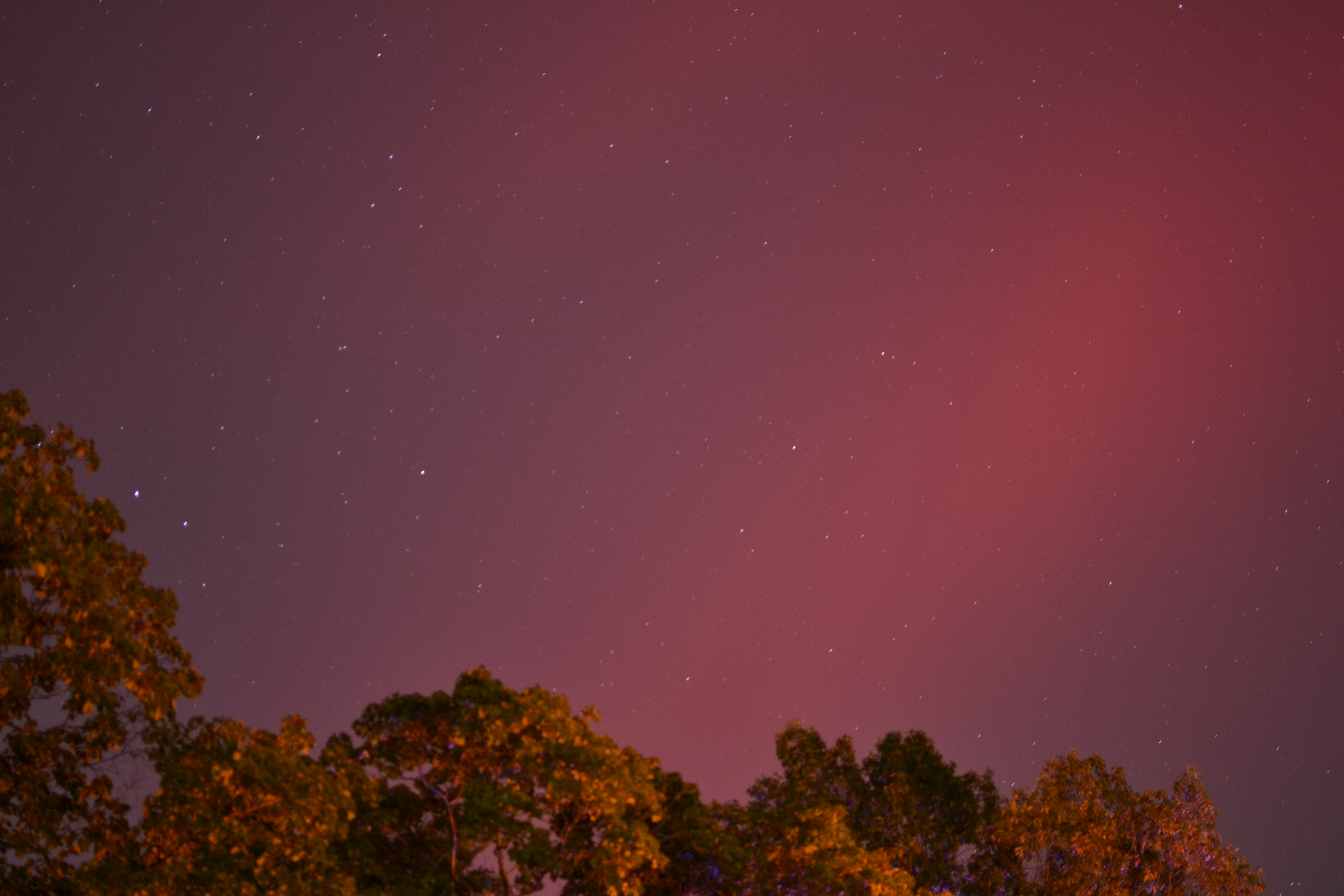
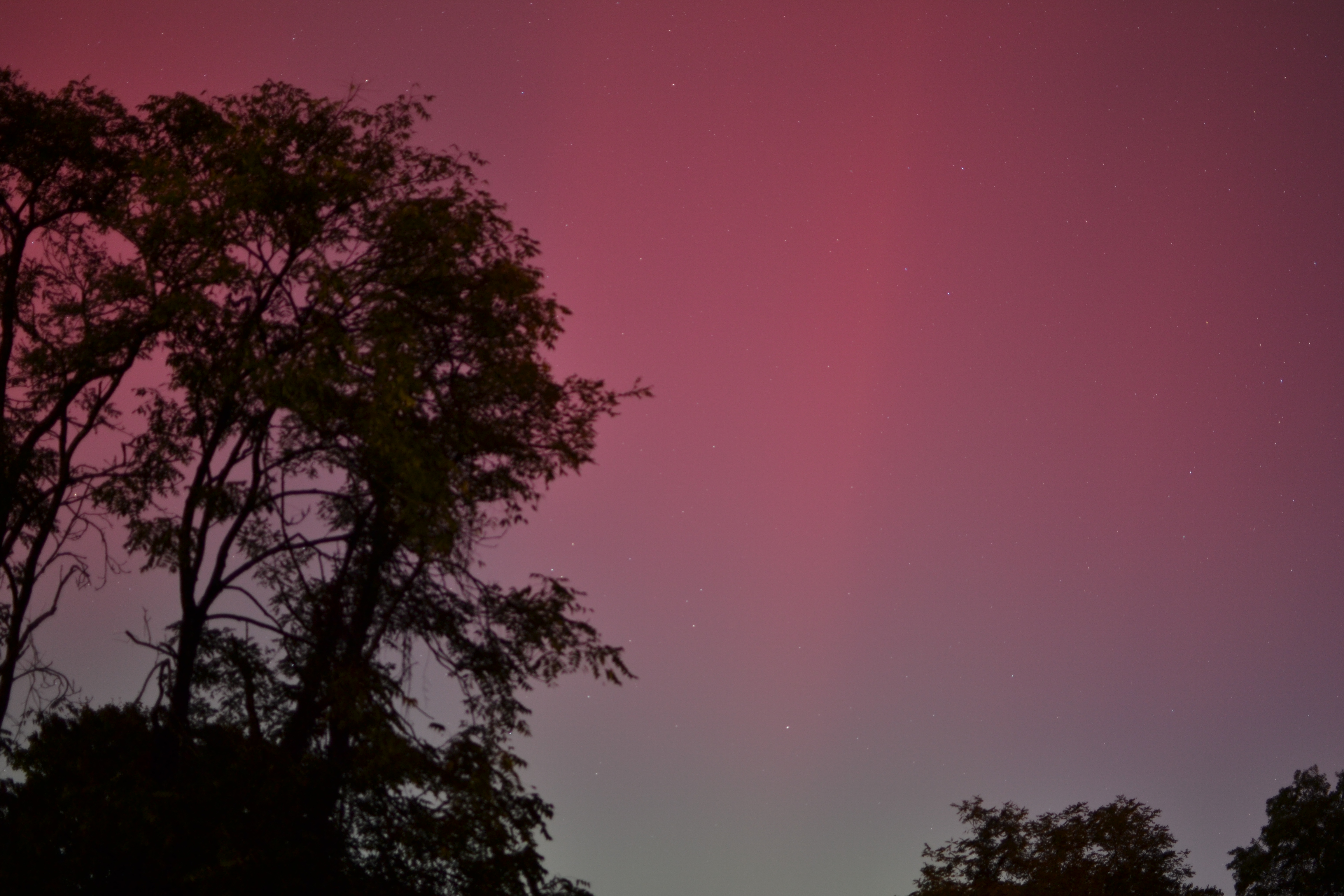
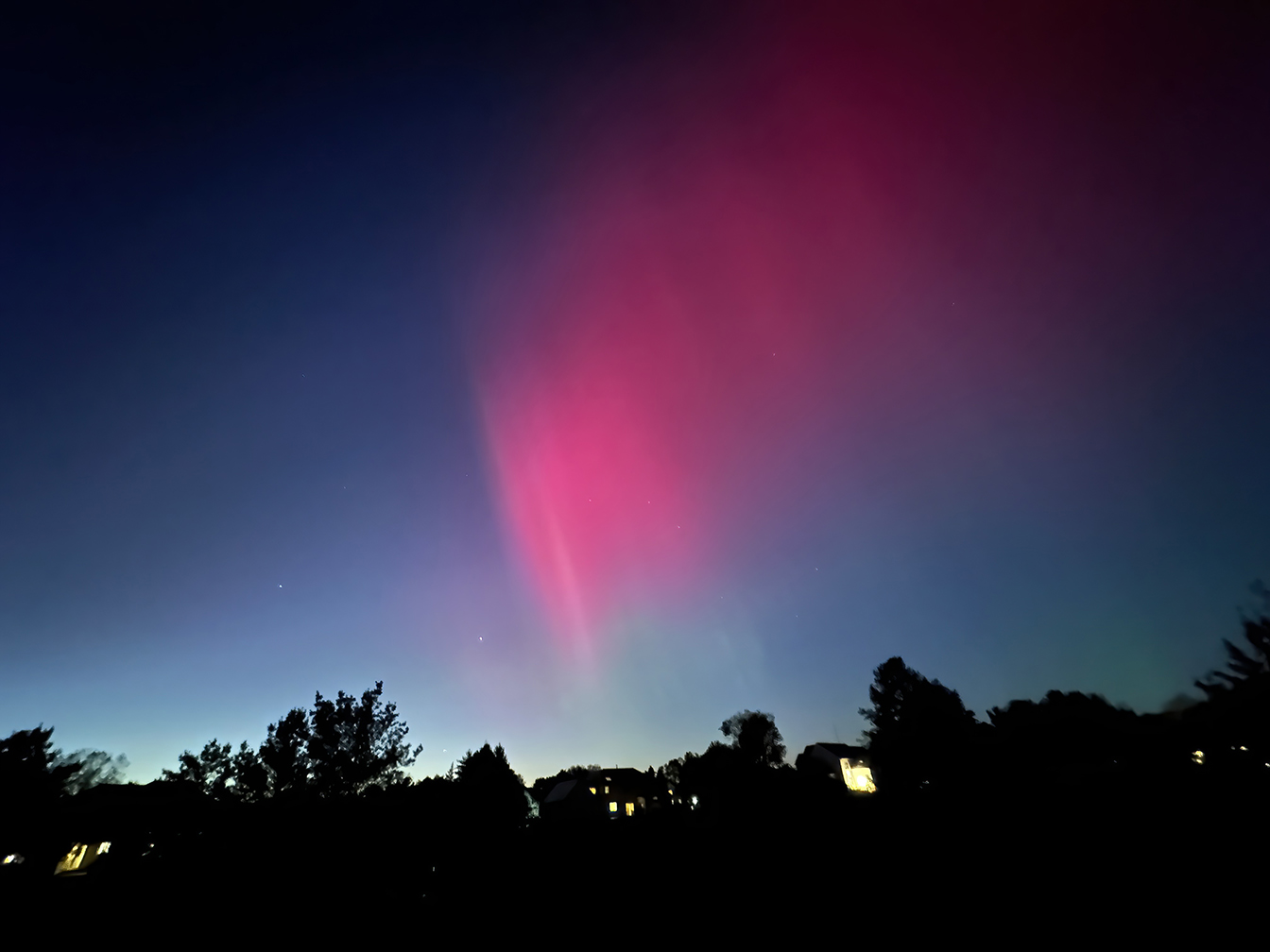
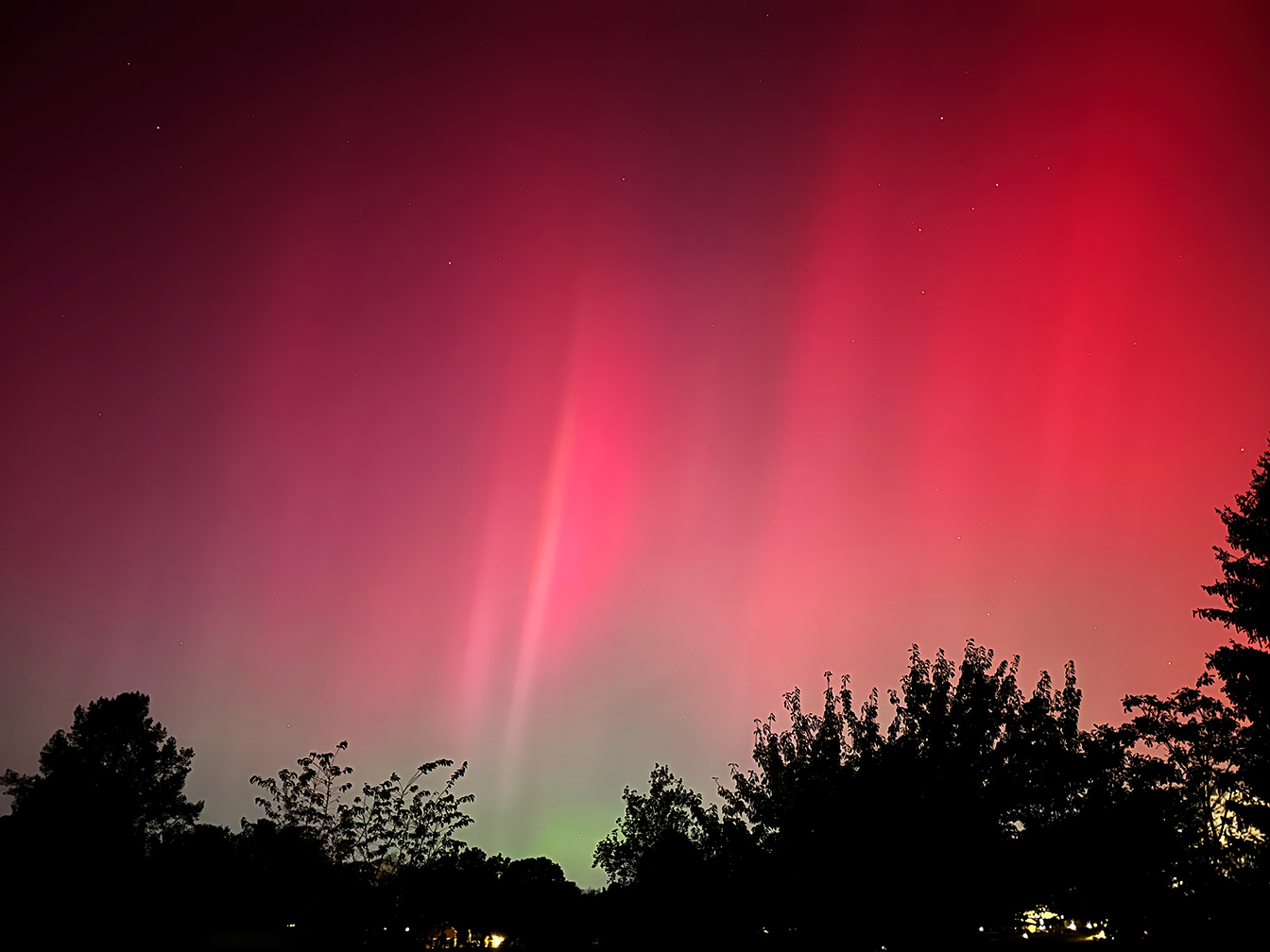
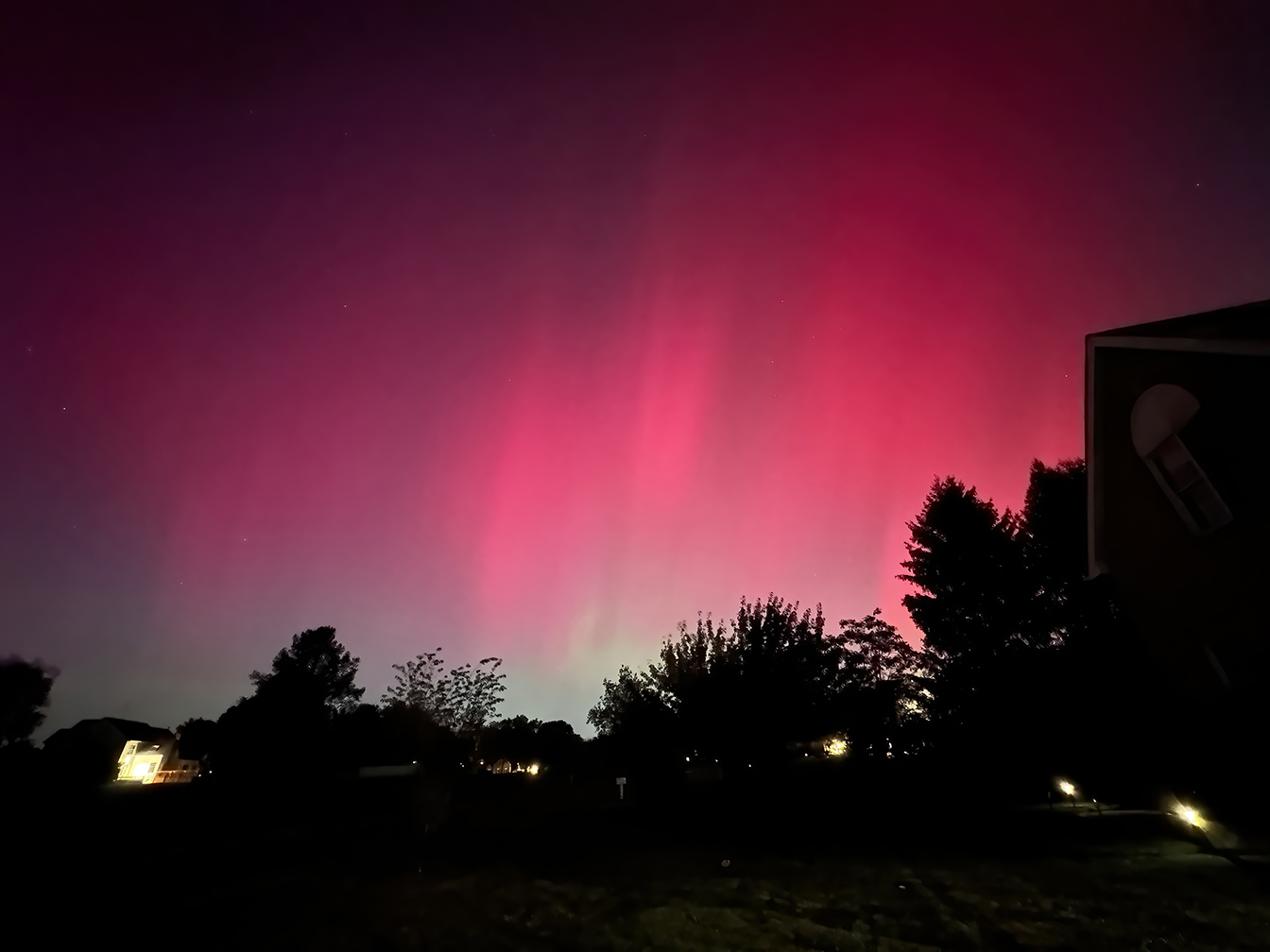
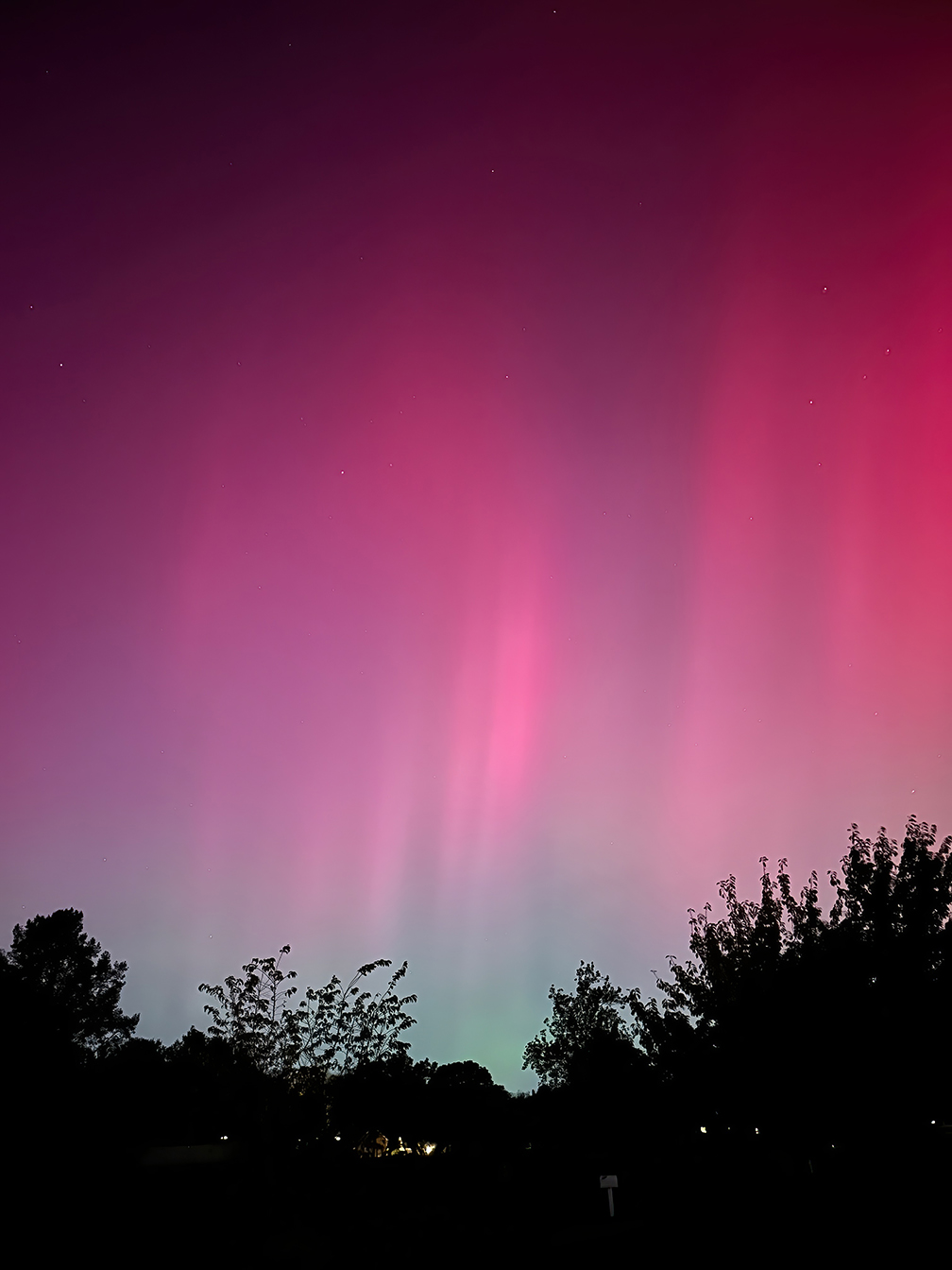
After waiting my whole life to see auroras, they finally came to me! Here are some of the better shots I got from my backyard in Crosswicks, NJ.
I worked as a musician in Alaska for six months and never saw one display. Imagine my excitement and delight when all I did was walk out the back door and see them directly above my house here in New Jersey!
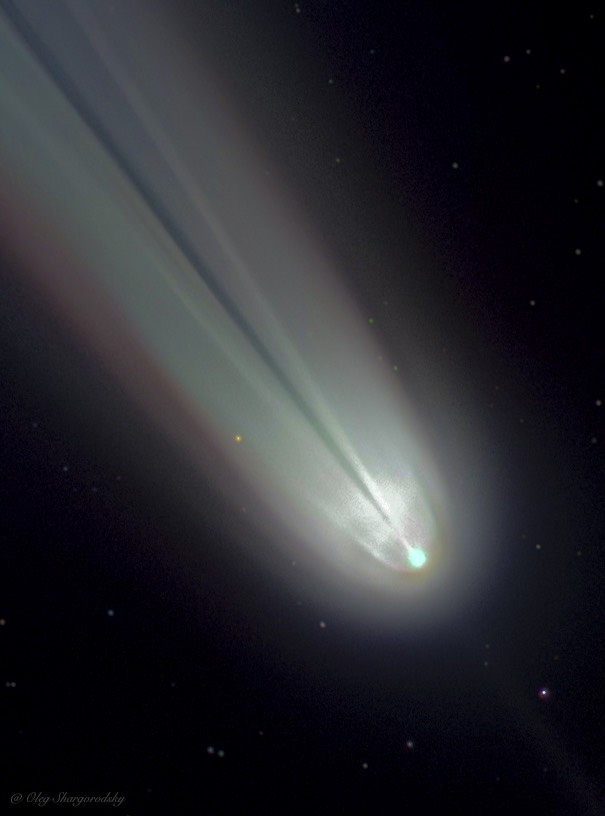
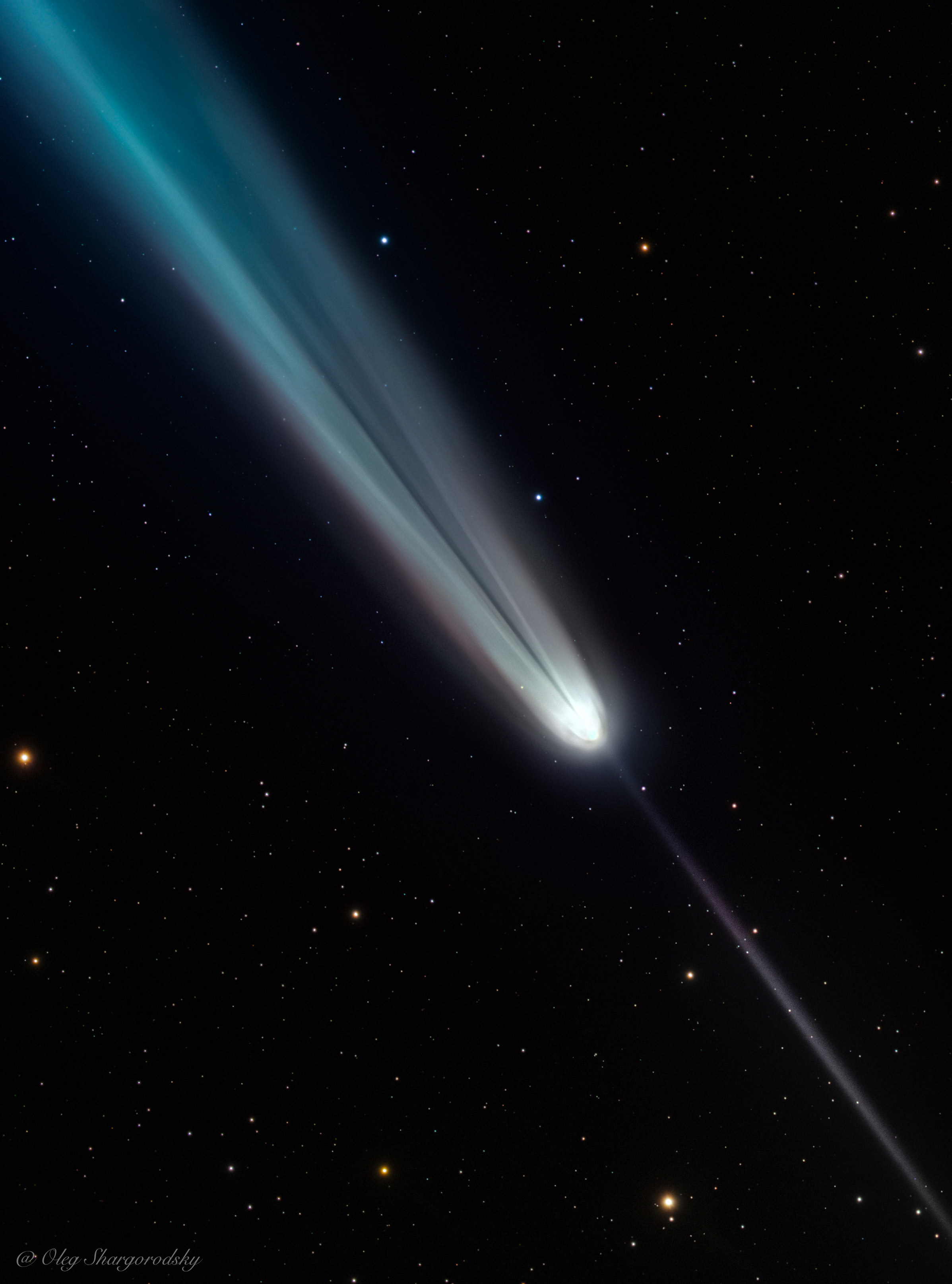
Oleg Shargorodsky C/2023 A3 (Tsuchinshan–ATLAS) comet Location: Van Sant Airport Date: Wednesday, October 16th Equipment: iOptron CEM40 eq mount ASKAR FRA600 Quintuplet ASKAR 0.7x f/3.9 Full Frame Reducer ZWO ASl2600mc pro ZWO ASI 120MM-mini ZWO EAF ASIAIR Plus Filters: None Processing: Pixinsight, Lightroom
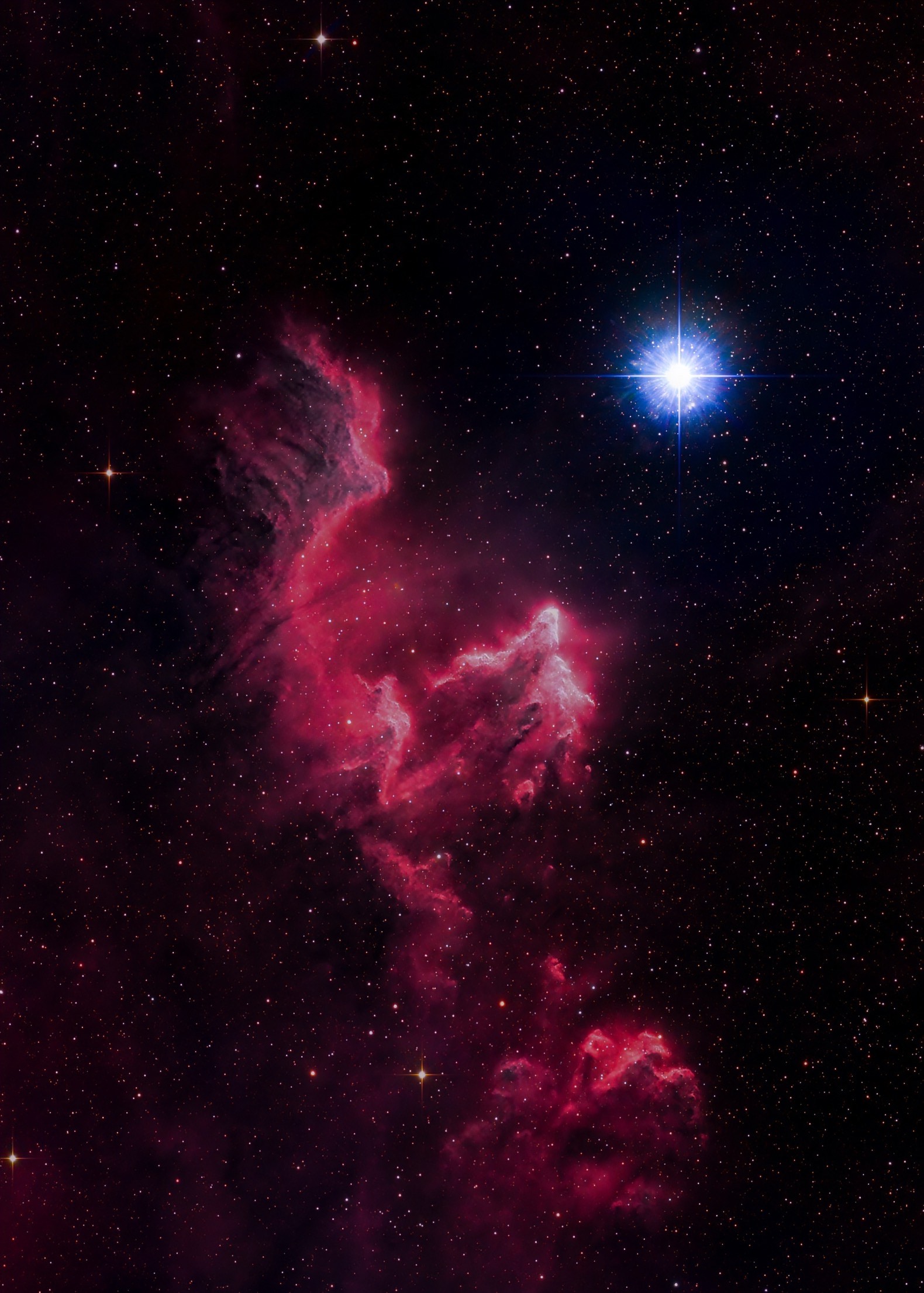
IC63 Location: Feasterville PA Equipment: iOptron CEM40 eq mount ASKAR FRA600 Quintuplet ASKAR 0.7x f/3.9 Full Frame Reducer ZWO ASl2600mc pro ZWO ASI 120MM-mini ZWO EAF ASIAIR Plus Filters: Antlia ALP-T Dual Narrowband OIII (5nm) & H-a (5nm) Processing: Pixinsight, Lightroom
Robert Vanderbei Comet Tsuchinshan 7:38-8:09 pm, October 20 2024. Telescope: 10″ Ritchey-Chretien. Camera: ZWO ASI294MC-Pro. Exposure: 15 second exposures auto-stacked every 1-minute. 26 minutes total.
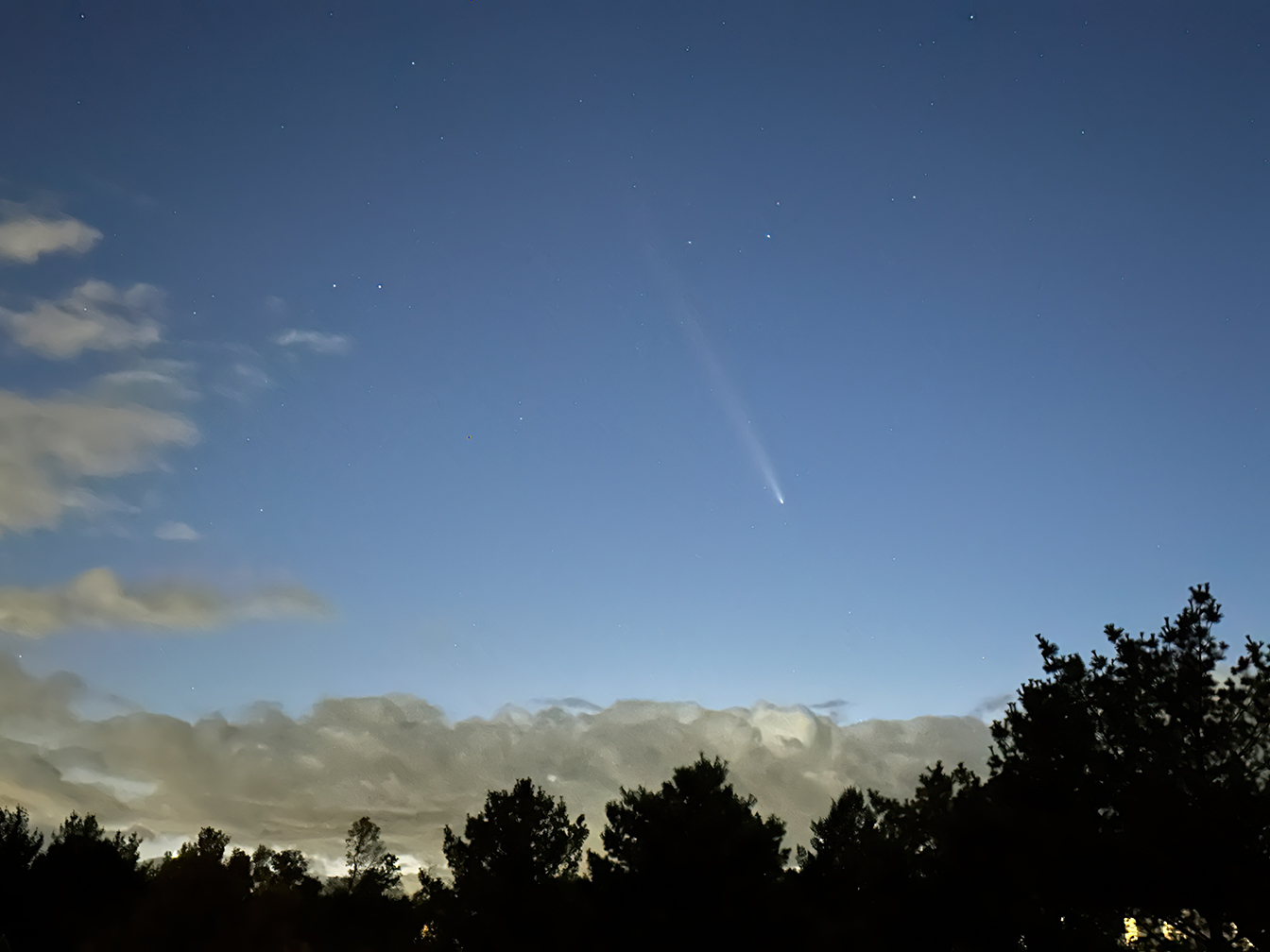
7:17 pm, October 15 2024. iPhone14 Pro. 3-second dark mode image.
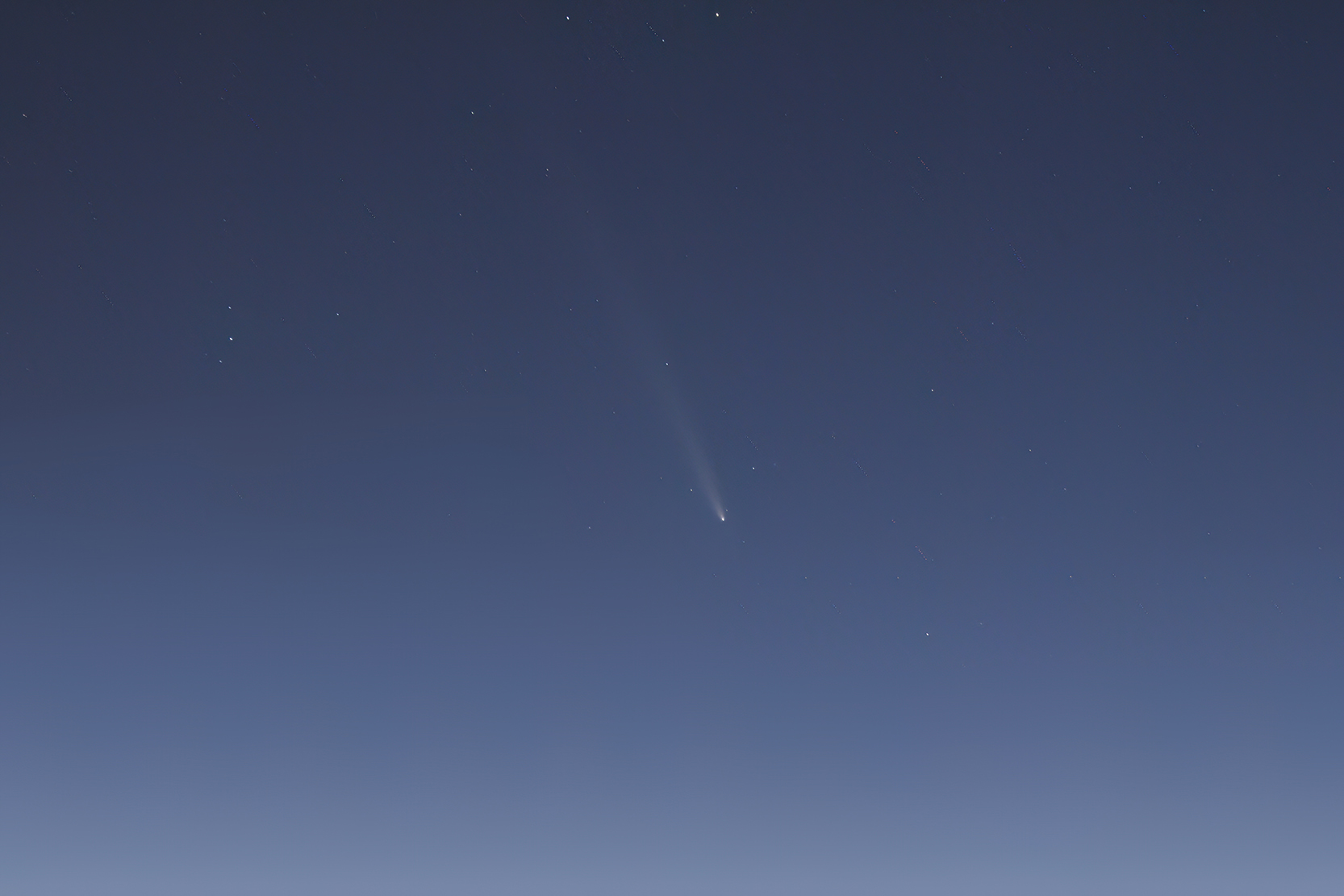
7:34 pm, October 15 2024. Canon T2i DSLR. Stack of 8 6-second exposures at ISO 1600.
Robert Vanderbei Aurora Borealis Oct. 11 2024 Pictures were taken in the early evening using an iPhone 14 Pro camera in Night Mode.
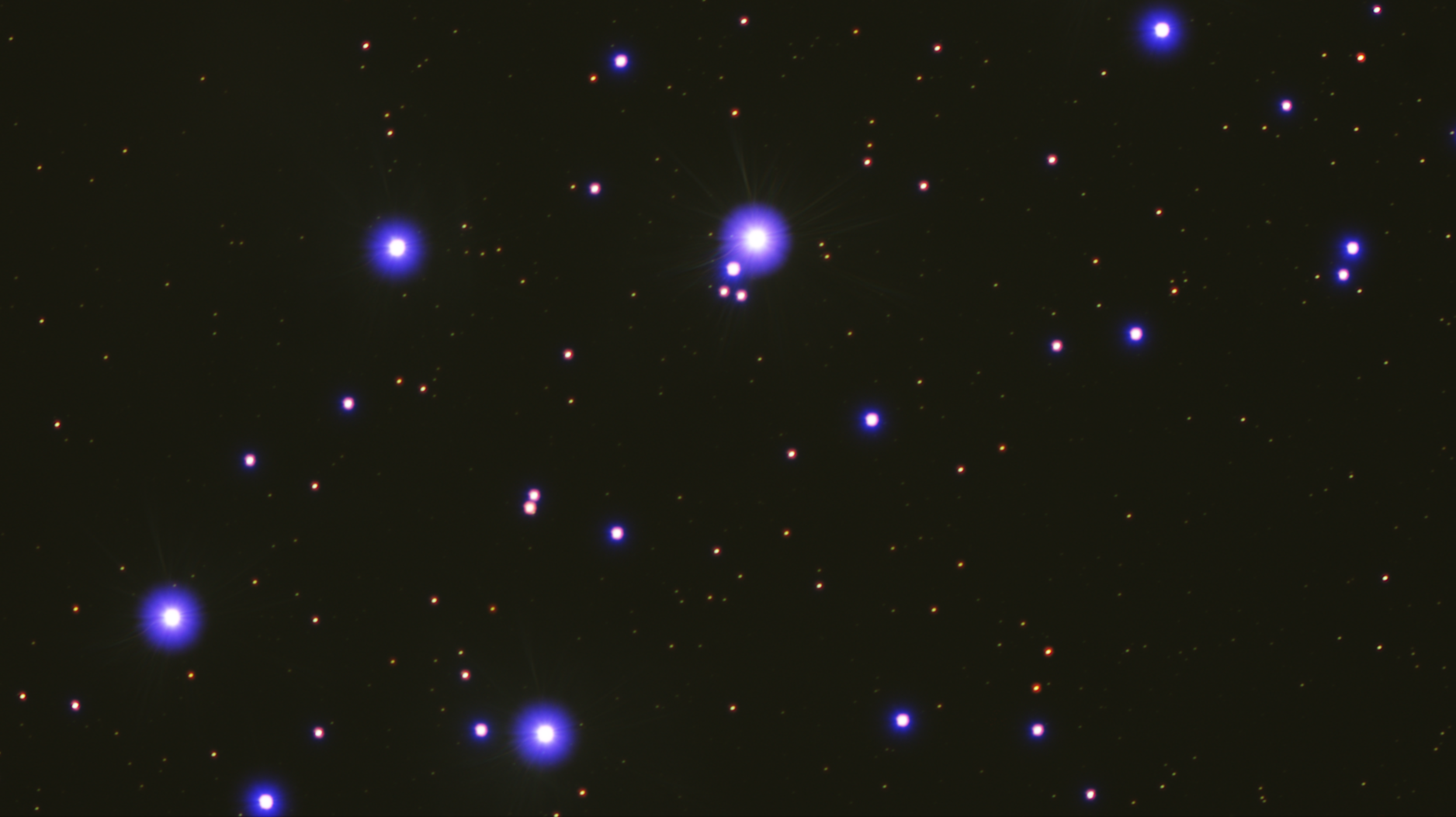
D.A. Opdyke Pleaides 10/25/24 11pm est SvBony SV48P Ota SvBony SV705C imaging camera SvBony SV165 guide scope SvBony SV 905C guide camera Gemini Autofocuser Pro Skywatcher AZ-GTI with EQ wedge in EQ mode. NINA and Sharp Cap HP Mini computer
Observations with the LOFAR (Low Frequency Array) radio telescope last year showed that first generation Starlink satellites emit unintended radio waves that can hinder astronomical observations. New observations with the LOFAR radio telescope, the biggest radio telescope on Earth observing at low frequencies, have shown that the second generation ’V2-mini’ Starlink satellites emit up to 32 times brighter unintended radio waves than satellites from the previous generation, potentially blinding radio telescopes and crippling vital research of the Universe.
In recent years, the number of satellites launched into Low Earth Orbit (LEO) has skyrocketed, driven primarily by the rapid commercialization of space and advancements in satellite technology. Since 2019, companies like SpaceX and OneWeb have launched hundreds to thousands of satellites, particularly for communication purposes. Plans show that the number of satellites launched into orbit could surpass 100,000 by the end of the decade. The escalation in radio wave emissions from satellites in LEO raises serious concerns for the future of astronomical research.
This study was conducted using the LOFAR radio telescope, which involved two extensive one-hour observation sessions on July 19, 2024, covering radio frequencies above and below the FM broadcast band used by radio stations that you receive with your household radio. During these observations, the team detected unintended electromagnetic radiation (UEMR) from almost all the Starlink satellites observed, including both first-generation and second-generation satellites.
The video shows the radio sky above a LOFAR station at wavelengths of 5 meters. The left-hand plot shows the actual data, with the brightest radio sources labelled (where Cassiopeia A is the remnant of a supernova in our Galaxy, while Cygnus A and Virgo A are galaxies outside of our own). The right-hand plot shows the data with the median pixel value subtracted, which highlights variations in brightness. At this radio wavelength we see scintillation where sources vary over time, like stars twinkling at night. Starlink satellites are seen as sources moving across the sky, matching predictions from publicly available orbital elements (red signs).
“With LOFAR we have started a program to monitor unintended emission from satellites belonging to different constellations, and our observations show that the second-generation Starlink satellites emit stronger emission and do so over a larger range of radio frequencies, compared to the first-generation satellites”, says Cees Bassa from ASTRON (the Netherlands Institute for Radio Astronomy), lead author of the study.
The analysis revealed that these newer satellites emit up to 32 times brighter unintended radio waves compared to the first generation, with levels potentially exceeding internationally regulated thresholds for interference set for intentional emissions and even more relaxed terrestrial electromagnetic compatibility standards.
“Compared to the faintest astrophysical sources that we observe with LOFAR, UEMR from Starlink satellites is 10 million times brighter. This difference is similar to the faintest stars visible to the naked eye and the brightness of the full Moon. Since SpaceX is launching about 40 second-generation Starlink satellites every week, this problem is becoming increasingly worse,” adds Cees Bassa.”
This research highlights the necessity for stricter regulations surrounding satellite unintended radiation to preserve the sanctity of radio astronomical observations, which are vital for understanding the Universe and our place within it. The study serves as a clarion call for action to safeguard the future of astronomy in the face of advancing satellite technology.
“Humanity is clearly approaching an inflexion point where we need to take action to preserve our sky as a window to explore the Universe from Earth. Satellite companies are not interested in producing this unintended radiation, so minimizing it should also be a priority in their sustainable space policies,” says Federico Di Vruno from the SKA Observatory. “Starlink is not the only big player in LEO, but they have a chance to set the standard here,” he continues.
The researchers emphasize that while the second-generation satellites have been designed to enhance connectivity and provide communication services, the unintended radio emissions are a growing threat to the integrity of astronomical observations. As the consequences of such interference become increasingly evident, collaboration between satellite companies, regulatory agencies, and the astronomical community is essential to devise effective mitigation strategies.
In the Netherlands, one of the most densely populated countries in Europe, ASTRON operates LOFAR, the most sensitive low-frequency telescope in the world. This is only possible as a result of the regulatory support of the Netherlands local, provincial and national agencies. Municipalities consult ASTRON before developments and support the institute advising others.
Prof. Jessica Dempsey, general and scientific director of ASTRON: “Since LOFAR began, more than a decade ago – when we were told we would soon struggle to observe because of radio interference – the regulation support and a productive collaboration with industry, totalling over 1000 individual mitigations – have been done in collaborations with dozens of groups, companies, infrastructures, agencies and individuals across the country.”
“And this relationship is not just one-sided. These clever techniques to find faint signals in the Universe have returned technology advancements to industry and society – from GPS to WiFi. We don’t just co-exist, we thrive together. We have the solutions for this symbiosis in space as well – we just need the regulators to support us, and the industry to meet us half-way. Without mitigations, very soon the only constellations we will see will be human-made.”
Ion engines could take us to the solar gravitational lens in less than 13 years, suggests paper Sending an object to another star is still the stuff of science fiction. But some concrete missions could get us at least part way there. These “interstellar precursor missions” include a trip to the solar gravitational lens point at 550 AU from the sun—farther than any artificial object…more
-phys.org
Saturn’s moon Titan has insulating methane-rich crust up to six miles thick Saturn’s largest moon, Titan, is the only place other than Earth known to have an atmosphere and liquids in the form of rivers, lakes and seas on its surface. Because of its extremely cold temperature, the liquids on Titan are made of hydrocarbons…more
-phys.org
Discovery of carbon-storing molecules in a distant interstellar cloud may shed light on how our own solar system formed A team led by researchers at MIT has discovered that a distant interstellar cloud contains an abundance of pyrene, a type of large, carbon-containing molecule known as a polycyclic aromatic hydrocarbon (PAH)…more
-NASA
New Team to Assess NASA’s Mars Sample Return Architecture Proposals NASA announced Wednesday a new strategy review team will assess potential architecture adjustments for the agency’s Mars Sample Return Program, which aims to bring back scientifically selected samples from Mars, and is a key step in NASA’s quest to better understand our solar system and help answer whether we are alone in the universe…more
-NYT
This Distant Planet May Host a Moon That’s Spewing a Volcanic Cloud Astronomers have identified thousands of planets orbiting distant stars using sophisticated observatories. But there’s something they have yet to spot with any certainty: moons around those worlds. Now a recent discovery around a Saturn-size planet 635 light-years from Earth offers one of the best potential clues…more
-NYT
NASA Launches Europa Clipper to Explore an Ocean Moon’s Habitability Europa Clipper, the biggest interplanetary spacecraft that NASA has ever built, lifted off from the Kennedy Space Center in Florida early Monday afternoon. The mission will tackle one of biology’s core questions: Can life exist anywhere else in our solar system?…more
independent.co.uk
Nasa spacecraft receives laser signal from 290 million miles awayNasa has successfully sent a laser signal about 290 million miles, smashing previous records and potentially transforming our exploration of the solar system. The milestone was reached by Nasa’s Deep Space Optical Communications technology demonstration, which is exploring whether it is possible to use lasers…more
-NYT
Jupiter’s Great Red Spot Moves Like the Solar System’s Biggest Kickball The Great Red Spot of Jupiter is one of the solar system’s most astonishing marvels. An elliptical storm with inky swirls of burnt orange and dulled copper, it is longer thanNasa spacecraft receives laser signal from 290 million miles away the Earth is wide, and its winds screech through the tops of the planet’s clouds at 400 miles per hour…more
-NYT
Unexplained Enigmas in the Orion Nebula May Be Victims of Stellar Bullying Some 1,350 light-years from Earth, astronomers detected strange pairs of unexplained objects orbiting in the Orion Nebula. Since then, about 12 months ago, other scientists have proposed a new potential explanation for these apparitions, while other researchers wonder whether they exist at all…more
-NYT
Solar Storm Buffets Earth and Is Likely to Generate Light Show An eruption of particles from the sun collided with Earth on Thursday morning. The Space Weather Prediction Center, part of the National Oceanic and Atmospheric Administration, reported that the solar particles, which were ejected on Tuesday, October 8 evening, arrived at 11:15 a.m….more
-NYT
How to See the ‘Once-in-a-Lifetime’ Comet Flaring in Our Night Skies Look up, stargazers: A comet discovered last year is getting brighter as it makes its closest pass by Earth later this week, and this could be humanity’s last chance to see the comet before it disappears into the cosmic depths…more
by Rex Parker, PhD director@princetonastronomers.org
Meeting Oct 8 at Peyton Hall. We hope to see you in person at Peyton Hall on campus for the next monthly meeting on October 8 (7;30pm). The guest speaker is widely read author and physicist Paul Halpern, Professor of Physics at Saint Joseph’s University in Philadelphia. He’ll discuss his latest book, published in 2024, “The Allure of the Multiverse: Extra Dimensions, Other Worlds, and Parallel Universes.” See Victor’s section below for more information about the program.
Paul Halpern’s book is getting good reviews on Amazon and is one of the most comprehensible books about a topic which I personally find utterly confusing. So here is our chance to come to grips with that part of theoretical physics and cosmology that has stirred the pot a great deal over the past couple decades.
Please remember that we aim to highlight member astro activities in the second half of our monthly meetings, after the break. Several topics are in circulation, including member results for the observing challenges — imaging Saturn, the lunar south pole craters, and observing and imaging the soon-to-go-nova star T CrB. We’ll add a new observing challenge this month – comet C/2023 A3 Tsuchinshan–ATLAS. As the news media are announcing, this might become a major bright comet visible to the unaided eye as it rounds the sun on its orbit in the next few weeks We also reserve a slot after the break for the Unjournal Club, in which members have the floor (and screen) to discuss recent astro-related articles from the journals and magazines or other personal astronomy experiences and projects to share with fellow members. Just shoot an email to me or our Program Chair to hold a place on the agenda Oct. 8. Also remember that if you want to share some images, experience has shown that it’s best (for connection with Peyton Hall projector and Zoom input) to bring them on a USB drive to insert into my already-connected laptop to show during the meeting.
AAAP’s Impressive and Growing YouTube Channel. You may have noticed at our monthly meetings at Peyton Hall simulcast live via Zoom that we are also recording the sessions in Zoom. What you may not realize is that these are being converted and uploaded to YouTube, posted on the AAAP YouTube Channel for members, the public, and posterity. Here’s the link: https://www.youtube.com/@amateurastronomersassociat1439 These videos are a great way to view the meetings you may have missed or review parts that may have been hard to grasp, since some of our topics do go pretty deep. The AAAP YouTube channel currently offers 62 videos produced inside AAAP the last few years (thanks to Victor, Dave, and Ira). The channel has gathered over 9220 views to date. Beyond recordings of the meetings and guest speaker presentations, it features how-to videos, cool celestial events from the observatory, astro video sessions from member telescopes, and interviews with knowledgeable club members.
The October, 2024 meeting of the AAAP will take place in Peyton Hall on the campus of Princeton University on Tuesday, October 8th at 7:30 PM. As usual, the meeting is open to AAAP members and the public. Participants can join the meeting in-person at Peyton Hall or log in to the Zoom session as early as 7:00 pm to chat informally before the meeting begins. The evening’s guest speaker is Paul Halpern, Professor of Physics at Saint Joseph’s University. His talk will be based on his book “The Allure of the Multiverse: Extra Dimensions, Other Worlds, and Parallel Universes.”
Options for Attending the Meeting
You may choose to attend the meeting in person or participate via Zoom or YouTube as we’ve been doing for the past few years. (See How to Participate below for details). Due to security concerns, if you log in before the host has set up internet connectivity in Peyton Hall, you may need to wait in the Waiting Room for a few minutes until the host is prepared to admit you into the meeting. You’ll need to unmute yourself to make comments or ask questions. It’s polite, though not required, for you to enable your camera so other participants can see you. A week or so after the meeting, the video of the lecture and Q&A will be posted on AAAP’s public YouTube channel.
The traditional “meet the speaker” dinner will be held at Winberie’s Restaurant & Bar, One Palmer Square, Princeton, NJ. Reservation is for 5:45 pm. Please advise the Program Chair if you plan to attend.
Princeton bookseller Labyrinth Books will be selling copies of Prof. Halpern’s book in the lobby, which he’ll be happy to sign after his presentation.
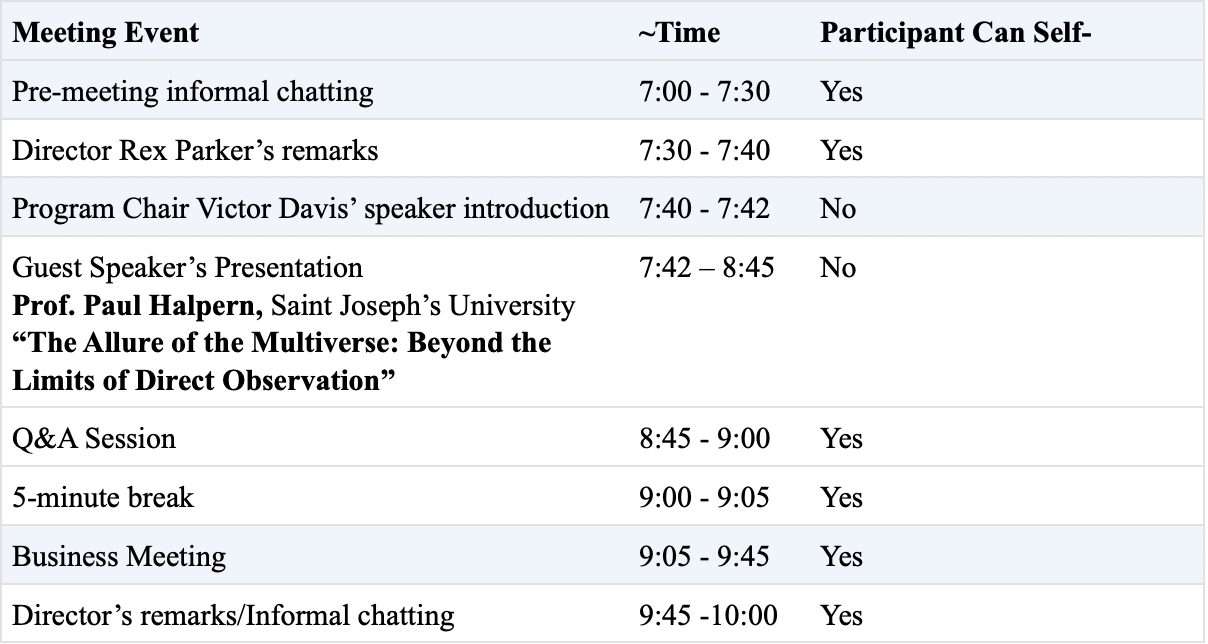
Here’s the anticipated agenda for October, 2024’s monthly meeting of the AAAP:
(Times are approximate)
Getting to Peyton Hall The parking lots across the street (Ivy Lane) from Peyton Hall are now construction sites, unavailable for parking. We’ve been advised by the administration of the astrophysics department that we should park in the new enclosed parking garage off Fitzrandolph street and walk around the stadium and athletic fields. Here’s a map of the campus and walking routes from the parking garage to Peyton Hall. The map shows the recently completed East Garage. Not shown is an access road Sweet Gum that connects from Faculty Road to an entrance at the lower left corner of the garage. Stadium Road connects from Fitzrandolph Road to another entrance at the opposite corner (and higher level) of the garage. It’s about a 10-15 minute walk from the parking garage to Peyton Hall.
Featured Speaker: Paul Halpern Professor of Physics Saint Joseph’s University phalpern@sju.edu “The Allure of the Multiverse: Beyond the Limits of Direct Observation”
The Allure of the Multiverse: Beyond the Limits of Direct Observation Given the extent of the observable universe that has yet to be mapped out, some might wonder why some physicists have introduced the concept of a multiverse into their models. This talk will examine why some eminent physicists, such as the late Nobel laureate Steven Weinberg, have been attracted to the idea of the multiverse, and others, such as Princeton cosmologist Paul Steinhardt, have raised significant concerns. We’ll also show how the cultural and scientific ideas of multiverses differ significantly.
Mike DiMario reviewed Prof. Halpern’s latest book (“The Allure of the Multiverse…”) in last month’s edition of Sidereal Times.
Paul Halpern Acclaimed science writer and physicist Dr. Paul Halpern is the author of eighteen popular science books, exploring the subjects of space, time, higher dimensions, dark energy, dark matter, exoplanets, particle physics, and cosmology. The recipient of a Guggenheim Fellowship, a Fulbright Scholarship, and an Athenaeum Literary Award, he has contributed to Nature, Physics Today, Aeon, NOVA’s “The Nature of Reality” physics blog, and Forbes “Starts with a Bang!” He has appeared on numerous radio and television shows including “Future Quest,” “Science Friday,” “Radio Times,” “Coast to Coast AM,” “The Simpsons 20th Anniversary Special,” and C-SPAN’s “BookTV.” Halpern’s latest book, “The Allure of the Multiverse,” describes the controversial history of higher dimensional and parallel universe schemes in science and culture.
Dr. Manuel Cuesta, a Postdoctoral Research Associate in Princeton University’s Department of Astrophysics, will discuss his work on the Parker Solar Probe and other heliophysics projects.
December 10, 2024
Jesse Christiansen christia.ipac.caltech.edu
Dr. Christiansen is Senior Scientist at NASA’s Exoplanet Science Institute at Caltech. She’ll describe her research and the current status of Exoplanet discoveries.
Rebecca Boyle, science writer, essayist, and Contributing Editor to Scientific American, will discuss her new book, “Our Moon: How Earth’s Celestial Companion Transformed the Planet, Guided Evolution, and Made Us Who We Are.” Suggested by Ira Polans.
As always, members’ comments and suggestions are gratefully accepted and much appreciated.
Director Rex Parker opened the meeting in Peyton Hall and on Zoom at 1930 with 38 in attendance.
The first ten minutes of his introduction were missed because the university had failed to arrange for the doors to be unlocked for us and someone had to stand by to admit latecomers.
Rex commented on the astroimaging subgroup and issued two observing and imaging challenges: Comet C/2023 A3, perhaps visible to the naked eye. Saturn, which is now at opposition with its rings nearly edge on.
He reported that the NJAA Open House and Flea Market is on September 14.
Program Chair Victor Davis introduced Princeton Professor Dr Neta Bahcall and her lecture, Lighting Up the Dark: Where is the Dark Matter?
Questions and a break followed her talk. There were 38 in attendance and 49 online.
Rex reconvened the meeting at 2111 with 16 in attendance. He asked “What did you do on your summer vacation?” of an astronomical nature. When no one spoke up he offered that he had been in Munich and saw an orrery very similar in construction and vintage to the Rittenhouse Orrery on the north wall of the central lobby of Peyton Hall.
Assistant Director Bob Vanderbei shared images of the aurora he captured from his home in Harlingen with his iPhone 14. He said the aurora was barely discernable visually but the photo really made it impressive.
Victor reported that he had been approached by an individual seeking a new home for his Meade 16” Newtonian telescope with a pedestal and clock drive. It is an observatory class scope for which we have no room and there was no interest in accepting the donation. A member of the Lehigh Valley club was in attendance and said he would see if they had any interest.
Merchandise Shop Lead Facilitator Rich Sherman pitched summer clothing articles before changing out the listings to winter gear.
It was suggested that we plan some more astrovideo evenings like last year. Observatory Co-Chair Dave Skitt reported that he and Jennifer had been to three stores looking at carpet choices and getting prices. He was considering carpet squares which interlock as an alternative. Discussion ensued and the Board members in attendance (Rex, Bob, Michael, Victor, Dave and Gene) subsequently voted to approve purchase of carpet squares for the observatory in excess of $1000. Dave went on to say he and Jen would be scheduling Keyholder training sessions again soon and he was also interested in setting up a solar observing session.
Secretary Gene Allen reported that Webmaster Jeff Pinyan was making good progress designing the new club website. He said the functionality was truly impressive and detailed just two of them. There is a button on the top of the left hand menu bar on every page that shows the status of the observatory (pending in amber, open in green, and closed in red) and links to the observatory page with the maps and other info. The speaker page has a scrolling band of past speakers across the top that link to their videos.
The meeting was adjourned at 2201.
Submitted by Secretary Gene Allen September 11, 2024
The AAAP Store has been updated with new merchandise for the colder weather. Hoodies, crew neck sweatshirts, long-sleeves, winter beanies? Yup, we got them. We added some new items this year such as the full-zip fleece jackets with embroidered logos, and a nifty carry-all tote.
Three things to note:
Our merchandise store can be accessed through the AAAP website at https://www.princetonastronomy.org/merchandise.html The password is “SiderealTimes” (note S and T are capitalized and there is no space). If you get confused, the password is also found on the AAAP merchandise page (that’s the link you see in the prior sentence).
It takes a couple weeks to receive your items, so if you are doing some HOLIDAY shopping, you’ll want to order before Thanksgiving.
I still have access to summer gear, so if you want a warm weather item, just email me at RJSherman@homtail.com and we can make this happen. Also, if you see an item currently in the store but you want a different COLOR, just email me and we can sort it out.










 Amateur Astronomers Association of Princeton