Minutes of the March 2015 AAAP Meeting

by Jim Poinsett, Secretary

  • Rex welcomed everyone, gave a brief preview of the meeting topics and introduced John Miller.
  • John then introduced the speaker for the evening Dr. Andy Goulding.
  • It was announced the next board meeting will be on March 17th at 6:45 pm at the West Windsor Library. Topics will be the video addition to the observatory and the disposition of the donated equipment.
  • The Mallincam has arrived and a plan is in place to test it with several telescopes to determine which would be the best one to use.
  • Rex brought up the topic of the Night Sky Network and asked if the club was interested in joining it? Requirements were discussed including the possibility of dues. Larry will gather more information and report to the club.
  • The next topic of discussion was the donated equipment and what to do with it. A couple of the scopes will be tried with the Mallincam to see if they are suitable. The topic will be discussed at the board meeting, possibilities include raffle prizes at StarQuest, keeping and loaning out to members and possibly selling and using the money raised for club activities.
  • Gene Ramsey wants to publicize the availability of the club owned 8-inch Dobsonian for use by members. He also included the binocular eyepiece and will publicize them in the next issue of Sidereal times.
  • Gene also wants to test several of the donated eyepieces for use with the Dobsonian.
  • Other activities suggested were:
    • A members-only night at the observatory on a Saturday night during the summer.
    • A trip to Cherry Springs Park in Pennsylvania, weekends suggested were July 17/18, August 15/16 or May 16/17. The new moon weekend in June is already taken by a star party.
    • A field trip to the Naval Observatory in Washington DC. The tours are on Mondays.
    • A trip to Holmdell to see the Bell Labs Horn Antenna.
  • Larry wants to schedule a viewing night for the Washington Crossing Park trustees, perhaps in May during NJ History Day.
  • Super Science Day is May 9th.  The club is looking for volunteers for the club table.
  • A motion was made and seconded to adjourn the meeting.
Posted in April 2015 | Tagged , | Leave a comment

Minutes of the March 17th Board Meeting of the AAAP

by James Poinsett, Secretary

  • The meeting was called to order at 6:45 pm.  The entire board except for Kate Otto was in attendance as well as several members of the club.
  • The first item of business was replacing Kate Otto as Program Chair.  Her new position and move to NY City has made it impossible for her to finish her term. John Miller, Ira Polans and Prassad Ganti will form a Program Committee to finish Kate’s term. The board approved and thanked them taking over the responsibilities.
  • Michael Wright agreed to act as the Nominating Committee and to present a slate of candidates to the membership at the next meeting to be voted on in June.
  • The Night Sky Network was discussed. The main issue is the commitment involved, financial and otherwise. More research is needed. Another possibility brought up was the Astronomical League.
  • The next topic brought up was the website is due for a make-over. There was no disagreement. Mike Wright and Surabhi will work on it and aim to have a beta version ready for September. One suggestion made was for updated member pictures.
  • The camera for the video project, the Mallincam, has arrived. Brian has done some preliminary testing and the camera works. Some initial testing on the donated telescopes will be done at Rex’s house, then more thorough work at the observatory.
  • There was some discussion on the equipment being used at the observatory, which scopes to use? Should the HB refractor be replaced? Currently things stand this way:
    • The Losmandy mount has been removed
    • There is a pier that came with the donated C14.  It will be checked to see if it can replace the mount holding the HB refractor.
    • The board was polled whether each person wanted to replace the HB refractor or keep it. The board was evenly split so it was decided to keep it for this observing season but to mount it on the second paramount side by side with the ten inch Astrograph from the Dixey donation.
    • The donated C14 will be tested side by side with the current C14 to decide if there is significant difference for the newer one to replace the current one.
    • The observatory will not open for public nights until May to allow installation of the video display system and upgrading of the mounts.
  • It was requested to move the club banking from 3rd Federal to PNC, the bank is closer and more convenient. The board approved the move.
  • There will be a members night at the observatory on May 16th.
  • There will be a club trip to Cherry Springs state park July 17-19 or June 19-21, this will be discussed at the next general meeting.
  • Trips to the Naval Observatory and the Bell Labs Horn antennae were tabled for now due to lack of time.
  • In new business Larry talked about pre-planning for an eclipse trip for the August 2017 total eclipse.
  • The possibility of installing a concrete observing pad at the observatory site in lieu of building a second observatory. This would give a more stable place for member scopes with the possibility of providing electricity to observers.
Posted in Sidereal Times | Leave a comment

Treasurer’s Report

by Michael Mitrano, Treasurer

Our membership count is now at 84 – about 10% below our count at the same time last year.

Our recent purchase of the Mallincam brought expenses for the year-to-date up the level of revenue, so we’re now at break-even.  Put another way: we’ve taken a big step toward improving capabilities at the Simpson Observatory without even dipping into our surplus.

On a cumulative basis at this date, the AAAP’s surplus is about $25 thousand.

Posted in April 2015 | Tagged , | Leave a comment

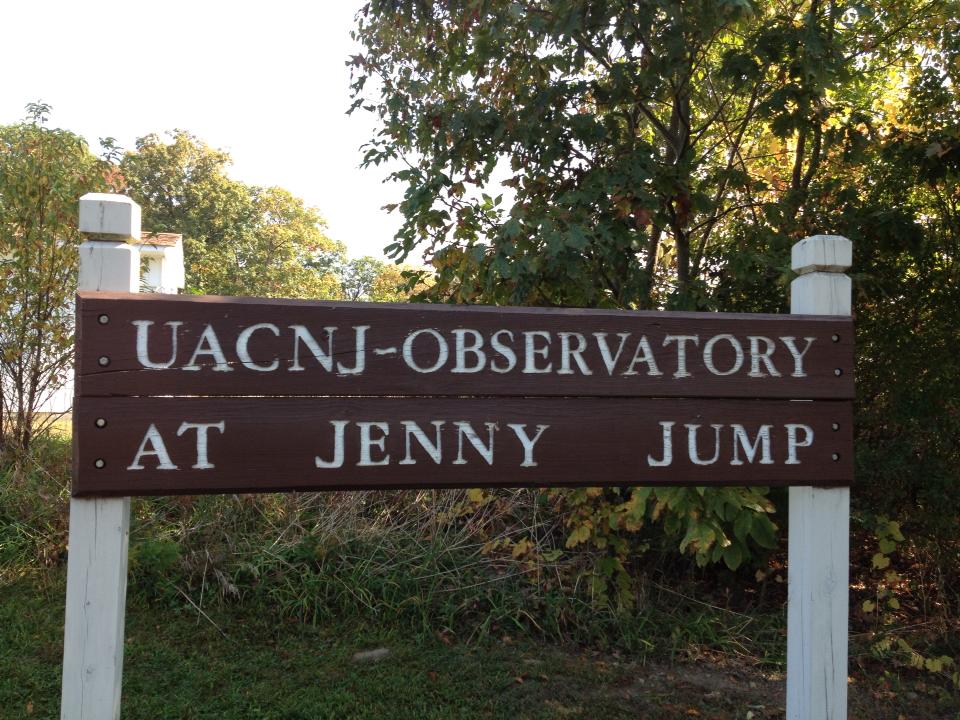
UACNJ Resumes Saturday Evening Programs

Jenny JumpJoin UACNJ for a free program at our facilities in Jenny Jump State Forest every Saturday evening from April 4 to October 31.
Our free Saturday evening programs begin at 8:00 PM. Following a lecture on an astronomy-related topic, the public is invited to view the night sky* through our telescopes until 10:30 PM.


Programs and speakers for the month of April:

  • 4/4/2015 What’s up in the April Sky? Lonny Buinis, RVCC
  • 4/11/2015 Naked Eye Astronomy, Jim Norton, NWJAA
  • 4/18/2015 Meteorites, Walter Rothaug, RAC
  • 4/25/2015 Pluto: The Arrival of New Horizons, Jason Kendall, WPU

Please visit http://www.uacnj.org for a list of other topics and speakers.
*weather permitting

Posted in April 2015 | Tagged | Leave a comment

From the Observatory Co-Chairs

by David Skitt, Observatory Co-Chair

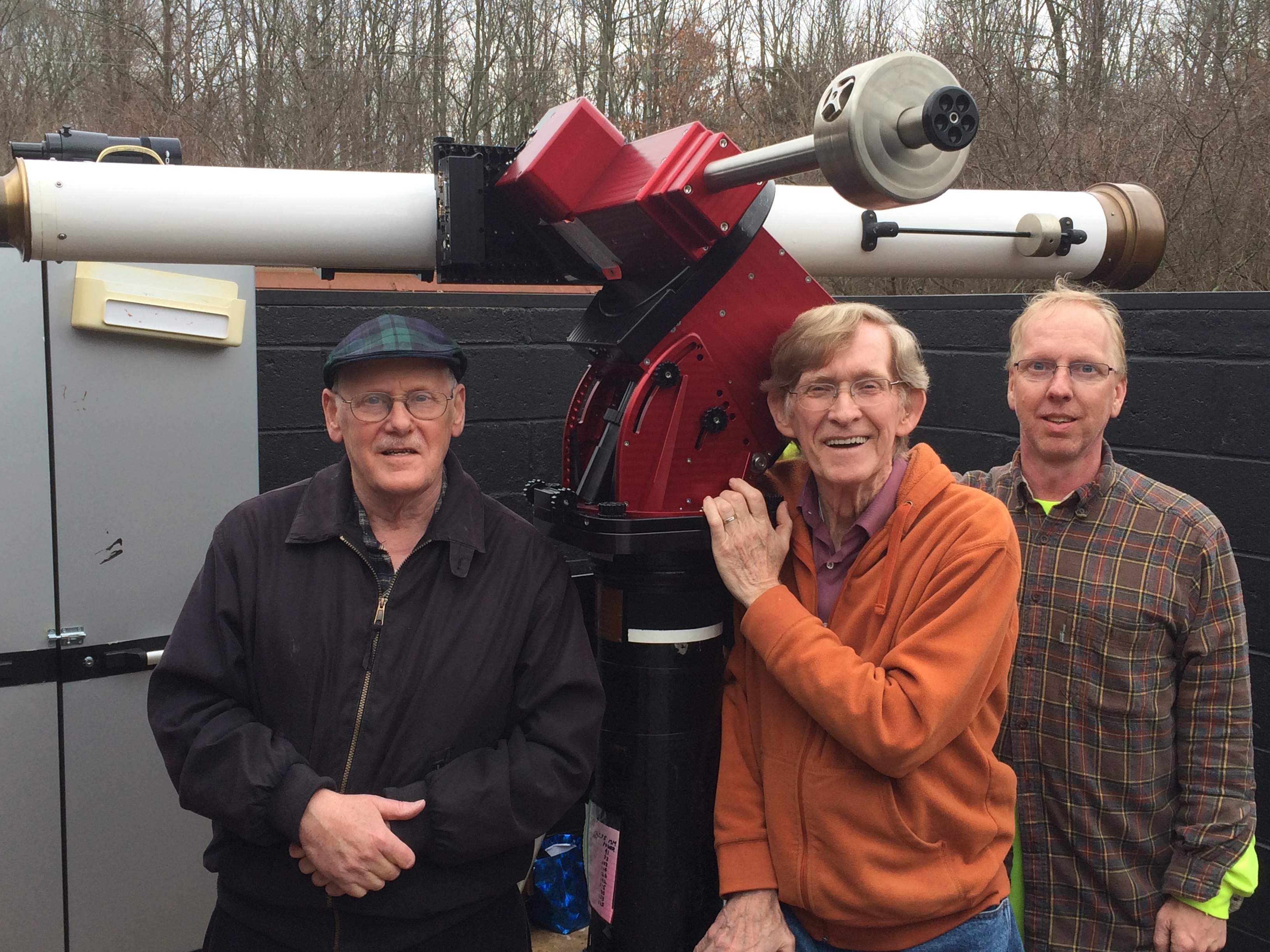
John Church, Gene Ramsey and David Skitt install Hastings-Byrne on Paramount ME.  Credit: Jen Skitt

John Church, Gene Ramsey and David Skitt install Hastings-Byrne on Paramount ME. Credit: Jen Skitt

The Hasting-Byrne refractor has been successfully mounted to the “new” Paramount ME mount and the existing cast iron pier! The roll-off roof clears the mount with just over an inch to spare. Keyholders, please be aware the roof flap must be pulled up as high as it can go to safely clear the scope.

After a few adjustments and balancing, we could successfully slew the telescope to the mounts’ ‘home’ position. John Church, Gene Ramsey and I are still working on determining what the optimal ‘park” position should be so, as of this writing, the scope is not quite ready for prime time use. More to come in the upcoming weeks.

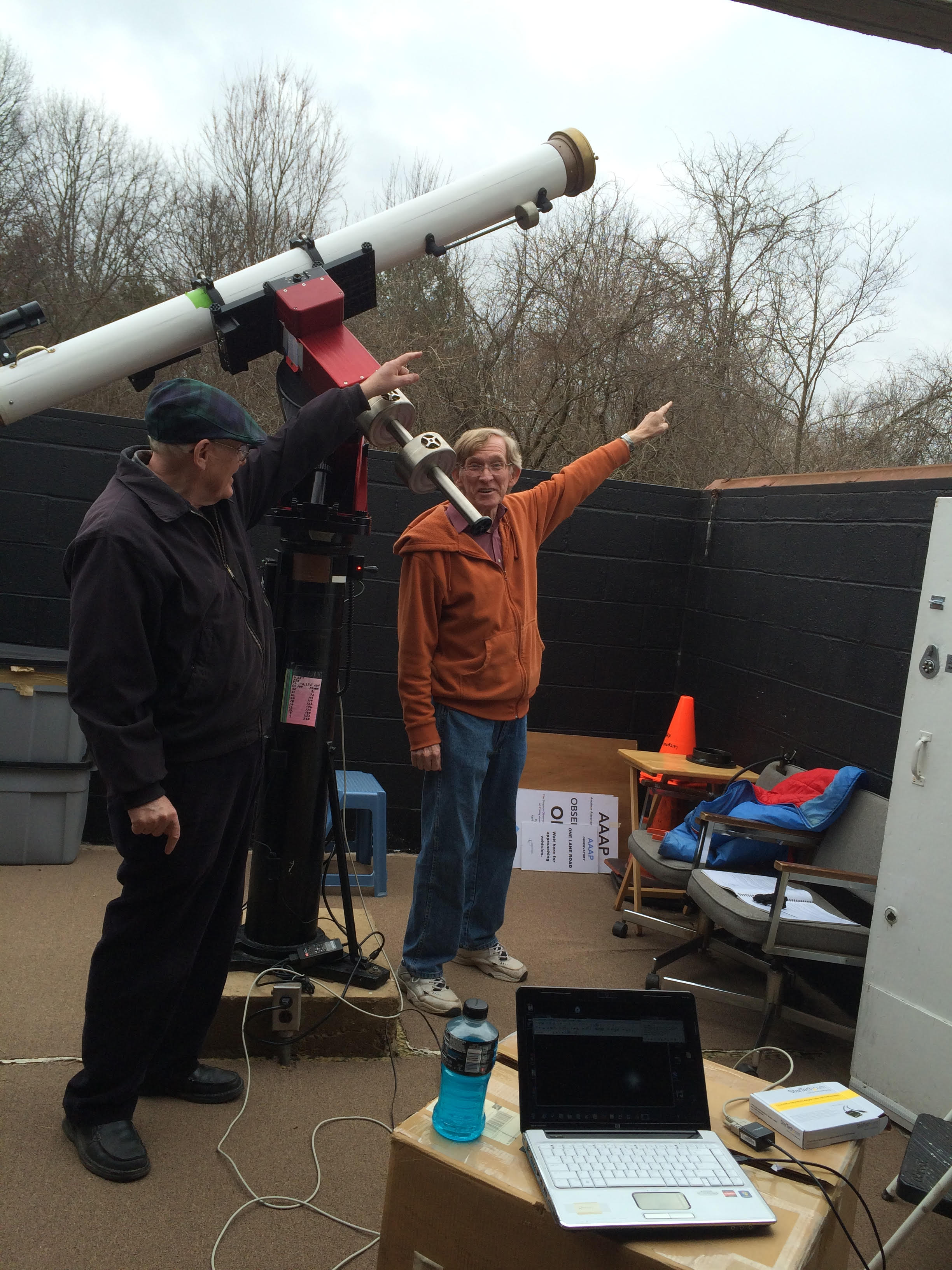
John Church and Gene Ramsey point the way.  Credit: Jen Skitt

John Church and Gene Ramsey point the way. Credit: Jen Skitt

Posted in April 2015 | Tagged , , , | Leave a comment

Wanted: Hydrogen-Alpha Scope

by Michael Wright

I received this message from our friends Pat and Mary Hayes. Can anyone help them out?

Hi Mike,

Pat and I were reflecting on what an outstanding club the AAAP is.  It is only when we are away do we appreciate how very advanced it is whether in upgrading its outreach program, supporting astrophotographers, the quality of guest lecturers and the immense knowledge, freely shared, by the members to the “newbees”.  We miss everyone.  Hope you are well.

On a separate note, Pat and I are looking at buying a hydrogen-alpha scope.  Could you put an enquiry into the Sidereal Times to see if anyone has one that they may want to sell?  Otherwise we will go online to see what may be available.

Thanks for your help.

Pat and Mary Hays
Haysgroup2@hotmail.com


Posted in April 2015 | Tagged , | Leave a comment

DSLR Astrophotography

by Freddy Missel

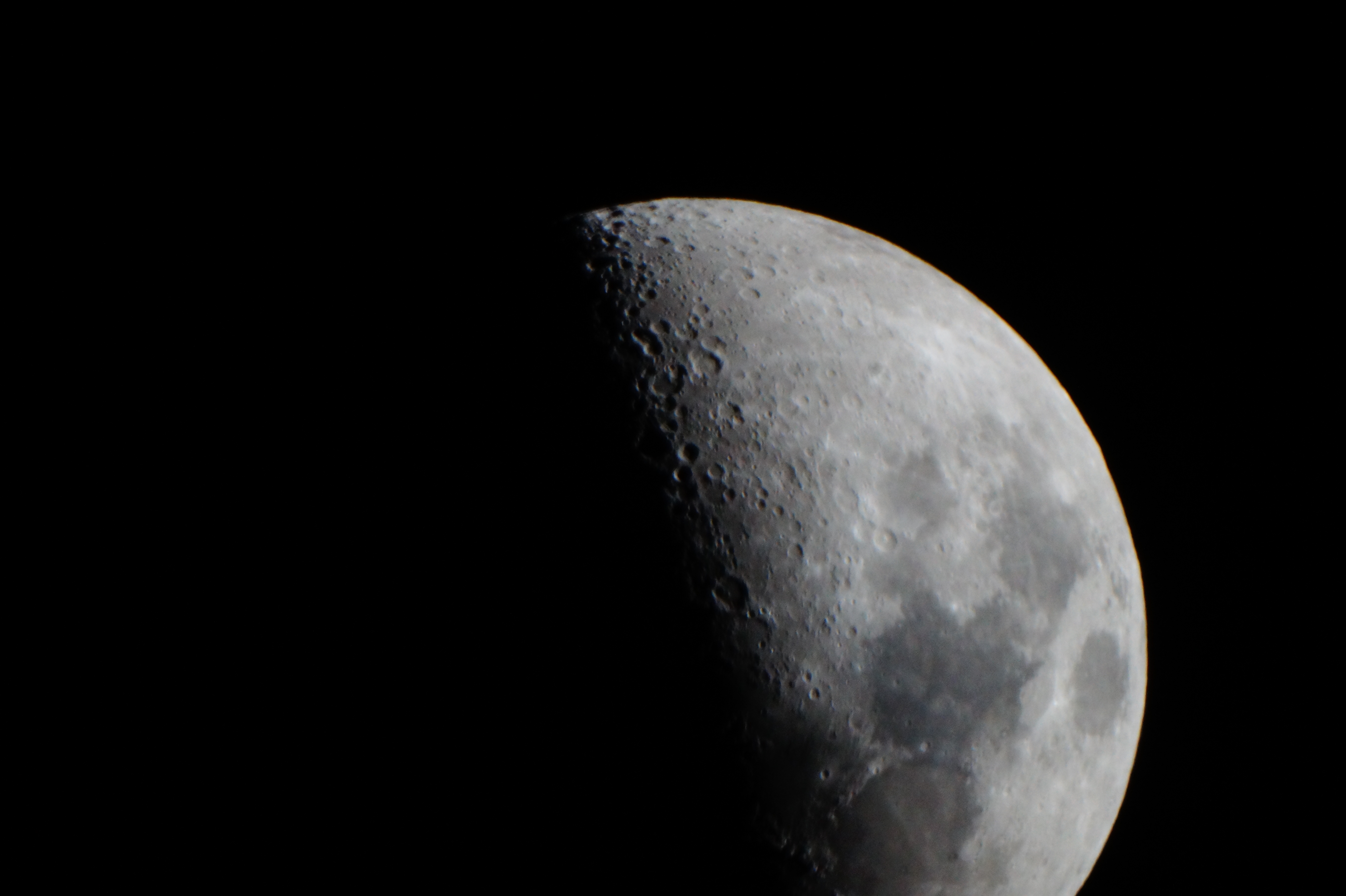
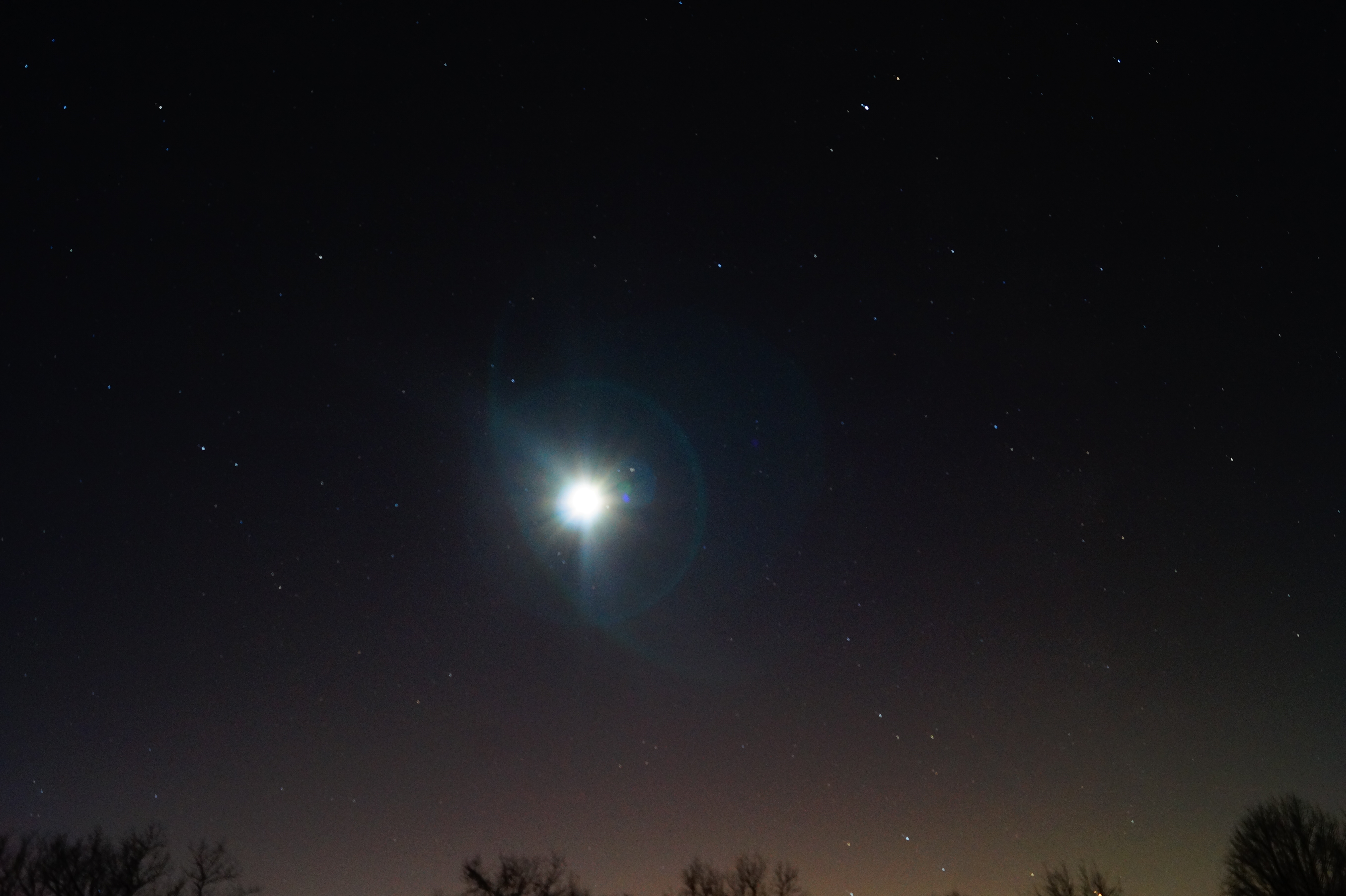
The picture of the moon was taken using my Sony DSLR and my Meade ETX90. I created the photo with an 1/200 second exposure and an ISO of 1600.

The picture of the moon was taken using my Sony DSLR and my Meade ETX90. I created the photo with an 1/200 second exposure and an ISO of 1600.


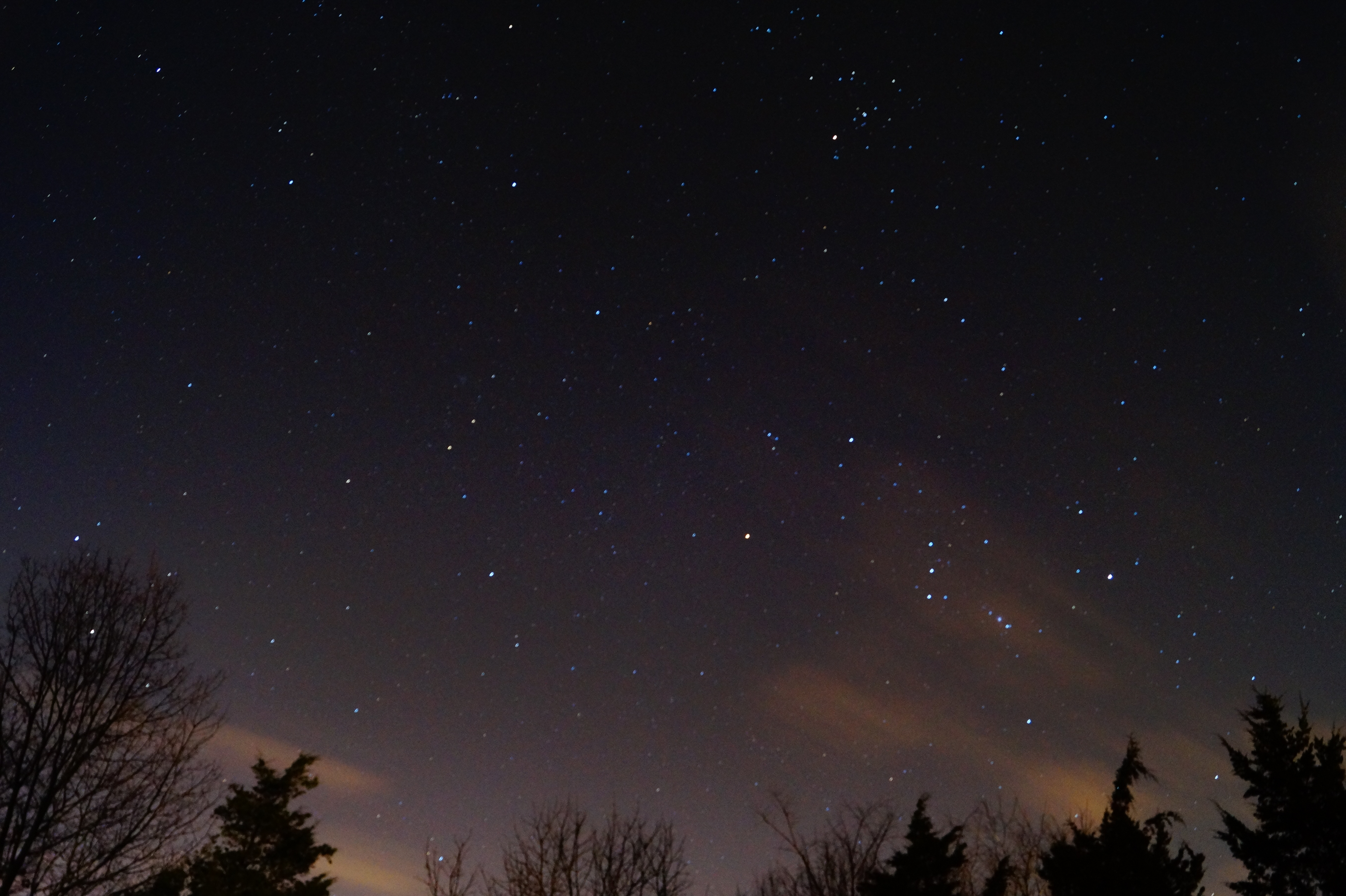
This picture of the Orion belt is taken in my backyard. The image was exposed for 30 seconds and an ISO of 1600.

This picture of the Orion’s Belt was taken in my backyard. The image was exposed for 30 seconds and an ISO of 1600.

The picture of the moon was taken at the unionville vineyard using a Sony DSLR. The image was made with a 30 second exposure and the ISO at 800.

This picture of the moon was taken at the Unionville Winery using a Sony DSLR. The image was made with a 30 second exposure and the ISO at 800.

Posted in April 2015 | Tagged , , | Leave a comment

Dinosaur Detectives

by S. Prasad Ganti

Both children and adults alike are fascinated by dinosaurs, the supersized “terrible lizards” of the past. Although they became extinct long ago, imaginations were stoked when Michael Crichton brought them to life in his sci-fi novel “Jurassic Park”. Steven Spielberg brought those creatures to life when he made the novel into a movie. Dinosaurs lived long before human beings appeared on the earth hundreds of millions of years ago and perished about sixty-five million years ago. The movie “Jurassic Park” claimed to be sixty-five million years in the making! So, what caused the extinction of these species?

It was long postulated that the birds replaced dinosaurs. The missing link between the two seemingly dissimilar species was the discovery of skeletal pieces of Archaeopteryx. This creature looks partly like a bird and partly like a dinosaur. The evolution of birds from dinosaurs still does not explain the reason dinosaurs ceased to exist on planet earth. Understanding and investigating natural history is not easy. The further you go into the past, more the things become fuzzier. Only part of the artifacts may still be around. Newer techniques needed to be developed to date such fossils.

Related to the existence and extinction of species on earth has been the many changes that the Earth has undergone in about four billion years of its existence: starting off as a hot ball soon after the solar system was formed, cooling off, chemical changes, atmospheric changes, and the appearance of first signs of life as single-celled organisms about three billion years ago. Also important are collisions with other extraneous bodies like the asteroids which are remnants of the formation of our solar system.

The Cambrian explosion occurred around half a billion years ago when the number of species exploded all around the globe. This happened in the ladder of evolution after multicellular organisms appeared and introduction of sex had ensured variety and survivability of the offspring. The Cambrian explosion has nothing to do with any kind of physical detonation like a nuclear blast. Natural historians believe that there have been five mass extinctions to date since the Cambrian explosion. The last of which happened about sixty-five million years ago when the dinosaurs became the casualty. This last one has been investigated in detail, but the details on the ones before are only sketchy.

Enter the father-son duo of Luis Alvarez and Walter Alvarez. Luis is  the famous Nobel prize-winning physicist who travelled on the plane that trailed the Enola Gay when it dropped the first atom bomb on Hiroshima in the Second World War. His son Walter became a geologist. He discovered a peculiar layer of sixty-five million year old rock that which forms a distinct narrow. The layer contains iridium, a chemical element that is found in abundance in the asteroids. The same layer with very similar age was found in several parts of the world.

The father and son duo with a highly skeptical group of scientists developed  the idea that an asteroid came from the space to wipe out the dinosaurs on the earth. The size of the asteroid, the speed with which it burrowed into the earth and the aftermath of the explosion on the climate, including blocking of the sun and stopping most photosynthesis, were modeled in great detail. The earlier volcanic eruption at Krakatoa about a hundred years ago served as a backdrop for this study. The final nail in the coffin was the finding of the impact crater below the sea near the Yucatán peninsula in Mexico. This is where an asteroid, several miles across, came crashing down, caused a giant explosion and wiped out the giant species, along with others of varying sizes.

The establishment of this cause was a major triumph for the dinosaur detectives. The fact that climate change has happened in the past and asteroid collisions have been frequent, does remind us of the potential perils that can strike us. We cannot take the safety of our home planet for granted. Of course, there is no reason to despair either. We just need to be aware of history so that we are better prepared to deal with future disasters.

Posted in April 2015 | Tagged , , | Leave a comment

Snippets

Submitted by David Kaplan except as noted

Keeping up with Rosetta
Rosetta’s comet is spinning down. The comet being observed by Europe’s Rosetta satellite is very gradually spinning down, most probably because its jets of gas and dust are acting like braking thrusters. BBC

Somewhere on Mars a Burger King…only kidding!Possible fatty acid detected on Mars. A fatty acid might be among organic molecules discovered on Mars by NASA’s Curiosity rover. BBC

Australia Finds ‘Huge Asteroid Impact’
Scientists in central Australia discover what they say is a 400 km-wide underground asteroid crater – the largest impact area ever found. BBC

Mars Rover Detects ‘Useful Nitrogen’
The Curiosity rover makes a detection of nitrogen compounds which provide further evidence that ancient Mars would have been a habitable world. 
BBC

What is the point of the Large Hadron Collider?
David Shukman explores the justifications for the £4bn ‘atom smasher’ buried under Geneva. BBC

Dark Matter Flits Through Collisions
A long-running study shows dark matter coasts unscathed through galactic collisions, betraying a ghostly lack of interaction with the known Universe. BBC

The Mission of Scott J. Kelly
NASA hopes to learn more about physical and psychological effects of space travel from the mission of Scott J. Kelly, who will have spent more time in space than any American when he returns. NY Times

Astrophotography Talk Forum Forum at Digital Photography Review
DPR

Ants In Space Grapple With Zero-G
A study finds that ants on board the International Space Station still use teamwork to search new areas, despite falling off the walls of their containers for up to eight seconds.
BBC

Mercury ‘Painted Black’ by Comets
The mystery of Mercury’s dark surface can be explained by a steady dusting of carbon from passing comets, research suggests.
BBC

NASA Releases Tool Enabling Citizen Scientists to Examine Asteroid Vesta
NASA (submitted by Michael Wright)

Don’t Try This at Home Guys
Green Light Laser Surgery (submitted by Michael Wright)

Signatures of Earth
A group of international scientists, including AAAP’s 50th Anniversary panelist Lisa Kaltenegger, has created a catalog of reflection signatures of Earth life-forms that provides researchers with a tool to help identify life on exoplanets. PNAS (submitted by Michael Wright)

Supermoon vs. Minimoon: Sizing Up Earth’s Satellite
The so-called “supermoon” has an impressive name, but just how super is the actual event? Taking the true measure of the supermoon means following Earth’s satellite at different points on its trip around the planet. Space.com (submitted by Robert Vanderbei)

Take Stunning Moon Shots From Your Driveway more from Space.com (submitted by Robert Vanderbei)

Posted in April 2015 | Tagged | Leave a comment