
by Victor Davis, Program Chair
Are We Alone? … Maybe
Science and science fiction writer Arthur C. Clarke famously speculated, “Two possibilities exist: Either we are alone in the Universe or we are not. Both are equally terrifying.” September’s guest speaker argues for the first terrifying possibility. The evening’s guest speaker is Edwin L. Turner, Emeritus Professor of Astrophysical Sciences at Princeton University. The September, 2025 meeting of the AAAP will take place in Peyton Hall on the campus of Princeton University on Tuesday, September 9th at 7:30 PM. As usual, the meeting is open to AAAP members and the public. Participants can join the meeting in-person at Peyton Hall or log in to the Zoom session as early as 7:00 pm to chat informally before the meeting begins.
Options for Attending the Meeting
You may choose to attend the meeting in person or participate via Zoom or YouTube as we’ve been doing for the past few years. (See How to Participate below for details). Due to security concerns, if you log in before the host has set up internet connectivity in Peyton Hall, you may need to wait in the Waiting Room for a few minutes until the host is prepared to admit you into the meeting. You’ll need to unmute yourself to make comments or ask questions. It’s polite, though not required, for you to enable your camera so other participants can see you. The meeting will be recorded and edited for posting to our club’s YouTube channel.
Meet the Speaker Dinner
Prof. Turner will join us for the traditional “meet the speaker” dinner at Winberie’s Bar and Restaurant prior to the meeting. Our reservation is for 5:45 pm. Please contact the Program Chair if you plan to attend.
Here’s the anticipated agenda for September 2025’s monthly meeting of the AAAP:

Getting to Peyton Hall
The parking lots across the street (Ivy Lane) from Peyton Hall are now construction sites, unavailable for parking. We’ve been advised by the administration of the astrophysics department that we should park in the new enclosed parking garage off Fitzrandolph street and walk around the stadium and athletic fields. Here’s a map of the campus and walking routes from the parking garage to Peyton Hall. The map shows the recently completed East Garage. Not shown is an access road Sweet Gum that connects from Faculty Road to an entrance at the lower left corner of the garage. Stadium Road connects from Fitzrandolph Road to another entrance at the opposite corner (and higher level) of the garage. It’s about a 10-15 minute walk from the parking garage to Peyton Hall.


Featured Speaker:
Edwin L. Turner
elt@astro.princeton.edu
Professor Emeritus of Astrophysical Sciences
Princeton University
“An Observable Universe Devoid of Extraterrestrial Life, Intelligence, and
Technological Civilizations Is Plausible”
The two most common and apparently compelling arguments for the existence of extraterrestrial life, intelligence and technological civilizations are the (probable) extremely large number of exoplanetary environments similar to the Earth’s and the application of the Copernican Principle to abiogenesis, evolution, and sociology. On closer examination both of these lines of reasoning are shown to have fundamental flaws. Thus, it remains plausible that the Earth is unique in the observable universe as a home to any or all three of these astro-biological phenomena. The discussion will also illuminate a major unresolved question in our understanding of nature which deserves serious attention independent of the specific context considered in this presentation.
Edwin L. Turner Edwin L. Turner is Professor of Astrophysical Sciences at Princeton University. He also serves as Co-Chair of the NAOJ-Princeton Astrophysics Collaboration Council (N-PACC). After receiving an S. B. in Physics at MIT (’71) and a Ph. D. in Astronomy from Caltech (’75), he spent brief periods at the Institute for Advanced Study and on the astronomy faculty at Harvard University before joining the Princeton faculty in 1978. Since 2008 he has also held an Affiliate Scientist appointment at the University of Tokyo’s Kavli Institute for the Physics and Mathematics of the Universe. He has carried out extensive astronomical observations at Mt. Palomar Observatory, Kitt Peak National Observatory, NRAO’s Very Large Array, Apache Point Observatory, the National Astronomical Observatory of Japan’s (NAOJ’s) Subaru Telescope and with the Hubble Space Telescope. Turner has served on a variety of national professional committees, including nine years each on the Board of Directors of the Association of Universities for Research in Astronomy and the Space Telescope Institute Council (which he chaired for 3 of those years). He also served as Director of the Apache Point Observatory 3.5-meter Telescope for nine years and on the Board of Governors of the Astrophysical Research Consortium for an additional 8 years. His sabbatical leaves have taken him to Caltech, Harvard, MIT, the National Astronomical Observatory of Japan, the University of Melbourne and the University of Tokyo. Working extensively in both theoretical and observational astrophysics, he has published more than 240 research papers with particular concentrations on topics including binary galaxies, groups of galaxies, large scale structure, dark matter, quasar populations, gravitational lensing, the cosmic x-ray background, the cosmological constant, exoplanets, astrobiology and the origin of life, frequently in all of these areas with an emphasis on statistical analyses. His recent teaching activities at Princeton include courses in cosmology, in astrobiology and in media coverage of science, and he has been a member of the University’s Committee for Statistical Studies since 1992. Recently he has been an active participant in the Breakthrough Starshot Initiative and in the organization of YHouse, Inc. project.
How to Participate (Links)
Zoom & YouTube Live
Amateur Astronomers Association of Princeton is inviting you to a scheduled Zoom meeting.
Topic: September 2025 AAAP Meeting-Edwin Turner, Emeritus Professor of Astrophysical Sciences, Princeton University
Time: September 9, 2025 07:00 PM Eastern Time (US and Canada)
Join Zoom Meeting ….
….
Click the above icons for Zoom and YouTube
| Date | Featured Speaker | Topic | |
| Oct. 14, 2025 | Becka Phillipson Assistant Professor in Physics Villanova University rebecca.phillipson@villanova.edu  | Prof. Phillipson is an astrophysicist who leverages statistics, nonlinear dynamics, and machine learning to study the explosive and highly variable characteristics of exotic astrophysical objects such as black holes and neutron stars. Thanks to Bill Thomas for suggesting this speaker. Also: Eklavya Doegar and members of the Unistellar Student Group will show images they acquired with the club scope and discuss their experiences using this recently donated smart telescope | |
| Nov. 11, 2025 | Romain Teyssier Professor of Astrophysical Sciences and Applied and Computational Mathematics Princeton University teyssier@princeton.edu 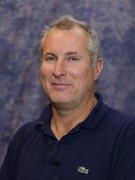 | Prof. Teyssier’s main research activity is to perform simulations of cosmic structure using supercomputers in order to understand the origins of stars and galaxies. | |
| Dec. 9, 2025 |  Sihao Cheng Postdoc Member scheng@ias.edu  Jiaxuan Li Graduate Student jiaxuanl@princeton.edu  Eritas Yang Graduate Student eritas.yang@princeton.edu | Discovery of Dwarf Planet Candidate in an Extremely Wide Orbit Dr. Cheng and colleagues discovered in publicly available data from the Dark Energy Camera a dwarf planet candidate, 2017 OF201, currently located at a distance of 90.5 au. Its orbit is extremely wide and extends to the inner Oort cloud, with a semi-major axis of 838 au and a perihelion of 44.9 au precisely determined from 19 observations over seven years. Assuming a typical albedo of 0.15, they estimate a diameter about 700 km, making it the second-largest known object in this dynamical population and a likely dwarf planet. Thanks to Nick Mellis for suggesting these speakers. | |
| Jan. 12, 2026 | Not Yet Scheduled | ||
| Feb. 12, 2026 |  John Bochanski Associate Professor and Chair, Department of Computer Science and Physics Rider University | Dr. Bochanski has been connected to the Legacy Survey of Space and Time Discovery Alliance since his graduate studies more than 15 years ago. Rider University is part of the global effort using the Vera C. Rubin Observatory to map the optical sky. The Rubin observatory (formerly the Large Synoptic Survey Telescope, LSST) will capture more information about our Universe than all other optical telescopes throughout history combined. The observatory released its first images this past June. Prof. Bochanski will discuss the project’s history and discoveries. Thanks to Nick Mellis for suggesting this speaker. | |
| Mar. 12, 2026 | Not Yet Scheduled | ||
| Apr. 14, 2026 | Not Yet Scheduled | ||
| May 12, 2026 |  John Horgan Science Writer horganism3@gmail.com | Mr. Horgan will discuss his controversial 1996 book The End of Science, in which he argues that pure science, defined as “the primordial human quest to understand the universe and our place in it,” may be coming to an end. Horgan claims that science will not achieve insights into nature as profound as evolution by natural selection, the double helix, the Big Bang, relativity theory or quantum mechanics. In the future, he suggests, scientists will refine, extend and apply this pre-existing knowledge but will not achieve any more great “revolutions or revelations.” Shades of Auguste Comte, perhaps? We expect to have copies of his book(s) for sale for the author to sign at the conclusion of his presentation. Thanks to Rex Parker for engaging this speaker. | |
| Jun 9, 2026 | 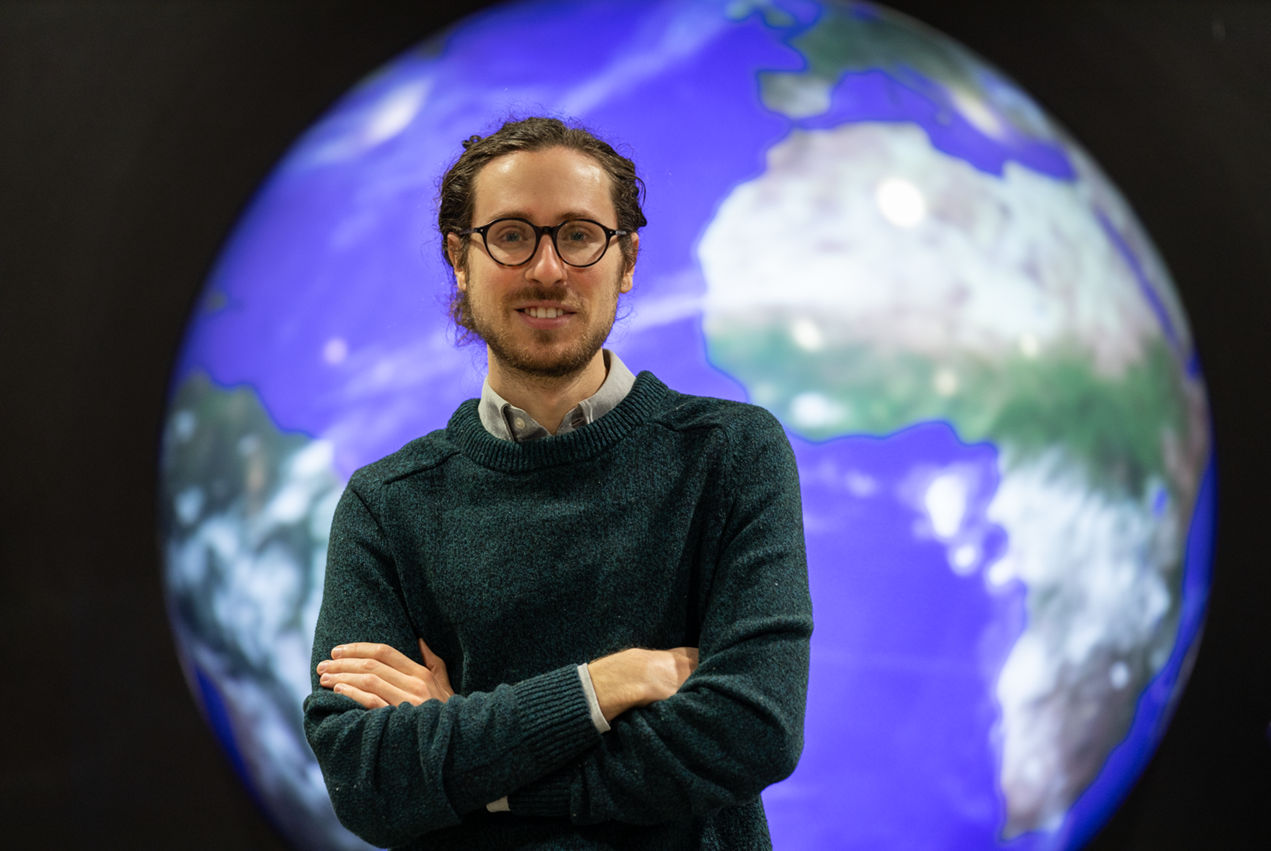 Jacob Hamer Assistant Curator NJ State Museum Planetarium Jacob.Hamer@sos.nj.gov | As usual, the June meeting will take place in the planetarium at the NJ State Museum in Trenton. There will be no streaming of this live-only sky show and PowerPoint presentation. Topic to be announced. |
As always, members’ comments and suggestions are gratefully accepted and much appreciated. Thanks to Ira Polans and Dave Skitt for setting up the online links and connecting the meeting to the world outside Peyton Hall.
victor.davis@verizon.net
program@princetonastronomers.org
(908) 581-1780 cell

 Amateur Astronomers Association of Princeton