
by Victor Davis, Program Chair
Understanding the Plasma Dynamics of Black Holes
The May, 2025 meeting of the AAAP will take place in Peyton Hall on the campus of Princeton University on Tuesday, May 13th at 7:30 PM. As usual, the meeting is open to AAAP members and the public. Participants can join the meeting in-person at Peyton Hall or log in to the Zoom session as early as 7:00 pm to chat informally before the meeting begins. The evening’s guest speaker is James Stone, Emeritus Professor of Astrophysical Sciences and the Lyman Spitzer, Jr. Emeritus Professor of Theoretical Astrophysics at Princeton University. His talk is entitled “Black Hole Accretion.”
Options for Attending the Meeting
You may choose to attend the meeting in person or participate via Zoom or YouTube as we’ve been doing for the past few years. (See How to Participate below for details). Due to security concerns, if you log in before the host has set up internet connectivity in Peyton Hall, you may need to wait in the Waiting Room for a few minutes until the host is prepared to admit you into the meeting. You’ll need to unmute yourself to make comments or ask questions. It’s polite, though not required, for you to enable your camera so other participants can see you. The meeting will be recorded and edited for posting to our club’s YouTube channel.
Meet the Speaker Dinner
Prof. Stone will join us for the traditional “meet the speaker” dinner at Winberie’s Bar and Restaurant prior to the meeting. Our reservation is for 5:45 pm. Please contact the Program Chair at program@princetonastronomers.org if you plan to attend.
Here’s the anticipated agenda for May 2025’s monthly meeting of the AAAP:

Getting to Peyton Hall
The parking lots across the street (Ivy Lane) from Peyton Hall are now construction sites, unavailable for parking. We’ve been advised by the administration of the astrophysics department that we should park in the new enclosed parking garage off Fitzrandolph street and walk around the stadium and athletic fields. Here’s a map of the campus and walking routes from the parking garage to Peyton Hall. The map shows the recently completed East Garage. Not shown is an access road Sweet Gum that connects from Faculty Road to an entrance at the lower left corner of the garage. Stadium Road connects from Fitzrandolph Road to another entrance at the opposite corner (and higher level) of the garage. It’s about a 10-15 minute walk from the parking garage to Peyton Hall.

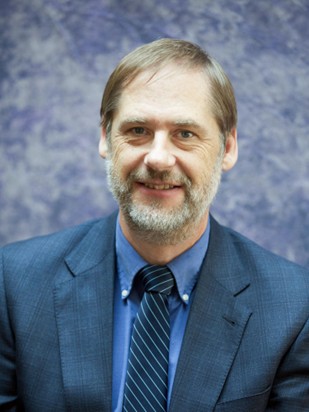
Featured Speaker:
James Stone
Emeritus Professor of Astrophysical Sciences
Emeritus Lyman Spitzer, Jr. Professor of Theoretical Astrophysics
Princeton University
jstone@astro.princeton.edu
jmstone@ias.edu
“Black Hole Accretion”
Black Hole Accretion
Accreting black holes power the most luminous objects in the Universe, including active galactic nuclei, quasars, and gamma ray bursts. Recent advances in computational methods allow calculations of the structure and dynamics of such flows from first principles. Moreover, observations from the Event Horizon Telescope and JWST are providing new insights into black hole accretion in a wide range of environments, and on scales down to the event horizon. Prof. Stone will summarize some of the recent progress that has been made in trying to understand the remarkable plasma dynamics of accreting black holes.
James Stone
Prof. Stone’s research program centers on the use of large-scale direct numerical simulations to study the gas dynamics of a wide range of astrophysical systems, from protostars to clusters of galaxies. Almost all of this work requires development of advanced numerical algorithms for astrophysical gas dynamics on modern parallel computer systems. Prof. Stone is one of the primary developers of the ZEUS code for astrophysical MHD, and more recently he and his collaborators have developed Athena, a high-order Godunov scheme for astrophysical MHD that uses adaptive mesh refinement (AMR).
Some of the research problems on which he works include: (1) hydrodynamic and MHD processes that can lead to outward angular momentum transport in accretion disks, (2) the production and propagation of highly supersonic, collimated jets from accretion disks around protostars and active galactic nuclei, (3) the properties of compressible MHD turbulence in cold molecular gas in the galaxy, (4) the time-dependent evolution of strong shocks in the interstellar medium, (5) the structure of radiatively driven winds and outflows from disks around hot stars and AGN, and (6) the effect of mergers and AGN feedback on the hot x-ray emitting gas in clusters of galaxies.
Prof. Stone is deeply involved in PICSciE, which provides access to high-performance computing systems on campus, and training and education in scientific computation and numerical analysis, and he has a joint appointment in the Program in Applied and Computation Mathematics (PACM).
How to Participate (Links)
Zoom & YouTube Live
Amateur Astronomers Association of Princeton is inviting you to a scheduled Zoom meeting.
Topic: May 2025 AAAP Meeting-James Stone, Professor, Princeton University
Time: May 13, 2025 07:00 PM Eastern Time (US and Canada)
Join Zoom Meeting
Meeting ID: 865 2780 4822
Passcode: 271417


Click the above icons for Zoom and YouTube
| Date | Featured Speaker | Topic | |
| June 10, 2025 | Jacob Hamer Assistant Curator NJ State Museum Planetarium Jacob.Hamer@sos.nj.gov  | Dr. Hamer has expressed his intention to continue AAAP’s tradition to host the June meeting at the planetarium of the NJ State Museum in Trenton. The meeting will feature a presentation of the planetarium’s current sky show, a live planetarium tour of the night sky, and a guest speaker presentation. | |
| July-August | No monthly meetings | ||
| Sept. 9, 2025 | Edwin L. Turner Emeritus Professor of Astrophysical Sciences Princeton University elt@astro.princeton.edu  | TBA | |
| Oct. 14, 2025 | Becka Phillipson Assistant Professor in Physics Villanova University rebecca.phillipson@villanova.edu  | TBA Thanks to Bill Thomas for suggesting this speaker. | |
| Nov. 11, 2025 | Romain Teyssier Professor of Astrophysical Sciences and Applied and Computational Mathematics Princeton University teyssier@princeton.edu  | TBA |
As always, members’ comments and suggestions are gratefully accepted and much appreciated. Thanks to Ira Polans and Dave Skitt for setting up the online links and connecting the meeting to the world outside Peyton Hall.
victor.davis@verizon.net
program@princetonastronomers.org
(908) 581-1780 cell

 Amateur Astronomers Association of Princeton