
by Victor Davis, Program Chair
Unweaving the Cosmic Web
The March, 2025 meeting of the AAAP will take place in Peyton Hall on the campus of Princeton University on Tuesday, March 11th at 7:30 PM. As usual, the meeting is open to AAAP members and the public. Participants can join the meeting in-person at Peyton Hall or log in to the Zoom session as early as 7:00 pm to chat informally before the meeting begins. The evening’s guest speaker is J. Richard Gott III, Emeritus Professor of Astrophysical Sciences at Princeton University. His talk is entitled “Journey to the Cosmic Web and Back to Earth.”
Options for Attending the Meeting
You may choose to attend the meeting in person or participate via Zoom or YouTube as we’ve been doing for the past few years. (See How to Participate below for details). Due to security concerns, if you log in before the host has set up internet connectivity in Peyton Hall, you may need to wait in the Waiting Room for a few minutes until the host is prepared to admit you into the meeting. You’ll need to unmute yourself to make comments or ask questions. It’s polite, though not required, for you to enable your camera so other participants can see you. The meeting will be recorded and edited for posting to our club’s YouTube channel, but Prof. Gott has asked that we postpone posting the video until he gives the go-ahead.
Speaking Virtually
Prof. Gott will participate via Zoom. There will be no “meet the speaker” dinner this month.
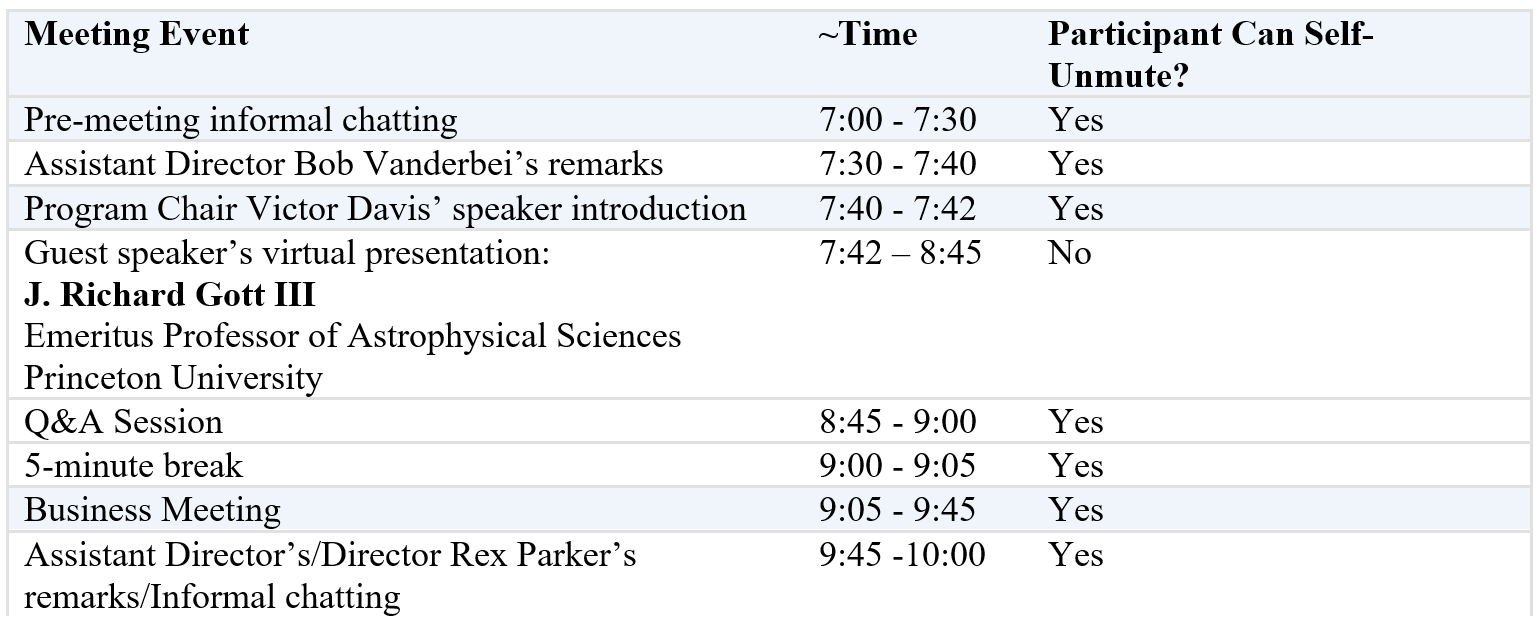
Here’s the anticipated agenda for March’s, 2025’s monthly meeting of the AAAP:
Getting to Peyton Hall
The parking lots across the street (Ivy Lane) from Peyton Hall are now construction sites, unavailable for parking. We’ve been advised by the administration of the astrophysics department that we should park in the new enclosed parking garage off Fitzrandolph street and walk around the stadium and athletic fields. Here’s a map of the campus and walking routes from the parking garage to Peyton Hall. The map shows the recently completed East Garage. Not shown is an access road Sweet Gum that connects from Faculty Road to an entrance at the lower left corner of the garage. Stadium Road connects from Fitzrandolph Road to another entrance at the opposite corner (and higher level) of the garage. It’s about a 10-15 minute walk from the parking garage to Peyton Hall.

Featured Speaker:
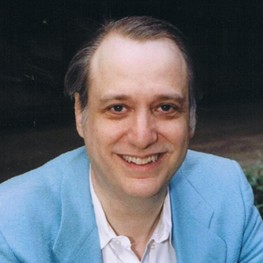
J. Richard Gott III
kjrg@astro.princeton.edu
Emeritus Professor of Astrophysical Sciences
Princeton University
“Journey to the Cosmic Web and Back to Earth”
Journey to the Cosmic Web and Back to Earth
Professor J. Richard Gott will tell how his high school science project on spongelike polyhedra led him to a new understanding of the large-scale structure of the universe. If the large-scale structure was seeded by random quantum fluctuations in the inflationary early universe, then the topology of its large-scale structure should look spongelike today. This spongelike structure, with clusters of galaxies connected by filaments of galaxies, has been confirmed many times and is now known as the Cosmic Web. Prof. Gott will also tell how a new kind of polyhedron he discovered recently led him to make (with Goldberg and Vanderbei) the most accurate flat map of Earth yet. It was picked by TIME as one of the 100 best inventions of 2021 and featured on the cover.
J. Richard Gott III
J. Richard Gott is noted for his contributions to cosmology and general relativity. He has received the Robert J. Trumpler Award, an Alfred P. Sloan Fellowship, the Astronomical League Award, and Princeton’s President’s Award for Distinguished Teaching. He was for many years Chair of the Judges for the Westinghouse and Intel Science Talent Search.
Born in Louisville, Kentucky in 1947, in high school, he won Second Place in the National Westinghouse Science Talent Search (1965) and First Place in Mathematics in the National Science Fair, St. Louis (1965). He graduated Summa cum Laude in physics from Harvard University (1969) and received his PhD in astrophysics from Princeton in 1973. After postdocs at Cal Tech and Cambridge he returned to join the Princeton faculty where he has remained.
His paper “On the Infall of Matter into Clusters of Galaxies and Some Effects on Their Evolution” co-authored with Jim Gunn is the most cited astronomy paper published in 1972 (over 4,000 citations). He proposed that the clustering pattern of galaxies in the universe should be spongelike–a prediction now confirmed by numerous surveys, as described in his book The Cosmic Web (2016).
In 1982 he was one of the first to suggest that bubble universes could form by quantum tunneling during a period of inflation, producing what we now call a multiverse. He discovered exact solutions to Einstein’s field equations for the gravitational field around one cosmic string (in 1985) and two moving cosmic strings (in 1991). This second solution has been of particular interest because, if the strings move fast enough, at nearly the speed of light, time travel to the past can occur. He wrote an article on time travel for Time magazine as part of its cover story on the future (April 10, 2000).
Gott and Mario Jurić are in Guinness World Records 2006 for finding the largest structure in the universe: the Sloan Great Wall of Galaxies (1.37 billion light-years long). Gott’s Copernican argument for space colonization was the subject of an article in the New York Times (July 17, 2007).
His new flat, double-sided map projection of the earth (with David Goldberg and Robert Vanderbei) was featured on the cover of Time magazine as one of 100 Best Inventions of 2021.
His book Welcome to the Universe in 3D (2022, with Neil deGrasse Tyson, Michael Strauss, and Robert Vanderbei) was a New York Times #1 Bestseller in Young Adult Nonfiction, reaching #1 on Amazon.com among all books.
How to Participate (Links)
Zoom & YouTube Live
Amateur Astronomers Association of Princeton is inviting you to a scheduled Zoom meeting.
Topic: March 2025 AAAP Meeting-J. Richard Gott, Prof Emeritus, Princeton U, A Voyage to the Cosmic Web and Back to Earth
Time: Mar 11, 2025 07:00 PM Eastern Time (US and Canada)
Join Zoom Meeting
Meeting ID: 813 0450 6946
Passcode: 814730

Click the above icons for Zoom and YouTube
| Date | Featured Speaker | Topic | |
| April 8, 2025 | Eliot Quataert Professor of Astrophysical Sciences and the Charles A. Young Professor of Astronomy Princeton University quataert@princeton.edu  | TBA | |
| May 13, 2025 | James Stone Emeritus Professor of Astrophysical Sciences and Emeritus Lyman Spitzer, Jr. Professor of Theoretical Astrophysics Princeton University jstone@astro.princeton.edu  | TBA | |
| June 10, 2025 | Jacob Hamer Assistant Curator NJ State Museum Planetarium Jacob.Hamer@sos.nj.gov  | Dr. Hamer has expressed his intention to continue AAAP’s tradition to host the June meeting at the planetarium of the NJ State Museum in Trenton. The meeting will feature a presentation of the planetarium’s current sky show, a live planetarium tour of the night sky, and a guest speaker presentation. | |
| July-August | No monthly meetings | ||
| Sept. 9, 2025 | Edwin L. Turner Emeritus Professor of Astrophysical Sciences Princeton University elt@astro.princeton.edu  | TBA | |
| Oct. 14, 2025 | Becka Phillipson Assistant Professor in Physics Villanova University rebecca.phillipson@villanova.edu  | TBA Thanks to Bill Thomas for suggesting this speaker. | |
| Nov. 11, 2025 | Romain Teyssier Professor of Astrophysical Sciences and Applied and Computational Mathematics Princeton University teyssier@princeton.edu  | TBA |
As always, members’ comments and suggestions are gratefully accepted and much appreciated. Thanks to Ira Polans and Dave Skitt for setting up the online links and connecting the meeting to the world outside Peyton Hall.
victor.davis@verizon.net
program@princetonastronomers.org
(908) 581-1780 cell

 Amateur Astronomers Association of Princeton