
by S. Prasad Ganti
Humankind’s venture into space is an expansion of the exploration of our Universe. It has been via unmanned spacecraft, space telescopes or even manned missions to the near earth orbits and the moon. But space is not easy. To both get to and to live in. Nor are the rockets which are the means of getting there. Rocket science is a very difficult science indeed.
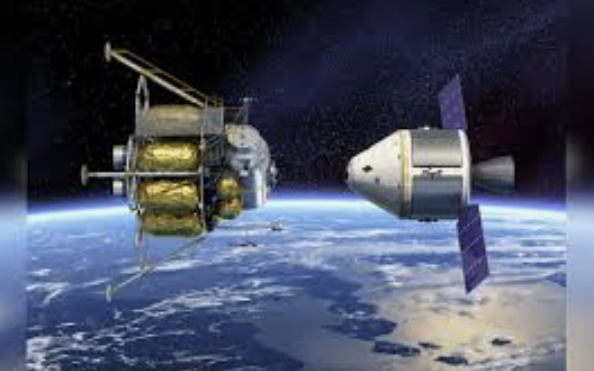
The name of the game in dealing with rocket science is to divide and conquer. By dividing the rocket into several stages, with each stage giving some push and falling off. Also, to send individual components into space and make them assemble there like the lego blocks. Assembly of individual components in space is achieved using a concept called “docking”.
The challenge with docking is to bring two components travelling at speeds of 17,000 miles per hour around the earth, and yet make them gently stick to each other. Once stuck or docked, they operate as one single unit. Enabling movement of materials between the two and sharing of power and electronics etc. Such high speeds are important for the orbiting spacecraft because otherwise they will fall back to the earth. The centrifugal force resulting from such high speeds counteracts the gravitational force of the earth. Docking is indeed a very complex technology and needs to be mastered for any kind of space mission.
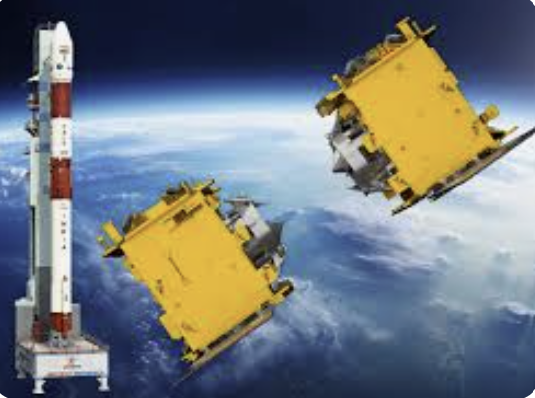
India achieved a successful docking recently between two satellites SDX01 and SX02. Thus becoming the fourth country to do so. After the US, Russia and China. Of these, only the US sent men to the moon about five decades back. And their docking experiment in the 1960s was in the form of the Gemini missions. After the success of Gemini spacecraft docking in space with each other, Apollo missions carried the astronauts to the moon.
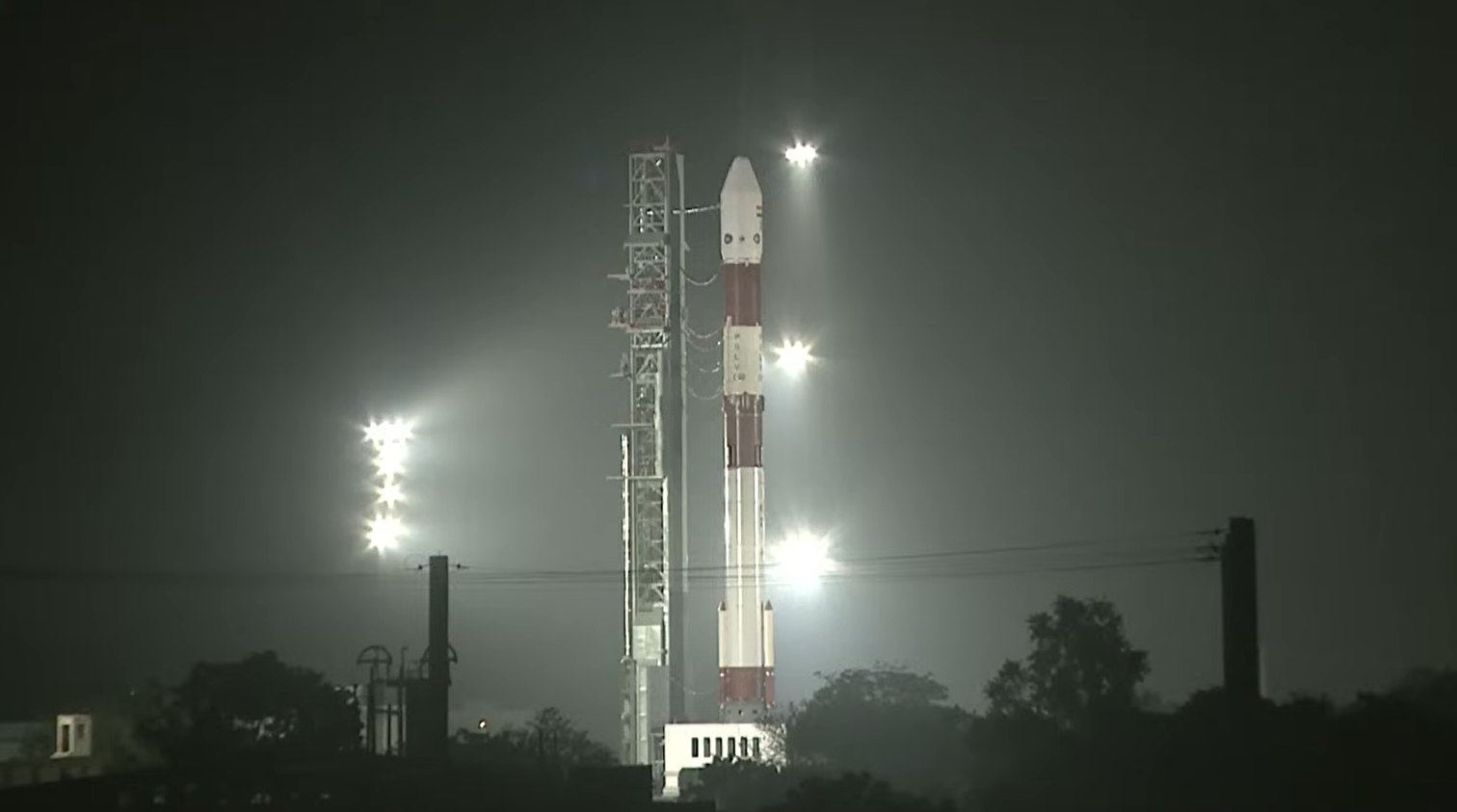
These two Indian spacecraft, built by the private sector, were launched on the government owned PSLV-C60 (Polaris Space Launch Vehicle). A good story of public-private partnership. The docking came after a couple of postponements due to last minute issues. It gave more time to hone the skills for precise maneuvers required for the docking. The docking occurred over an altitude of 475 km (about 295 miles).
The immediate use for the docking technology is to put astronauts into space via the Gaganyaan missions. Followed by lunar sample return mission and construction of a space station called the “Bharatiya Antariksh Station” (Indian Space Station).
Another use of docking is a spacecraft called MEV (Mission Extension Vehicle) which can dock to an existing spacecraft and extend its life by servicing it. After the service time, the MEV can undock and move on to the next spacecraft to be serviced. This reduces the space junk and extract more value from existing spacecraft.
There will be more lunar sample return missions and space stations in the future. From different countries. Some of them will be executed at least in part by the private sector. Space technology is maturing with private sector participation and government funding of only the basics. An example is the recent successful New Glenn rocket launch by Jeff Bezos. It gives the US a second private option after SpaceX for space launches.
Docking has matured as a technology and is now being deployed for multiple uses.


