
by Gene Allen
For many reasons I’m sure, I have been unable to observe any comet, either visually or with photography, with the naked eye, binoculars, iPhone cameras, DSLRs, telescopes with eyepieces, or telescopes with cameras. This condition has prevailed for decades. Recently everybody reports seeing C-2023 A3, and some show me pictures they took on their phones quite effortlessly, even neighbors who are virtually never astronomers. It truly makes me feel as if I were the victim of some nefarious “no comets for you!” curse.
Tonight I took my little ZWO Seestar S50 to a school in nearby Robbinsville to support a AAAP outreach event for a Girl Scout troop. Not too cold yet, and fairly decent skies, I was hopeful to share some of the DSOs (Deep Sky Objects) it captures so handily. I have not yet worked out why it has trouble with the first target and needs manual pointing, but from then it’s spot on. After struggling a bit trying for Venus as it slipped into the trees, Saturn was centered on the screen, and I figured what the heck, why not take one more stab at that #*$& comet?
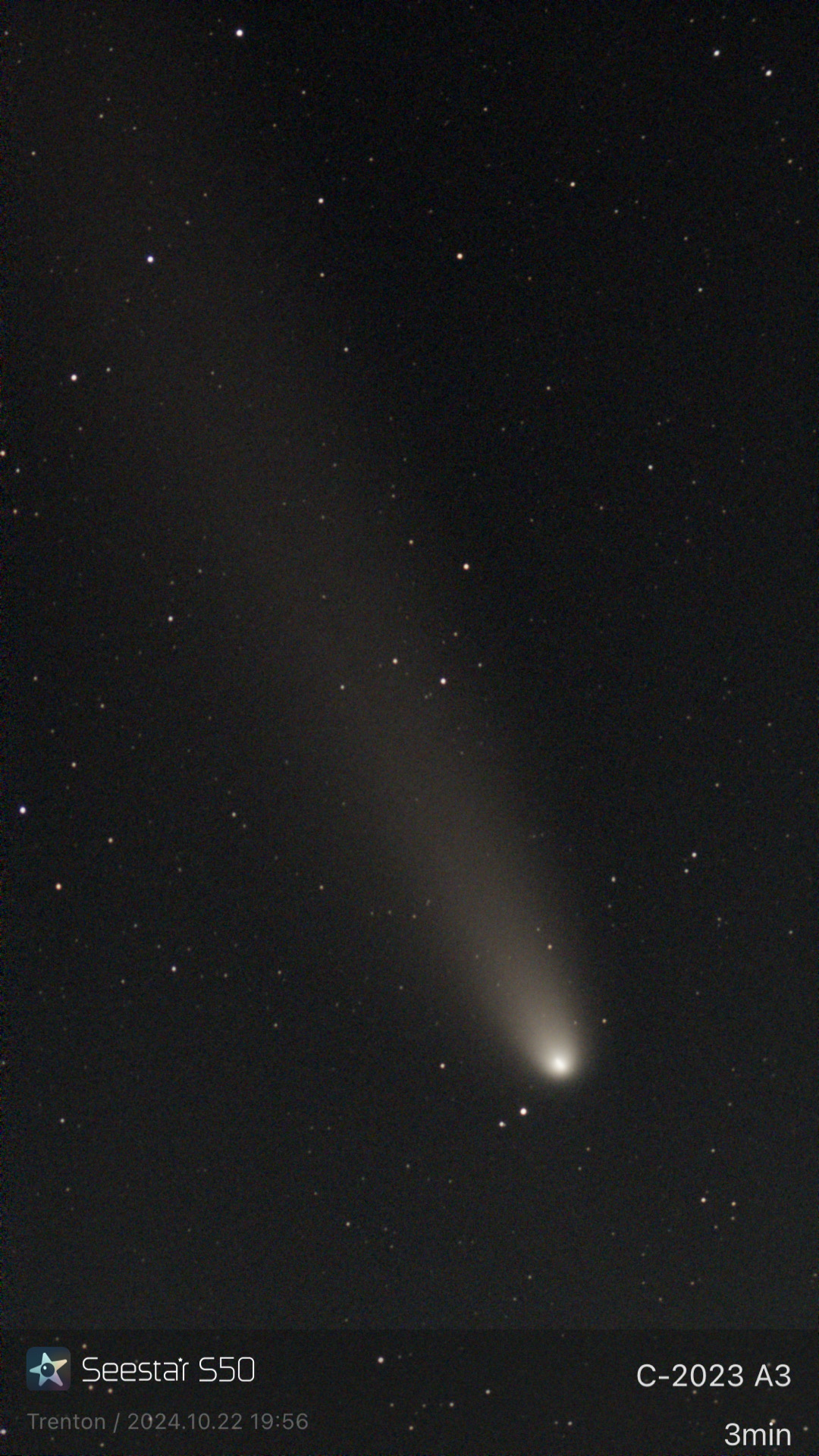
And there it was, blooming from a tiny speck as the 10 second images stacked in what ZWO calls “enhancing.” It was a popular spectacle, on both my iPhone and iPad, when intently searching the night sky clearly showed a big, fat nuthin’.
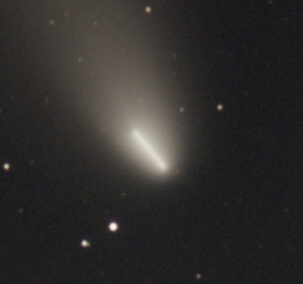
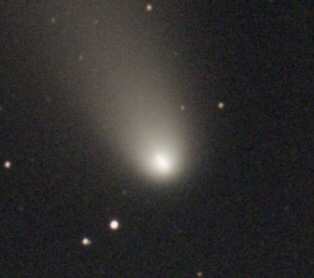
The view was reframed, moving the core down from center to better show the tail, and the stack restarted. While the tail did intensify as the images accumulated, I noticed that the core “extended” into a bar. My first thought was field rotation, that bane of alt-az mounts with longer exposures. What little I understand about it seems to involve a degrading of the edges of the field, not this growing bar, with the stars in the background staying pretty circular, at least by EAA (Electronically Assisted Astronomy) standards. Those far more capable at this stuff can chime in, but I conclude that the bar shows the movement of the comet away from us over the duration of the total exposure. Instead of a fault with the image, it’s actually some neat and, to me, unexpected evidence.
The smaller pictures on the side are enlargements of the core at 3, 6, and 13 minutes of exposure. Even the 3 minute one is less than round.

The leaders and parents were more excited than the scouts about what the five of us were able to show them, but I’m convinced that the best rewards of the night came to me.
As you can see, anyone can do it. Grab whatever binoculars or telescope you have, and bring your enthusiasm to an outreach event.

 Amateur Astronomers Association of Princeton