A Change of Venue The June, 2025 meeting of the AAAP will take place in the planetarium at the NJ State Museum in Trenton. Traditionally, the club’s last meeting of the academic year takes place in the state planetarium, and includes the planetarium’s prerecorded sky show and the guest speaker’s live presentation. This month’s guest speaker is Dr. Jacob Hamer, Assistant Curator of Planetarium Education at the New Jersey State Museum. He’ll present the planetarium’s sky show and the film “Spark: The Universe in Us” and his live presentation “Tides in the Solar System and Beyond.”
As usual, the meeting will be the second Tuesday of the month, this month June 10, 2025. Doors of the planetarium will open at 7:00 pm and the meeting will begin promptly at 7:30 pm. Members and the public are invited.
Attending Live is Your Only Option Due to copyright constraints on the prerecorded portions of the program and complications with streaming visuals that are projected onto the planetarium’s dome, the June meeting will not be available on Zoom or streamed on YouTube. There is ample parking outside the planetarium; 205 West State Street, Trenton, NJ.
Also, due to the change in venue, there will be no “meet the speaker” dinner this month.
Here’s the anticipated agenda for June, 2025’s monthly meeting of the AAAP:
Tides in the Solar System and Beyond To those of us living near a coastline, the tides are a familiar celestial cycle. We directly experience ocean tides resulting from the cosmic ballet of Earth and Moon, but much more extreme tidal interactions happen elsewhere in our Solar System. Dr. Hamer will discuss why tides happen, and show examples of tides in the universe. Beyond our Solar System, tides may actually spell destruction for giant planets orbiting very close to their stars.
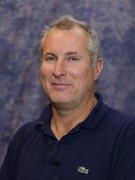
Jacob Hamer Dr. Hamer is Assistant Curator of Planetarium Education at the NJ State Museum. He received his BA in Physics and Mathematics from CUNY Macaulay Honors College at Hunter College. During his undergraduate studies he conducted research on galaxies at the American Museum of Natural History. He received his PhD in Astronomy and Astrophysics at Johns Hopkins University, where he carried out research on the interactions between close-in exoplanets and their host stars.
A look ahead at future guest speakers:
Date
Featured Speaker
Topic
July-August
No Monthly Meetings
September 9, 2025
Edwin L. Turner Emeritus Professor of Astrophysical Sciences Princeton University elt@astro.princeton.edu
“Why a Universe Devoid of Extraterrestrial Life is Quite Plausible”
A discussion of why there’s little foundation for the popular expectation that life in the universe may be common.
Prof. Phillipson is an astrophysicist who leverages statistics, nonlinear dynamics, and machine learning to study the explosive and highly variable characteristics of exotic astrophysical objects such as black holes and neutron stars.
Thanks to Bill Thomas for suggesting this speaker.
November 11, 2025
Romain Teyssier Professor of Astrophysical Sciences and Applied and Computational Mathematics Princeton University teyssier@princeton.edu
Prof. Teyssier’s main research activity is to perform simulations of cosmic structure using supercomputers in order to understand the origins of stars and galaxies.
The YouTube recording of May’s AAAP meeting featuring Princeton Professor James Stone has been edited and uploaded for public viewing. Visit AAAP’s YouTube channel for recordings of monthly meetings going back several years.
As always, members’ comments and suggestions are gratefully accepted and much appreciated. Thanks to Ira Polans and Dave Skitt for setting up the online links and connecting the meeting to the world outside Peyton Hall.
Director Rex Parker opened the meeting in Peyton Hall at 1931. There were 36 attending and 23 online. He introduced Nomination Chair Dan Opdyke who reported that no additional nominations had been submitted and he called for a vote for the slate. Hands of 27 members were counted in person and an additional 7 online exceeded the required quorum of 32. Those elected for a one year term are:
Director: Rex Parker Assistant Director: Bob Vanderbei Treasurer: Ira Polans Secretary: Gene Allen Program Chair: Victor Davis Observatory Co-Chairs: Jennifer & Dave Skitt Outreach Chair: Bill Murray
Program Chair Victor Davis introduced our speaker for tonight, James Stone, Professor Emeritus at Princeton University and Member of the Institute of Advanced Study. His talk was entitled Accreting Black Holes
Twenty minutes of questions and a break followed the talk.
At 2102 Member Maiya Qui gave an Unjournal Presentation about Variable Stars: RR Lyraes & More. Maiya’s presentation would have been impressive if presented by a professor, and was even moreso when one realizes that she is a high school sophomore.
Rex convened the business meeting at 2113 with 25 attending in Peyton Hall.
Treasurer Ira Polans reported that 22 members have responded with interest in a field trip to the National Air & Space Museum Udvar-Hazy Center at Dulles International Airport. They chose to self-drive and stop at the Franklin Institute on the return. Details will be worked out for a date in September.
Rex reported on an April 16 New York Times article Astronomers Detect a Possible Signature of Life on a Distant Planet ( https://www.nytimes.com/2025/04/16/science/astronomy-exoplanets-habitable-k218b.html ). Hycean world K2-18b has an atmosphere of hydrogen and methane and exists at a distance that would permit liquid water on its surface. A large amount of dimethyl sulfide was detected in its atmosphere, and on Earth it is only produced by life. Please see his article in the May issue of Sidereal Times on the AAAP website for more detail. Rex concluded his report with a pitch to join the American Astronomical Society, “a community of astronomers and advocates for science.”
The AAS publishes multiple scientific journals as well as Sky & Telescope magazine. Membership in the AAAP qualifies you to join as an Amateur Affiliate member ($56 dues for 2025). In the current environment where science is being shunned and critically defunded, those of us who respect science need to support such organizations. < https://aas.org/join/classes-membership-and-affiliation >
Observatory Co-Chair Dave Skitt and Member Michael Mitrano reported that we are still awaiting the state permit to replace the failed service lateral to the observatory. The electrical contractor selected to do the replacement has received some questions from the state, an encouraging indication of some action. Until the repair can be completed a generator will be supporting Public Nights. For now, Keyholder Training has been suspended.
Outreach Chair Bill Murray reported that a group will be coming from the planetarium to the observatory on Friday, May 23, so additional member scopes are needed. He reported that 10 members have volunteered to bring scopes to Mercer Meadows on June 7 but there is plenty of room for more.
Dave Skitt reported that he has received a donated 8” Dobsonian with a Star Sense appliance that uses a smartphone to give it push-to guidance.
Rex reminded everyone that the June meeting will be held in the Planetarium of the NJ State Museum in Trenton.
The meeting was adjourned at 2148.
As of May 12, we have 211 active members. So far in CY2025, renewals number 46 and expirations number 26, giving us a 64% retention rate. We have added 17 new members.
In the past couple of months, I read a few books that delve into astronomy – some more than the others. Here is a short overview to help you decide if they are to your taste:
A Brief History of Time Keeping
The book delves into the art and science of keeping track of passage of time. We’ve all seen those sundials, hourglasses, grandfather clocks, and take for granted the quartz crystal buzzing away in that Rolex that is part of the heirloom. What mechanism does your iPhone use for telling time? Google it
The book is a fascinating journey through ages as humans discovered the periodicity and variations of days and seasons. How did we come to define 24 hours in a day and 60 minutes in an hour, rather than stick to decimal system? How did we arrive at the unintuitive distribution of number of days in each month of the year with no well-defined mathematical pattern? How long has the modern-day “Gregorian” calendar been around, and how did it come about? Lots of history covered in the book.
In latter chapters the book also delves into my favorite topic: General Theory of Relativity, how gravity bends light, and, gasp, how gravity impacts time and its consequences on timekeeping.
The book does delve into fair bit of physics along the way, so it is definitely for those who like that subject.
Our Moon
The book’s author was actually on one of our monthly meets, which spurred me to get a copy of the book.
If you were to be walking around on moon, would there be any odor you would smell? Is it all black-and-white on its terrain, or are there some dashes of color? Why do astronauts feel disoriented when they walk on moon? Is moondust for real? How was moon created billions of years ago? Does the phase of moon really have impact on our moods? Is it a coincidence that human menstrual cycle is similar in duration as a lunar month? How much did people know about moon before Galileo peered through his telescope? Why does moon still hold fascination for human landings and exploration?
If these are the questions that pique your interest, then this book is for you. Rebecca is a science journalist who did a thorough research on moon to compile this dossier. The editing could’ve been a bit tighter though as, as times, the book gets a bit repetitive. All in all, a fascinating read.
An Astronaut’s Guide to Life on Earth
Col. Hadfield is a Canadian astronaut who made several trips to space aboard the Space Shuttle and Soyuz spacecrafts and spent a good amount of time on the International Space Station (ISS). This book is his memoir of his experiences: the prep work that goes into becoming and Astronaut, what the lift-off experience is like, life inside the ISS, the hard landing upon return.
Book explains in much detail how life in space is different from life on earth. Absence of gravity manifests itself in very many surprising ways in space. When you brush your teeth, you have no choice but to swallow the toothpaste (yuck). Your spine grows a couple of inches due to decompression. You invariably get congested in your sinuses since the fluids have nowhere to settle. Your cardiovascular system atrophies due to gross underuse. But those magnificent views from up there! It takes a day of recovery on earth for every day spent in space. Col. Hadfield spent five months in space in his final mission, so the recovery time upon arrival was inordinate.
A well-written book, with much attention to detail. Enjoyed it. I still harbor the desire for space tourism – hopefully it will be an affordable reality in my lifetime!
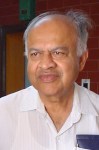
Famed Indian astrophysicist and cosmologist Dr. Jayant Narlikar has recently passed away. What follows is my tribute to this great scientist. Narlikar worked under the tutelage of Fred Hoyle, the eminent British astrophysicist and cosmologist at Cambridge. Narlikar and Hoyle were two main backers of the Steady State Theory that attempted to explain the history of our universe, claiming that the universe was always expanding and new matter was being created to keep the universe at a constant density. The theory lost ground to the Big Bang theory when more evidence came to light in the form of Cosmic Microwave Background (CMB) radiation, and Narlikar and Hoyle eventually accepted the Big Bang theory and redeemed their careers with other significant contributions.
Backing the wrong horse is not a sin in itself. Until strong evidence is discovered for a particular theory, other competing theories are fair game. That is how scientific research thrives and should be conducted. Groupthink has no place in such endeavors.
Narlikar was the son of an eminent mathematician. After his stint at Cambridge with Hoyle, he came back to India to work at TIFR (Tata Institute of Fundamental Research). He popularized cosmology in India and fostered a new generation of cosmologists. He set up the Inter-University Center for Astronomy and Astrophysics (IUCAA), which created collaborations between different universities. Narlikar was a prolific writer who wrote numerous articles, books and TV programs, covering popular science as well as science fiction. I call him the Carl Sagan of India, since Sagan is known for popularizing astronomy in the US via his books, lectures and famous TV series, “Cosmos”.
During the later part of his career, Narlikar worked on finding the origins of life. He conducted experiments to find out if life existed higher up in earth’s atmosphere. By putting bio sensors in hot air balloons rising to the stratosphere, he detected 3 species of microbes which survive in the ultra violet (UV) ray filled environment. They had become UV tolerant in an extraordinary demonstration of evolutionary adaptation. Narlikar’s premise was “panspermia”, the hypothesis that life on earth originated from outside and was transported here. It was a profound contribution that enriched the fields of microbiology, astrobiology, and environmental science.
Around the same time, Hoyle worked and contributed significantly to understanding the nucleosynthesis process which powers the Sun. Until then, people were unsure whether it was chemical processes like burning of coal or atomic/nuclear processes that fired the Sun. Hoyle proposed that nuclear fusion combines hydrogen atoms to form helium, creating energy. Hoyle also came up with an explanation of how stars can create all the elements heavier than helium. Hoyle predicted that an unstable form of carbon was a stepping stone to produce heavier elements all the way up to iron in stars. This form of carbon has now been recreated in labs. Hoyle’s work helped us understand the powering of the sun and other stars of all sizes in our universe.
To conclude, here is a little known work of Narlikar and Hoyle: as late as 1993, they worked with another scientist, Geoffrey Burbidge, and proposed a model which tried to attribute the CMB to thermalized starlight instead of the Big Bang. Called ‘Quasi Steady State Cosmology’ (QSSC), it proved to be mathematically elegant. It is still a fringe theory which did not cause any revolutions, but the thinking behind it was sophisticated.
Although neither Narlikar nor Hoyle won a Nobel prize, they had significant contributions to astrophysics and cosmology. Narlikar is remembered as one of the great Indian cosmologists, and his legacy will endure in our minds forever.
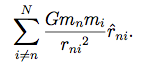
Physicists and astronomers have proposed countless theories about the cosmos. Until recently, however, there was little means through which to test their theories; often, observational data was not detailed or plentiful enough to verify them. Thus, scientists came up with a method known as N-body simulations when computers began to evolve, a simulation that allowed them to track the motion of multiple astronomical bodies. In principle, N-body simulations are simple; the only significant force acting on these astronomical bodies is the gravitational force, which can be determined by Newton’s equation of gravitation. In order to calculate the total gravitational force on an astronomical body, it follows that one must simply integrate all of the gravitational forces acting on each star, producing an equation like so:
Essentially, the gravitational effects of all the other stars on each individual star is calculated, and using this, a new velocity and position is found for each of the stars at the next timestamp. Although this method was the most accurate, most computers lacked the computational power to complete this process for a large number of stars, since the number of calculations needed for N stars was N^2, meaning a simulation with 10^4 stars would need 10^8 calculations for each iteration. Despite the computational inconvenience, this method remained prominent for many years. That changed with the development of the revolutionary Barnes-Hut simulation, a clever approximation that drastically reduced the required computation and made N-body simulations accessible to a larger number of astronomers
The Barnes-Hut N-body simulation uses an approximation method to make running N-body simulations far easier. Essentially, the algorithm divides the 3D space into smaller and smaller cubes until there are only 1 or 0 stars in each cube. Then, it treats far away stars as a single, massive star, and calculates their effect on a given star using the center of mass of the cube those far away stars are in. It is a bit like looking at a far away city skyline; you don’t need to see every individual window to determine the approximate brightness. For closer stars, it uses the smaller, subdivided cubes in order to make calculations. This ensures that the stars that have a greater effect are considered while far away stars are approximated. The original algorithm scaled as N^2 for N stars, but the Barnes-Hut version scales as NlogN, significantly reducing the number of calculations. Drawing on the prior example, a simulation with 10^4 stars would only require around 40 thousand calculations using the Barnes-Hut algorithm, a significant improvement from the 100 million needed using the original brute force method.
With the improved performance enabled by the Barnes-Hut algorithm, N-body simulations became far more accessible. However, the amount of computation involved was still significant for most computers, so many projects “borrowed” computational power from many different computers in order to run their simulations. With the advance of GPUs, however, computers can run multitudes of calculations all at once using matrix multiplication. Today, astronomers throughout the world utilize N-body simulations to chart the position of galaxies over time, model cosmic structures, and even predict the final fate of our universe. As computational power and modeling mechanisms evolve, our ability to understand the night sky above us will only grow.
The Jelly Fish Nebula, located in the Gemini Constellation 5000 light years from Earth, is a result of possibly several supernova remnants of spinning neutron stars. The nebula is 70 light years in diameter and is composed of two shells that may the result of multiple events. The inner shell remnant is between 5000 to 35000 years old while the outer shell maybe 100,000 years old interacting with molecular clouds.
The structure of IC 443 is influenced by its surroundings. In the southeast part of the nebula, the supernova’s blast wave is interacting with a dense molecular cloud. The cloud has slowed down the wave so it is moving between 67,000 to 89,000 mph. Toward the northeast part of the nebula the blast wave is hitting a cloud of hydrogen that is less dense and thus moving at between 180,000 and 220,000 mph.
Image was taken over the course of two nights April 1-2 at Big Cypress National Preserve, Florida in competition with a seven-foot alligator that occupied my imaging location. IC 443 image was captured with 300 light frames of 60 sec or 5 hours total integration. First set of 150 light frames used an Optolong Ultimate Ha-OIII filter and second set of 150 light frames used an Askar D2 OIII-SII filter. Telescope: Takahashi Baby-Q 85mm, f5.3; Camera: ASI2600MC Pro; other aids ASIAIR, OAG ASI174 mini, filter wheel; mount ZWO AM5N. PixInsight was used for image processing.
Astroimage IC 443 Jelly Fish Nebula
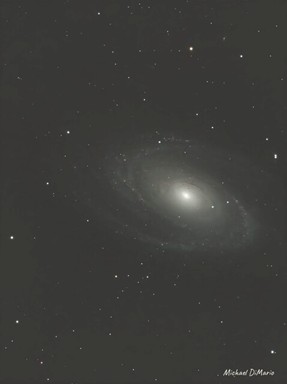
Messier 81 was first discovered by Johann Elert Bode on 31 December 1774 and thus its acquired name. M81 is one of the brightest galaxies in the night sky. It is located 11.6 million light-years from Earth in the constellation Ursa Major and has an apparent magnitude of 6.9. Through a pair of binoculars, the galaxy appears as a faint patch of light in the same field of view as M82. A small telescope will resolve M81’s core. The galaxy is best observed during April.
The galaxy’s central bulge contains much older, redder stars. It is significantly larger than the Milky Way’s bulge whereby a black hole of 70 million solar masses resides at the center of and is about 15 times the mass of the Milky Way’s central black hole. The galaxy’s spiral arms extend downward into its nucleus and comprise young, bluish, hot stars formed in the past few million years.
M81 image was salvaged from a failed attempt of capturing two galaxies M81 and M82 in a single image. The M81 image was cropped out of the failed image. Image was captured April 28th in Bortle 5 skies of Doylestown, PA. M81 image is comprised of 75 light frames of 60 sec each or integration of 1.25 hours. Image was captured with a Celestron 9.25 Edge HD SCT with a 0.7x reducer. Camera is a ASI2600MC Pro, filter is an Antilla Triband, guidance was with ASIAIR and OAG with a ASI174mm mini camera. Mount used is a Losmandy GM811. PixInsight was used for image processing.
A Massive, Glow-in-the-Dark Cloud Lurking in Our Cosmic Backyard Stars and planets are born inside swirling clouds of cosmic gas and dust that are brimming with hydrogen and other molecular ingredients. On Monday, astronomers revealed the discovery of the closest known cloud to Earth, a colossal, crescent-shaped blob of star-forming potential…more
-farmingdale-observer
Measuring 1.3 billion light-years across, scientists have discovered the largest structure in the universe while scanning space. We thought we had identified the great structures of the universe with superclusters of galaxies such as Shapley or Laniakea, but Quipu has just stolen the show. Imagine a sort of giant web, a titanic network of interconnected galaxies stretching over…more
-dailygalaxy.com
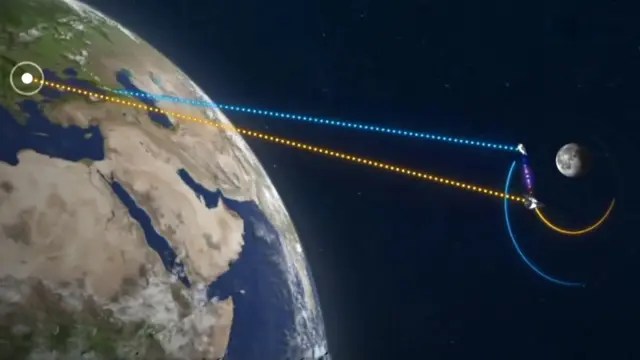
China Fires Laser at the Moon in Broad Daylight In a major leap for lunar navigation, China has successfully bounced a laser off a Moon-orbiting satellite in full daylight—a feat previously thought impossible due to intense solar interference. The breakthrough, carried out by the Deep Space Exploration Laboratory (DSEL) using the Tiandu-1 satellite, marks the world’s first Earth-Moon laser-ranging success under strong sunlight, according to a report…more
-NYT
Soviet Spacecraft Crash Lands on Earth After a Journey of Half a Century After looping through space for 53 years, a wayward Soviet spacecraft called Kosmos-482 returned to Earth, entering the planet’s atmosphere at 9:24 a.m. Moscow time on Saturday, according to Roscosmos, the state corporation that runs the Russian space program….more
-skyatnightmagazine
Yes, astronomers have captured real photos of alien worlds in deep space. The field of exoplanet study is one of the most rapidly advancing fields in astronomy, going from first confirmed discovery to the first direct images of exoplanets within less than 10 years. Up until the mid 1990s, astronomers could only hypothesize that, if there are planets around our own star, the Sun, then surely there must be planets around other stars…more
-NASA.com
1 Astronaut, Many Cameras and 220 Days of Amazing Images From Space Don Pettit, NASA’s oldest active astronaut, returned to Earth on April 20, the day he turned 70 years old. That concluded his fourth trip to space — a busy 220 days at the International Space Station. Like other crew members on the space station, Mr. Pettit conducted experiments, talked with students and exercised for hours…more
-NYT
Ed Smylie, Who Saved the Apollo 13 Crew With Duct Tape, Dies at 95 Ed Smylie, the NASA official who led a team of engineers that cobbled together an apparatus made of cardboard, plastic bags and duct tape that saved the Apollo 13 crew in 1970 after an explosion crippled the spacecraft as it sped toward the moon, died on April 21 in Crossville, Tenn. He was 95…more
-NYT
New Studies Dismiss Signs of Life on Distant Planet In April, a team of astronomers announced that they might — just might — have found signs of life on a planet over 120 light-years from Earth. The mere possibility of extraterrestrial life was enough to attract attentionworldwide. It also attracted intense scrutiny from other astronomers,..more
-NASA
Eccentric ‘Star’ Defies Easy Explanation, NASA’s Chandra Finds Scientists have discovered a star behaving like no other seen before, giving fresh clues about the origin of a new class of mysterious objects. As described in our press release, a team of astronomers combined data from NASA’s Chandra X-ray Observatory and the SKA [Square Kilometer Array] Pathfinder (ASKAP) radio telescope on Wajarri Country in Australia to study the antics of the discovered object, known as ASKAP J1832−0911 (ASKAP J1832 for short)…more
by Rex Parker, PhD director@princetonastronomy.org
May 13 2025 Meeting of AAAP. Our meeting in Peyton Hall on May 13 will be the final monthly session on campus until September. The June 10 meeting will convene at the State Planetarium in Trenton, then our schedule takes a summer hiatus until September. The guest speaker on May 13 will be James Stone, renowned Professor of Astrophysical Sciences at Princeton. He’ll illuminate the deep mysteries of the physics of black holes. For more on the speaker please see program chair Victor’s article below. I hope to see you in person at Peyton Hall May 13, though Zoom will also be available (thanks to Dave and Ira).
Observatory Status. This summer should offer many opportunities to gather for hands-on astronomy at the AAAP Observatory in Washington Crossing State Park. The electrical problem discussed at the meeting last month is being rectified, although state permitting can be slow. An electric repair company has been selected and a quote for the job has been accepted by the Board. Until the wiring repair is completed, for Friday night public observing sessions (when weather permits) a portable AC generator will be on site to power the observatory and enable the FiOS wifi system.
Election of Officers May 13. It is important that you, as a member of AAAP, attend the May 13 meeting to help us get the quorum needed for the annual election of officers. I would like to thank Daniel Opdyke for agreeing to serve as the nominations chair. According to the Constitution and By-laws, the Nominating Committee will identify a slate of candidates for the 7 Board positions of director, assistant director, secretary, treasurer, program chair, observatory chair, and outreach chair. “Officers shall be elected at the Annual Meeting of AAAP in May. Subject to the quorum requirement of Section 5, Subsection C, a simple majority of votes cast shall be sufficient for election. Newly elected officers shall assume office at the end of the Annual Meeting.” So this year we are pleased that 6 of the 7 incumbents indicated willingness to serve again. Michael Mitrano has decided to step down as Treasurer, and we are indebted to him for a decade and a half of excellent service to the club. And I am happy to inform you that Ira Polans has put his name up as Treasurer candidate.
Board of Trustees candidates for May 13 election: Director, Rex Parker Assistant Director, Bob Vanderbei Secretary, Gene Allen Treasurer, Ira Polans Program Chair, Victor Davis Observatory Chair, David Skitt and Jennifer Skitt assistant chair Outreach Chair, Bill Murray
Biosignature on an Exoplanet! In mid-April a major announcement splashed across the news media – an astronomy research group at Cambridge Univ. in England had detected a sign of life on an exoplanet. The big news centered on planet candidate K2-18, orbiting a red dwarf star in Leo. It was first discovered by the Kepler space telescope about 10 years ago. In the 10 years since, much attention has been drawn to sub-Neptune type planets, which can have environments potentially harboring life outside our solar system. The sub-Neptune “hycean worlds” (hydrogen ocean worlds) feature vast water oceans, but very unlike earth have atmospheres that are rich in molecular hydrogen (H2). This recognition has markedly increased the number of planet candidates which might have life-habitable environments. It’s important to recognize that the large size of Hycean worlds makes them much more accessible to atmospheric spectroscopy study with JWST compared to rocky earth-like planets. Here is the publication that created the current news media stir: Madhusudhan et al., ApJ Lett, Vol 983, No. 2, April 17 2025.
K2-18b is a hycean world situated in the habitable zone of its star. The new findings build on previous JWST near-IR (0.8 to 5 μm ) observations which showed CH4 and CO2 in its atmosphere consistent with predictions for hycean conditions. Those observations also provided a tentative hint of dimethyl sulfide (DMS), a possible biosignature gas, but the previous data reached only low statistical significance. The new report analyzed the mid-infrared transmission spectrum (6 to 12 μm) of K2-18 b using the JWST MIRI LRS instrument. They found that among the molecules predicted for K2-18b’s atmosphere, the data best fit the biosignature gases DMS and dimethyl disulfide (DMDS) with high statistical significance.
The excitement about dimethyl sulfide (DMS) in the atmosphere of an exoplanet comes from understanding it’s biological origin on earth. It is unstable and doesn’t persist for long, although its half-life depends on conditions as for most chemical substances. Its detection on K2-18b therefore implies continual formation, which on earth is essentially 100% biological. On earth DMS is the product of bacterial breakdown of an important organo-sulfur biochemical (dimethylsulfoniopropionate) produced in marine algae and phytoplankton. This precursor has an important role in regulating internal pressure and ability of plankton to float in the ocean. The DMS product is volatile and diffuses from seawater into the atmosphere on earth, where it further oxidizes to form sulfate aerosols. These aerosols are a main source of cloud-condensation nuclei over the oceans, which ultimately control the earth’s radiation budget through cloud reflectance. The DMS levels on K2-18b based on the newer JWST data (>10 ppm) are higher than in the bulk atmosphere on earth. If the data can be further verified, this represents the strongest biosignature on an exoplanet ever detected to date.
Life beyond Earth, a Continuing Discussion in AAAP. NASA first developed a major program to search for life on other planets and moons in the mid-1990’s. In 1996, NASA chief Dan Goldin expanded on the intense public interest stirred by the report of putative fossil microbes in a Martian meteorite and the recent discovery of exoplanets. The subsequent advances made by NASA planetary probes defined the most likely places in the solar system to harbor life. Today, with hundreds of exoplanet candidates discovered by the Kepler and TESS orbiting telescopes and Mars rovers continuing to explore, extraterrestrial life seems less sci-fi and more like impending reality.
A few years ago, it was proposed that the science community establish a framework for how to present evidence for life beyond Earth (Green et al., Nature vol 598, p 575, Oct 28 2021). At the time of that paper, the interstellar visitor Oumuamua had recently sailed through the solar system and provoked a lot of interest, including the Amazon best-selling book, Extraterrestrial by Avi Loeb (who was a AAAP guest speaker the next year). In the Nature article, former NASA chief of Planetary Sciences James Green stated, “Our generation could realistically be the one to discover evidence of life beyond Earth.” Responsibility comes with this privilege because of the deep implications and impact that such a discovery would have on humanity. Findings presented in the public media may take on more weight than the data actually support or the principals intend. There are challenges of perception and communication, as evidence likely would be revealed in stages, for example from one set of JWST spectroscopy data to the next. Our society has a tendency to turn scientific findings into binary, all-or-nothing propositions, placing unrealistic expectations on initial stages. The paper lays out a conceptual framework for how to proceed with a dialogue among scientists, technologists, and the media, to agree on objective standards of evidence for life and best practices for communicating it. If indeed we are on the verge of making the most significant scientific and philosophical discovery ever in human history, this is an essential step to prepare society for acceptance.
An Owl in the Deep Sky. Messier 97 (NGC 3587) in Ursa Major is known as the Owl Nebula, one of the most colorful planetary nebulae in the northern sky in spring. The image below was taken over the last few nights in April by Rex Parker in New Jersey. Final image is the mean of 81 x 6 min subframes, with Antlia RGB Tri-Band filter, ASI2400MC camera at gain 140 (unity), and 12.5” Cassegrain reflector on a Paramount MX mount.
Understanding the Plasma Dynamics of Black Holes The May, 2025 meeting of the AAAP will take place in Peyton Hall on the campus of Princeton University on Tuesday, May 13th at 7:30 PM. As usual, the meeting is open to AAAP members and the public. Participants can join the meeting in-person at Peyton Hall or log in to the Zoom session as early as 7:00 pm to chat informally before the meeting begins. The evening’s guest speaker is James Stone, Emeritus Professor of Astrophysical Sciences and the Lyman Spitzer, Jr. Emeritus Professor of Theoretical Astrophysics at Princeton University. His talk is entitled “Black Hole Accretion.”
Options for Attending the Meeting You may choose to attend the meeting in person or participate via Zoom or YouTube as we’ve been doing for the past few years. (See How to Participate below for details). Due to security concerns, if you log in before the host has set up internet connectivity in Peyton Hall, you may need to wait in the Waiting Room for a few minutes until the host is prepared to admit you into the meeting. You’ll need to unmute yourself to make comments or ask questions. It’s polite, though not required, for you to enable your camera so other participants can see you. The meeting will be recorded and edited for posting to our club’s YouTube channel.
Meet the Speaker Dinner Prof. Stone will join us for the traditional “meet the speaker” dinner at Winberie’s Bar and Restaurant prior to the meeting. Our reservation is for 5:45 pm. Please contact the Program Chair at program@princetonastronomers.org if you plan to attend.
Here’s the anticipated agenda for May 2025’s monthly meeting of the AAAP:
(Times are approximate)
Getting to Peyton Hall The parking lots across the street (Ivy Lane) from Peyton Hall are now construction sites, unavailable for parking. We’ve been advised by the administration of the astrophysics department that we should park in the new enclosed parking garage off Fitzrandolph street and walk around the stadium and athletic fields. Here’s a map of the campus and walking routes from the parking garage to Peyton Hall. The map shows the recently completed East Garage. Not shown is an access road Sweet Gum that connects from Faculty Road to an entrance at the lower left corner of the garage. Stadium Road connects from Fitzrandolph Road to another entrance at the opposite corner (and higher level) of the garage. It’s about a 10-15 minute walk from the parking garage to Peyton Hall.
Featured Speaker:
James Stone Emeritus Professor of Astrophysical Sciences
Emeritus Lyman Spitzer, Jr. Professor of Theoretical Astrophysics
Black Hole Accretion Accreting black holes power the most luminous objects in the Universe, including active galactic nuclei, quasars, and gamma ray bursts. Recent advances in computational methods allow calculations of the structure and dynamics of such flows from first principles. Moreover, observations from the Event Horizon Telescope and JWST are providing new insights into black hole accretion in a wide range of environments, and on scales down to the event horizon. Prof. Stone will summarize some of the recent progress that has been made in trying to understand the remarkable plasma dynamics of accreting black holes.
James Stone Prof. Stone’s research program centers on the use of large-scale direct numerical simulations to study the gas dynamics of a wide range of astrophysical systems, from protostars to clusters of galaxies. Almost all of this work requires development of advanced numerical algorithms for astrophysical gas dynamics on modern parallel computer systems. Prof. Stone is one of the primary developers of the ZEUS code for astrophysical MHD, and more recently he and his collaborators have developed Athena, a high-order Godunov scheme for astrophysical MHD that uses adaptive mesh refinement (AMR).
Some of the research problems on which he works include: (1) hydrodynamic and MHD processes that can lead to outward angular momentum transport in accretion disks, (2) the production and propagation of highly supersonic, collimated jets from accretion disks around protostars and active galactic nuclei, (3) the properties of compressible MHD turbulence in cold molecular gas in the galaxy, (4) the time-dependent evolution of strong shocks in the interstellar medium, (5) the structure of radiatively driven winds and outflows from disks around hot stars and AGN, and (6) the effect of mergers and AGN feedback on the hot x-ray emitting gas in clusters of galaxies.
Prof. Stone is deeply involved in PICSciE, which provides access to high-performance computing systems on campus, and training and education in scientific computation and numerical analysis, and he has a joint appointment in the Program in Applied and Computation Mathematics (PACM).
How to Participate (Links) Zoom& YouTube Live Amateur Astronomers Association of Princeton is inviting you to a scheduled Zoom meeting.
Topic: May 2025 AAAP Meeting-James Stone, Professor, Princeton University Time: May 13, 2025 07:00 PM Eastern Time (US and Canada)
Dr. Hamer has expressed his intention to continue AAAP’s tradition to host the June meeting at the planetarium of the NJ State Museum in Trenton. The meeting will feature a presentation of the planetarium’s current sky show, a live planetarium tour of the night sky, and a guest speaker presentation.
July-August
No monthly meetings
Sept. 9, 2025
Edwin L. Turner Emeritus Professor of Astrophysical Sciences Princeton University elt@astro.princeton.edu
TBA Thanks to Bill Thomas for suggesting this speaker.
Nov. 11, 2025
Romain Teyssier Professor of Astrophysical Sciences and Applied and Computational Mathematics Princeton University teyssier@princeton.edu
TBA
As always, members’ comments and suggestions are gratefully accepted and much appreciated. Thanks to Ira Polans and Dave Skitt for setting up the online links and connecting the meeting to the world outside Peyton Hall.















 Amateur Astronomers Association of Princeton