by Dave and Jennifer Skitt, Observatory Chairperson(s)
Figured I give everyone an update on a recent Keyholder (KH) refresher training session. We had nine persons total, 6 KH’s and 3 KH’s in training. Rafael Caruso received his key at the end of the night as he successfully completed his fourth session. A few others are close to receiving their keys.
Jennifer and I showed how to set up the two EAA monitors and ran through mount startup and slewing. We covered how to use ASICap for camera focus with the Baht mask and for bright objects like the Moon. The moon was visible as a spectacular tiny crescent. We then showed how to use ASILive for deep sky objects. Everyone had a chance to practice what was shown.
As the night went on, Jacob Kosowski took to finding objects to image with ASILive. In the process, he found the reason Tom Swords and I had star trails after re-running the TPoint model a few days before. A setting to stack and align frames in the software had gotten turned off. Have no clue how this happened but problem solved!
The pointing of the C-14 is very good with the TPoint model that we have so we’ll stick with it for the time being. Tom and I will soon run a new TPoint model for the Hastings.
Sam Sherman was there and told me he was able to get the measurements he needed for his AP Calculus project by logging into the computer and using SkyX. He was very appreciative for the help the club members provided.
Near the end of the night, I was able to show how to use the FOV indicator, Angle measurement and Image link features in SkyX to the few who were left fighting off the cooler temperatures.
It was a very rewarding session!
Addendum: the TPoint model has since been successfully completed for the Hastings mount. Celestial objects can now be easily found in both primary telescopes.
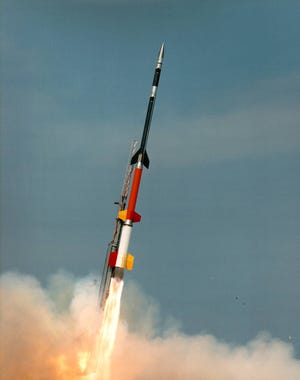
Launched at 8:44 p.m. EDT, Sunday, May 16, 2021, from the Wallops Flight Facility.
Even though this video is not of the stars, planets or other celestial objects I thought it would still be of interest to our members. This is the launch of the Black Brandt XII about two weeks ago from NASA’s Wallop facility in Virginia. It was very exciting to view my very first rocket launch. Purpose of the mission is -How are energy and momentum transported between different regions of space that are magnetically connected?
My good friend Saul Moroz was an active member of AAAP, who reintroduced me to our beautiful science, astronomy. But there was another part of Saul’s life, just as there are with all our members, but Saul’s life was documented in this short film “Saul’s 108th Story” created by Minnesota-based filmmaker Joshua Carlon. It has been an official selection in twelve film festivals throughout the country. https://www.pbs.org/video/sauls-108th-story-qxxlxs/
In recent issues of Sidereal Times I’ve been discussing whether our 1879 Hastings objective was designed using John Herschel’s 1822 procedure. Herschel’s method was a major advance that gave very good results for its time. As part of my investigation, I adapted it for an Excel spreadsheet.
Sixty years earlier in France, Clairaut and d’Alembert had published design methods equivalent to the best ones even today. However, their equations were too complicated for general use. Besides the goal of helping opticians in their design efforts, Herschel proposed that a refractor should be able to focus sharply on both distant astronomical objects and nearby land objects. This is unimportant for permanently mounted refractors, but could be useful for smaller hand telescopes.
As mentioned in the April Times, the four surface radii of the Hastings lens elements are somewhat different from what Herschel’s formulas would have required. However, air-spaced doublet achromats with surfaces shaped in the general neighborhood of the “Herschel condition” are relatively forgiving for visual use at f/10 and above. For wide low-power fields and photographic applications where coma should be minimized, fully optimized design methods should be used instead.
We’re fortunate that our Hastings objective comes fairly close to the best possible design. I became interested in how well it would perform on nearby objects. Fraunhofer is said to have tested his own lenses this way in the long galleries of the Benediktbeuern monastery. Dave and Jennifer Skitt and I did some similar tests on the afternoon of April 18th. We mounted a book with small print at distances of 95 and 60 feet and used eyepieces to give us 105 to 116 power.
Jennifer Skitt, Credit: Dave Skitt
Focusing at such short distances requires racking an eyepiece much farther out than for sky objects. I brought an extension tube that I use on my own 4-inch Edmunds refractor. We obtained sharp images of the book print, somewhat better at 95 feet than at 60 feet as might have been expected. Although I have no record of Hastings having actually tested his objective this way, my guess is that he did do this before releasing the lens to Byrne for the final cell, tube, and mounting. One of his papers mentioned some successful 1879 observations of close double stars before letting the lens go, so he must have had a temporary mount of his own.
I plan to do a similar test with my own refractor. Other club members with refractors of different sizes and focal ratios might be interested in trying this experiment themselves if they have suitable extension tubes. I would like to hear about any results. Those with reflectors might also like to try it.
So far, I have found no evidence that Herschel did actual experiments on lenses designed by his equations and reduced to practice. He had made a fine contribution to applied optics and went on to other areas.
Fellow AAAP member, John Harding, sent this ISS image he shot some years ago (he describes just below). Grab your camera and tripod for the next flyby. Contest time! Send in your entries to secretary@princetonastronomy.org by August 15, 2021 and we will declare a winner in the September issue of Sidereal Times.
“Very easy to spot the ISS. I got this photo with a DSLR in July, 2018 from my severely light polluted backyard, looking south. (F/1.8, ISO 400, 3s, 35mm). The bright red star is Antares. Aircraft lights are visible through the leaves, left side of image.”
First Light: Switching on the Stars at the Dawn of Time by Emma Chapman
Published 2021
Grade: B+
Hardback $23.40 on Amazon
276 pages
Award-winning astrophysicist Dr. Emma Chapman (Imperial College, London) just published “First Light: Switching on the Stars at the Dawn of Time” earlier this year. In the book, she reveals there is no observational evidence of the first “Population III” stars that lit up the universe for the first time approximately 380 million to 1 billion years after the Big Bang. Her research on this subject is challenging, since the overwhelming percentage of Population III stars were high mass, short-lived metal free gems that, upon their death, gave life to new stars, heavier elements, and life on Earth. And yet, astronomers believe the first generation of stars must also have included low mass, long-lived stars that should still be burning today. This book discusses how and why we are searching for these elusive stars. The author adds a bit of humor along the way to lighten, what at times, becomes a bit technical and dry.
“First Light” is an interesting book that opened my eyes to dwarf galaxies (e.g., Segue 1), the Sagittarius Stream, and astroarchealogy. In a hopeful note, Dr. Chapman tells us that the lower mass Population III stars shine for approximately 16 billion years. This gives us a couple billion years to discover these hard-to-find relics of the early universe—my only question is: is that enough time?
Club member looking for (paid) onsite help with various AP-related software and hardware issues, including checking polar alignment, slewing troubles, achieving successful meridian flip and proper installation and use of filters/Barlows. Hardware consists of Skywatcher Esprit 100 ED (triplet refractor), Skywatcher AZ-EQ6 mount, et al (auto-focuser, Pegasus Advance Powerbox…). Prefer familiarity with Sequence Generator Plus, but especially EQMOD and Cartes de Ciel. Hopewell/Pennington area. Call Dennis at 781 820 7039 for details.
James Webb Space Telescope’s golden mirror in final test The technological marvel that is the James Webb Space Telescope (JWST) is going through final testing before being shipped to the launch site. The successor to the mighty Hubble is due to leave Earth in October to begin a new era of astronomical discovery…more
-BBC
Europe plans sat-nav and telecoms network at the Moon The European Space Agency is proposing a precise navigation system at the Moon, much like the sat-nav technology we have here on Earth. It would enable spacecraft and astronauts to know exactly where they are when moving around the lunar body and to land with precision…more
-NYT
How They Took the First Picture of a Black Hole A planet-sized network of radio telescopes has assembled the first image of a supermassive black hole. At the center of our galaxy lies Sagittarius A*, a black hole as massive as four million suns. The black hole is obscured by thick dust and a bright haze of superheated gases. A network of eight telescopes called the Event Horizon Telescope tried to use radio waves…more
-NYT
What Is a Black Hole? Here’s Our Guide for Earthlings Welcome, earthlings, to the place of no return: a region in space where the gravitational pull is so strong, not even light can escape it. This is a black hole. It’s O.K. to feel lost here. Even Albert Einstein, whose theory of general relativity made it possible to conceive of such a place, thought the concept was too bizarre to exist. But Einstein was wrong, and here you are…more
-P. Jenniskens/SETI Institute
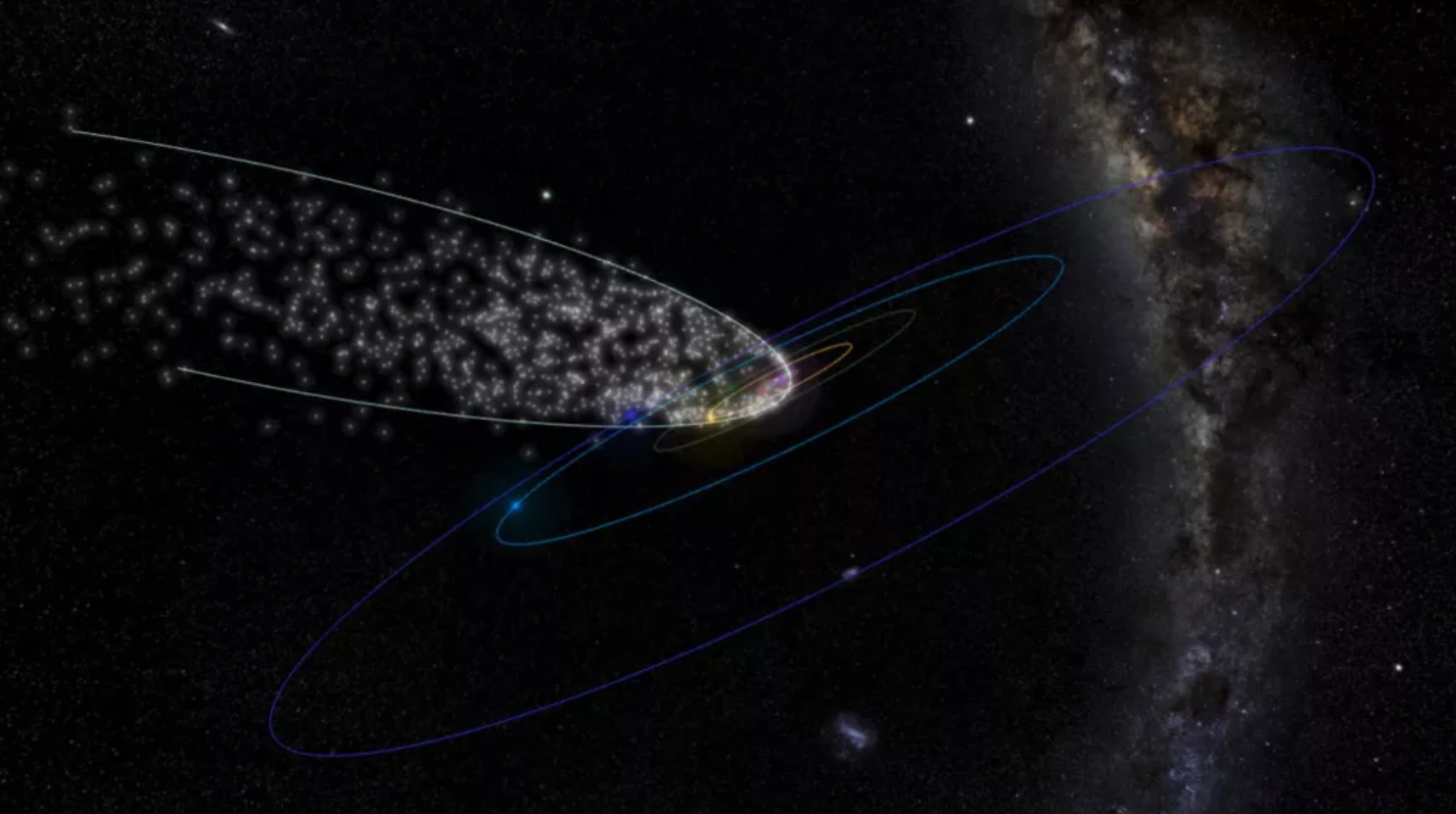
Scientists track meteor shower to unusual comet seen every 4,000 years Meteor showers are the dazzling result of cometary debris building up along well-worn paths through the solar system, then burning up in Earth’s atmosphere as our planet crosses that dust trail. It’s hard to call a path well-worn when something passes by only once every 3,967 years…more
-space,com
‘Super Flower Blood Moon’ webcasts: How to watch the supermoon eclipse of 2021 online The full moon on Wednesday (May 26) will be something to behold, as the only total lunar eclipse of 2021 arrives together with the year’s biggest “supermoon.” Skywatchers in much of the world will have a chance to see a slightly larger-than-average full moon temporarily appear red during the so-called “Super Flower Blood Moon.” But for those in parts of the world where the eclipse isn’t visible…more
-2018 Stanford-Brown-RISD iGEM Team
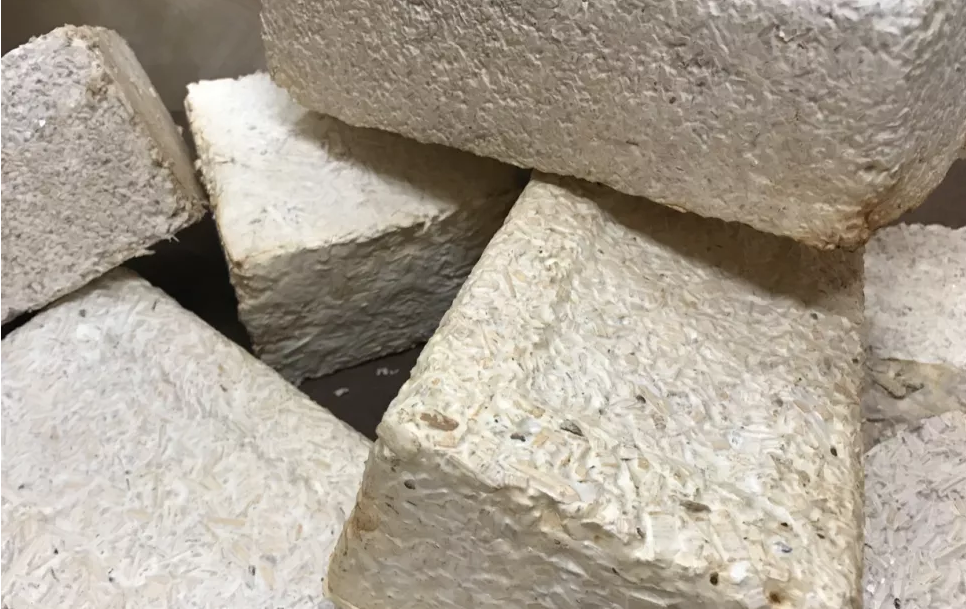
There could be fungus among us on Mars with this wild astronaut house idea A strange consequence of Lynn Rothschild’s current research is that she ends up snapping photos of the more exotic mushroom offerings she encounters in the grocery store’s produce aisle. Rothschild, an astrobiologist and synthetic biologist at NASA’s Ames Research Center in California…more
-NASA/ESA
Hubble Space Telescope traces 5 mysterious ‘fast radio bursts’ to distant spiral galaxiesNew Hubble Space Telescope observations have given more credence to a theory explaining mysterious radio energy bursts. The long-running observatory tracked down five fast radio bursts (FRBs) to the spiral arms of five faraway galaxies. FRBs are notoriously hard to trace because the bright flares fade so quickly…more
-NASA/ESA
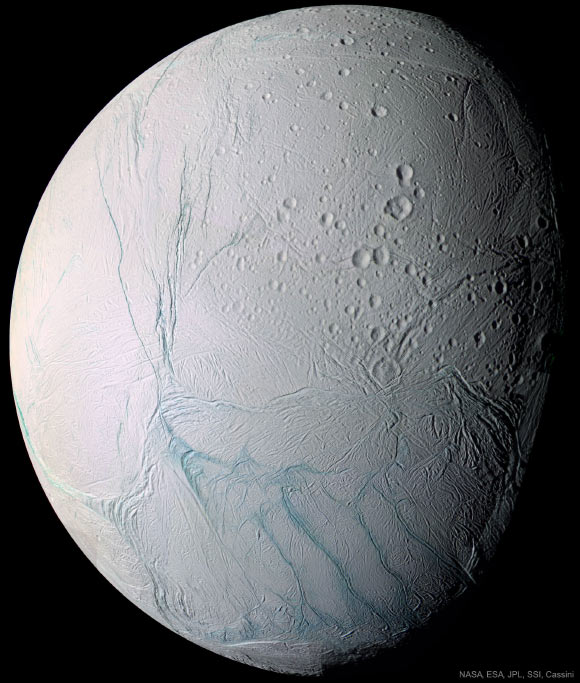
Subsurface Ocean of Enceladus Has Currents, New Theory Suggests A novel theory proposed by planetary scientists from Caltech and NASA’s Jet Propulsion Laboratory challenges the current thinking that the saltwater global ocean of Enceladus, the sixth largest moon of Saturn, is homogenous. In 2014, NASA’s Cassini spacecraft discovered evidence of a large subsurface ocean on Enceladus and sampled water from geyser-like eruptions…more
by Rex Parker, Phd director@princetonastronomy.org
Zoom meetings continue for May and June meetings. There is some light beaming through the dark nebula, and a tiny sliver of hope emerges that we might be able to return to Peyton Hall next fall. Meanwhile we hope that you are well and keeping your sense of humor and perspective despite the challenges of COVID.
For the May 11 meeting, we are again taking advantage of the situation by inviting another non-local guest speaker-astronomer. See program Chair Victor Davis’s section below for details on the talk. After that, we’ll hold a members business meeting including results of the election of officers and plans for the Observatory this spring/summer. In order to more smoothly handle the election we are again using a survey to conduct the vote – please go to the election link below.
Officer elections – voting link. In order to conduct elections of officers in May, consistent with the by-laws, we have sent a link to a specific survey on-line where you can vote on the slate of officers. There are two additional questions in the survey that we need member input on. Results will be discussed at the May 11 meeting. If you haven’t yet responded, please do so by going to this secure link. https://www.surveymonkey.com/r/JMNYZNJ
A sea change in planetary sciences – and a book recommendation from an expert. After last month’s fascinating presentation I asked the guest speaker, Dr. Alexandra Davatzes of Temple Univ., for insights on a text or other book that could help amateur astronomers better understand geochemistry and planetary formation. She noted that the science changes fast and texts may become outdated. I realized after checking out a few book reviews and journal articles that there is a big change underway in how planetary sciences are being taught in academe. There previously was a strong physics approach to the subject as part of the astronomy curriculum, typically using a tour of the solar system bodies as framework. But with NASA’s spacecraft exploration and lab-based analysis of extraterrestrial materials over the past decade or more, a new geological perspective on planet formation and evolution seems to be at hand.
Dr. Davatzes suggested looking at one of the first textbooks to take the newer approach, “Planetary Geosciences” by Hap McSween. Although I haven’t bought that one, I did get another one she recommended (and has used in her classes) which has the catchy title “Planetary Crusts”, by S Ross Taylor and Scott McLennan. (Planetary Crusts: Their Composition, Origin and Evolution; Cambridge Planetary Science, Series Number 10). After starting in on the book I already agree with Dr. Davatzes that it is very well written, and it brings a perspective I had not before realized. The amazing situation that a planet forms out of the solar nebula, how the elements are distilled and congeal into the rocky and gaseous planets, and the conditions needed for a surface crust to even form at all, are where this books starts. Here on earth, the crust is everything we as a human species has going for it – all of evolution and anything we ever imagined are all a result of this process. So I am especially hoping that AAAP members will look into this title (you can download a free sample from Amazon that includes all of Ch.1). It would be a good follow-on discussion (chapter by chapter at least) to our review a couple months ago of Avi Loeb’s “Extraterrestrial”.
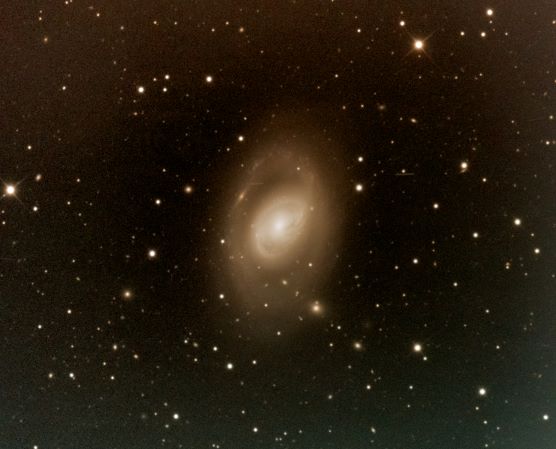
Observing in the spring. While the club’s Observatory at Washington Crossing Park is open on a limited basis to members (please check with Observatory Chair Dave Skitt before going out), we are continuing to plan for astro video live sessions. Plans will be discussed at the May meeting. Meanwhile, hopefully you’re getting outside in your yard at home and observing using your own personal telescope. In many ways this is the most essential domain of the amateur astronomer. Below, I offer a recent image taken with my own amateur equipment. I hope you can get outside to take in some of the views in your own telescope.
Messier 96 in the constellation Leo, a galaxy 31 million light years away. The faint streak above the core of the galaxy is the asteroid 9098 Toshihiko (1996BQ3), magnitude 18 and a mere 7 km in diameter! Astrophoto by Rex Parker from Titusville NJ; 12.5” telescope with ZWO CMOS camera for color and Atik 383l+ CCD camera for luminance.
The May 2021 meeting of the AAAP will take place (virtually) on Tuesday, May 11th at 7:30 PM. (See How to Join the May Meeting below for details). This meeting is open to AAAP members and the general public. Due to the number of possible attendees, we will use the Waiting Room. This means when you login into Zoom you will not be taken directly to the meeting. The waiting room will be opened at 7:00 PM. Prior to the meeting start time (7:30 PM) you may socialize with others in the waiting room. The meeting room has a capacity of 100 people.
For the Q&A session, you may ask your question using chat or may unmute yourself and ask your question directly to the speaker. To address background noise issues, we are going to follow the rules in the table below regarding audio. If you are not speaking, please remember to mute yourself. You are encouraged, but not required to turn your video on.
Meeting Event
Participant Can Speak?
Participant Can Self-Unmute?
Director Rex’s General Remarks
Yes
Yes
Program Chair Victor’s Speaker Introduction
Yes
Yes
Speaker Presentation
No
No
Q&A Session
Start All on Mute
Yes
5-minute bio break
Yes
Yes
Journal Club presentation
Start All on Mute
No
Business Meeting
Start All on Mute
Yes
Director’s closing remarks
No
No
Only the Business part of the meeting will be locked.
Featured Speaker: Dr. Alexander Hayes is an Associate Professor in the Department of Astronomy at Cornell University and Director of the Cornell Center for Astrophysics and Planetary Science. His presentation is entitled, “Ocean Worlds of the Outer Solar System.”
Titan is the only solar system body besides Earth that supports standing bodies of liquid on its surface. There’s compelling evidence that beneath Europa’s icy shell is a global ocean of liquid water. Might these support life? Solar system exploration stands on the verge of a golden age of exploration, with the opportunity to search for signs of life in one or more of the ocean worlds of the outer solar system within the next two decades. Prof. Hayes’ talk will review what we know about the habitability of the ocean worlds Europa, Enceladus, and Titan, and discuss upcoming mission concepts designed to determine if they are, in fact, inhabited.
Dr. Hayes’ research is focused Solar System exploration, using a growing armada of spacecraft to study the properties of planetary surfaces. Hayes’ NASA flight project experience includes Cassini, MER, MSL, Mars2020, Europa Clipper, and Dragonfly. He has also worked on instrument design and characterization for several Missile Defense Agency Programs. Hayes’ research program focuses on planetary surface processes, with a special interest in the ocean worlds of the outer solar system, Mars, and comets. He is a recipient of the Zeldovich Medal from the Committee on Space Research (COSPAR) and the Russian Academy of Sciences, the Ronald Greeley Early Career Award from the American Geophysical Union, the Sigma Xi Young Scholar Procter Prize, and a NASA Early Career Fellowship. Prof. Hayes earned an M.Eng in Applied Physics at Cornell University and a Ph.D. in Planetary Science from the California Institute of Technology. He is currently the chair of the Ocean Worlds and Dwarf Planet panel of the 2023-2032 Planetary Science and Astrobiology Decadal Survey. Prof. Hayes has also been involved in preflight development, calibration, in-flight operation and scientific analysis of data generated by Mastcam-Z, the panoramic and stereoscopic camera on NASA’s Perseverance rover.
AAAP webcast: This month’s AAAP meeting, beginning with Rex’s opening remarks and ending at the break before the business meeting, will be webcast live on YouTube and recorded for subsequent public access on AAAP’s YouTube channel. Be aware that your interactions during this segment, including questions to our guest speaker, may be recorded for posterity. Here is YouTube live link https://youtu.be/FtD3Lj7OE0g
Using Zoom: While we are, social distancing the AAAP Board has chosen to use Zoom for our meetings, based our belief that many members have already have used Zoom and its ease of learning. One of its great features is you can choose whether you want to install the software on your computer or use it within your browser.
How to Join the May Meeting: For the meeting, we are going to follow a simple two-step process:
Please make sure you have Zoom installed on your computer. You do not need a Zoom account or need to create one to join the meeting. Nor are you required to use a webcam.
Please visit our websitefor the link to the meeting
This session will be recorded and saved on YouTube. Send me an email at program@princetonastronomy.org if you have any concerns.
NOTE: We plan to open the meeting site 30 minutes to the 7:30 start time. This way you won’t have to rush to join the meeting. A maximum of 100 attendees can join the meeting.
More Information: The Zoom site has many training videos most are for people who are hosting a meeting. If you’re unsure how Zoom works you might want to view the videos on how to join a meeting or how to check your computer’s audio and video before the meeting.
We hope to make these short presentations a regular feature of our monthly meetings. If you are interested in presenting a topic of interest, please contact either director@princetonastronomy.org or program@princetonastronomy.org. We’d like to keep our momentum going!
Upcoming Programs: Here’s a look ahead at upcoming guest speakers. We’re expecting to conduct virtual meetings for the remainder of this academic year. In an effort to turn necessity into a virtue, we’re casting our recruiting net a bit wider than usual, inviting speakers for whom a visit to Princeton would be impractical or inconvenient. Suggestions for guest speakers for September, 2021 and beyond are welcome.
June 8 – Anna Schauer: Dr. Schauer, a new mother, is the NASA Hubble Fellow at the University of Texas at Austin. She leads the team researching what she’s nicknamed the Ultimately Large Telescope, a lunar liquid-mirror telescope that will aim at investigating First Star Formation.
WANTED: Members with interesting stories to tell. As of this writing, no member has volunteered to offer up a brief story or presentation for Journal Club this month. During the past months, we’ve enjoyed interesting and informative talks from AAAP members, and we’d like to keep the momentum going! We hope to make these short presentations a regular feature of our monthly meetings. We’d like to know what members are doing or what members are thinking about in the broad range of topics encompassed by astronomy. A brief ten-minute (or so) presentation is a good way to introduce yourself and the topics you care about to the club membership. If you are interested in presenting a topic of interest, please contact either director@princetonastronomy.org or program@princetonastronomy.org.
Looking forward to you joining us on Zoom or YouTube Live webcast at the May meeting!









 Amateur Astronomers Association of Princeton