James Webb Telescope

by S. Prasad Ganti

It was the most awaited event – launch of the James Webb telescope into space on Christmas day 2021. In development for close to two decades and a hefty price tag of $10 billion. It is considered as a successor to the Hubble space telescope which still continues to be used and provides great pictures of our universe. Why did it cost more and take much longer with so many overruns ?  And what is it expected to do after it settles down in its new home far from Earth over the next six months ?

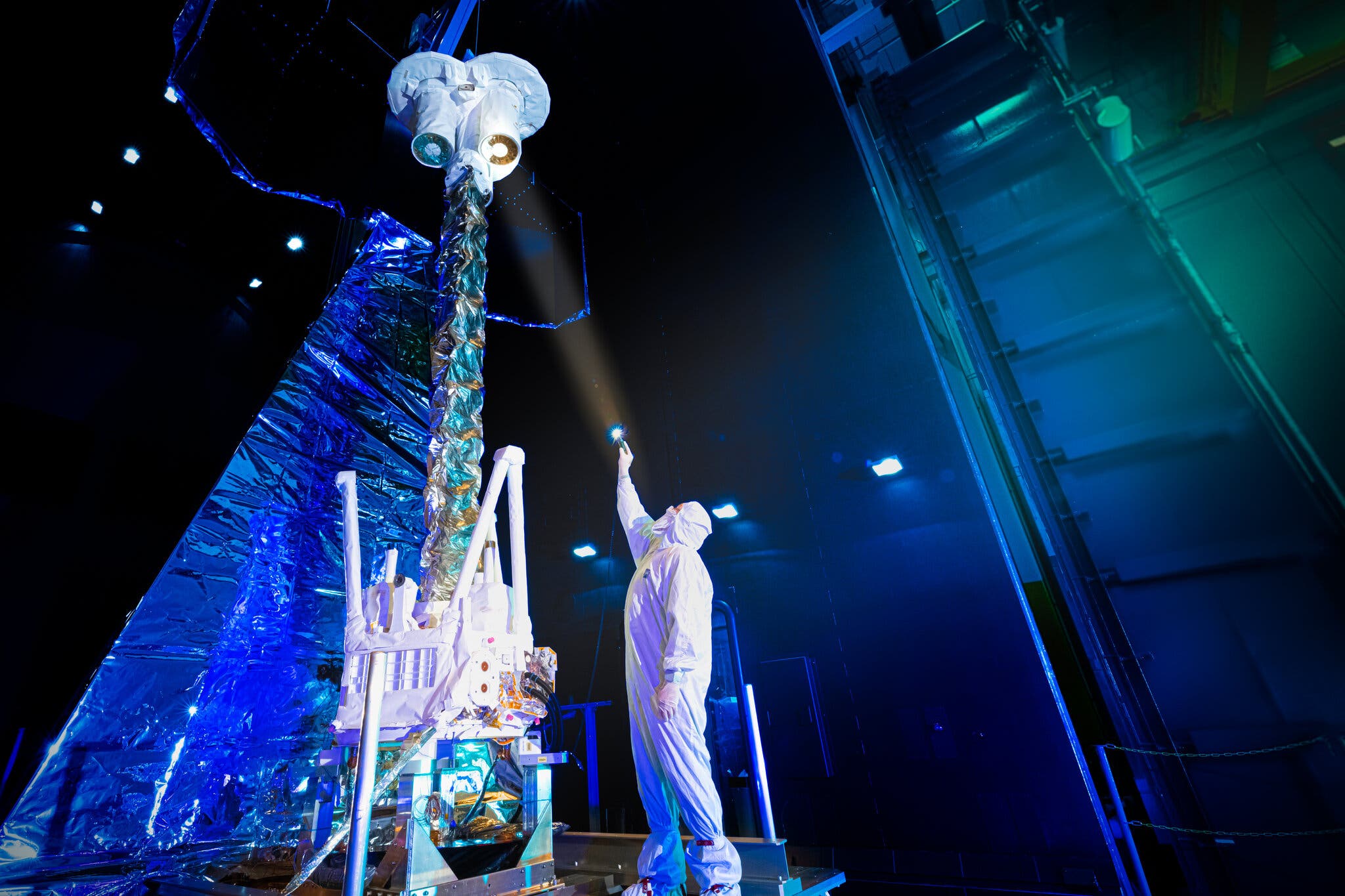
It is a very complex scientific instrument ever built by humanity. Its primary mirror is about 2-3 times bigger than Hubble, although much lighter. Building and deploying a mirror of that size is a gigantic exercise. Unlike Hubble, this mirror is not a single piece of glass. It is made of eighteen hexagonal segments. Each made of lighter Beryllium and coated with a thin layer of gold. This was done to fold the mirror at the time of launch and unfold it once in space. Else, there is no rocket capable of taking it up unfolded. So are the solar panels which will provide power to the telescope. The panels are folded for launch and were unfolded in space.      

Next are the most sophisticated instruments onboard. With each new generation of technology, the detectors become more sensitive. The basic instrumentation is a camera and  a spectrograph. A camera captures the image while the spectrograph splits the incoming radiation into different frequencies (colors for visible radiation). Unlike Hubble which looked at the Universe in the visible region, Webb will operate in the infrared region, of lower frequencies than the visible light. Since Webb is going to look at further and hence older objects in the Universe, something like viewing the Universe when it was a baby in its diapers, infrared is more suitable. All the ancient light is now stretched so that its remnants are in the infrared region. The gold coating of the mirror will reflect the infrared waves much better. Maybe the next generation telescope may attempt to look at when the Universe was in its mother’s womb !

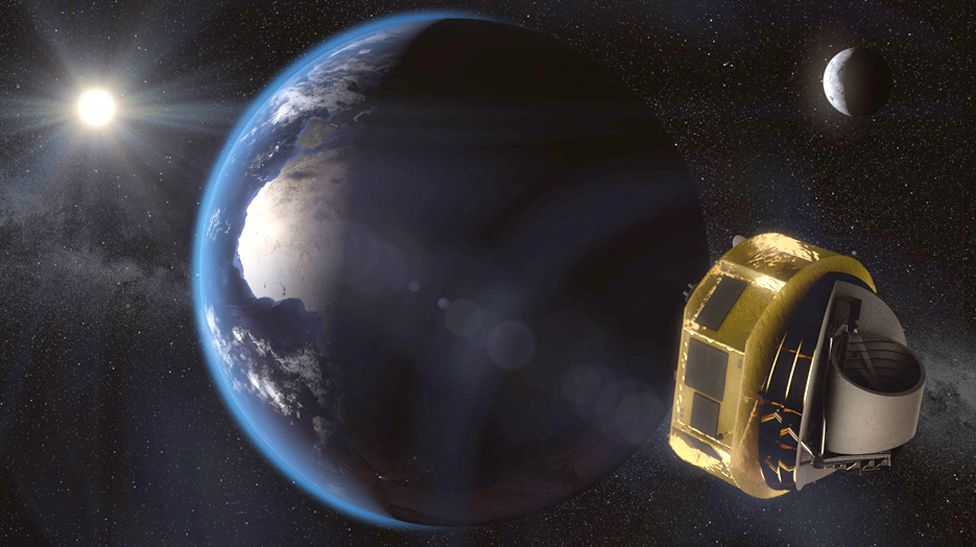
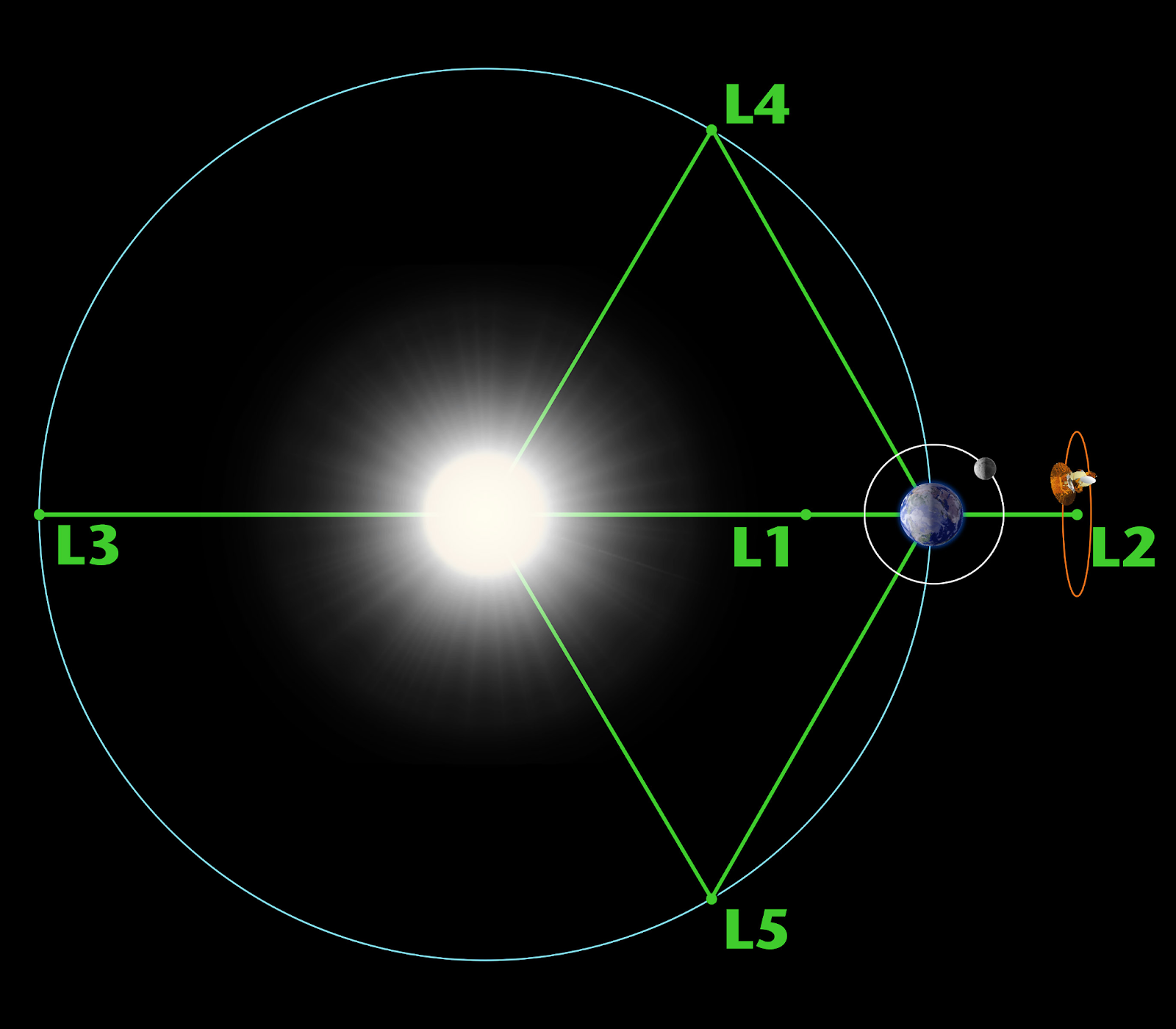
Next is an enormous heat shield which will protect its instrumentation from the heat of the Sun and the Earth. The instruments need to be cooled down to the lowest temperatures in the Universe so as to be able to view the infrared waves. Else, any heat, even from the telescope and its instruments will distort the picture. To get away from Earth’s heat, the telescope will be positioned about a million miles away at a point in space called Lagrangian point L2.  Postulated by French mathematician Joseph Lagrange, there are five points in space where the Sun’s and Earth’s gravity almost cancel each other. Given below is the picture courtesy NASA. L2 is a point away from both the Earth and the Sun. The heat shield will protect from Earth and Sun on the left so that the telescope is free to look into deep space into the right. At L2, the fuel consumption is minimum so that the telescope can function for about ten years or hopefully longer. with the given fuel budget.      
Once the telescope was constructed in California, its long terrestrial journey started. Too big to fit into any aircraft, it was placed in a specialized container and loaded onto a ship. The ship made the perilous journey through the Panama canal before reaching French Guiana in South America where the European Space Agency (ESA) has its Ariane launch facilities. While ESA is a partner in the telescope mission, its Ariane is the largest and the most reliable rocket. The rocket did its job on Christmas day. After unfurling its solar panels, the telescope is travelling towards the L2 Lagrange point. It is expected to take about a month to reach. 

After reaching its destination, the heat shield and the mirror will unfurl. Then the mirror needs to be tuned. Each segment of the mirror is actuated by a motor. There are too many points of failure in this whole process. Any failure can doom the mission. The telescope will be beyond any human mission for servicing. If everything goes well, we will start getting pictures  by about mid 2022. Else, bad luck and we go back to the drawing board again.

Other than viewing the original glare from the infancy of the Universe, the telescope will also help in detecting exoplanets, the planets outside of our solar system. Although Kepler and now TESS space telescopes are on the job, Webb will be much more sensitive because of its abilities in the infrared region.  Planets like Earth emit radiation in this region. Webb also has a coronagraph, an instrument which blocks out the brilliant glare of the central star and helps the infrared detectors gather information from the orbiting planets.   

Hoping that Webb will work flawlessly and give us glimpses of our early universe and the hidden universe of exoplanets for many years to come.
Posted in January 2022, Sidereal Times | Tagged | Leave a comment

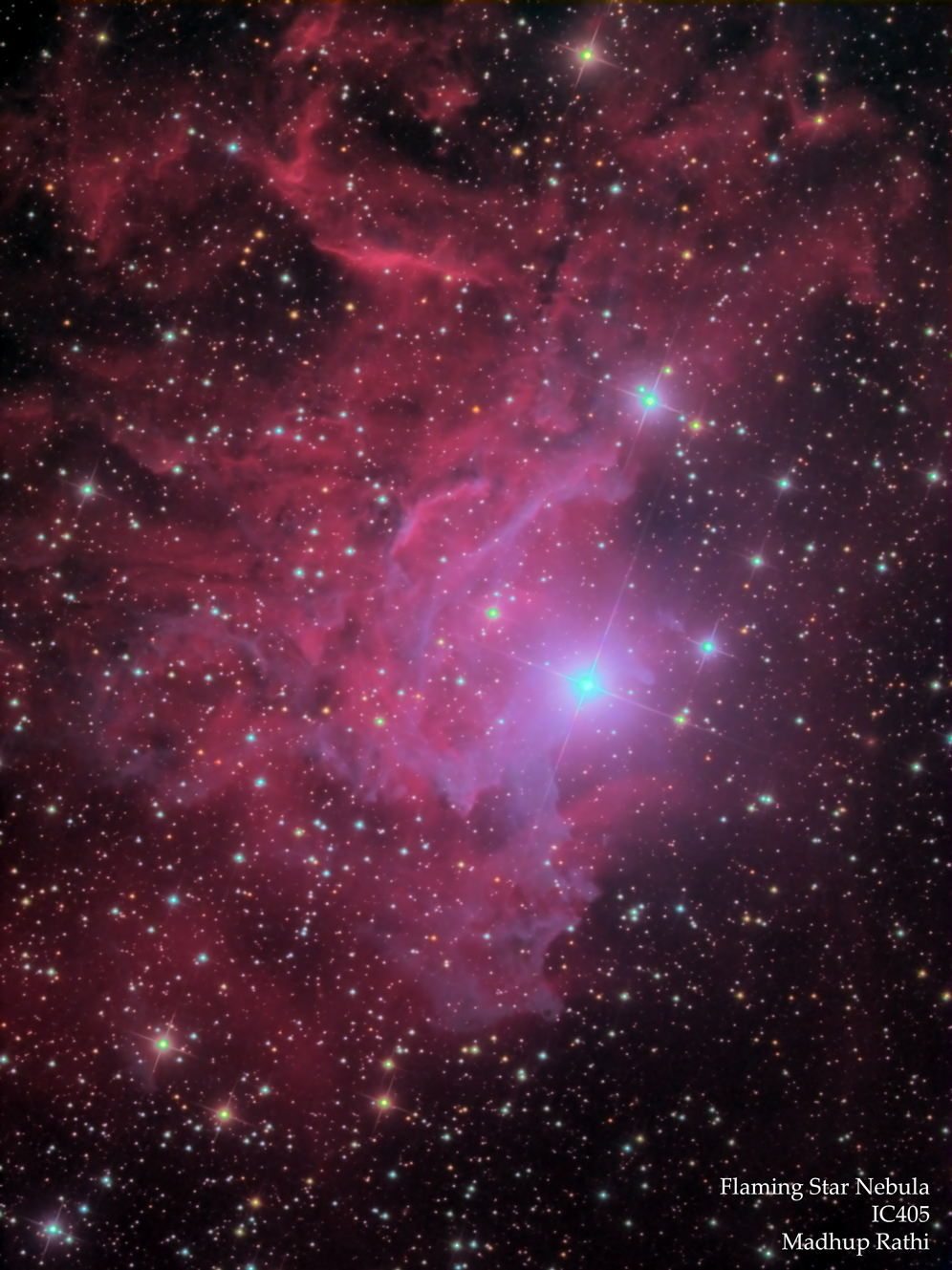
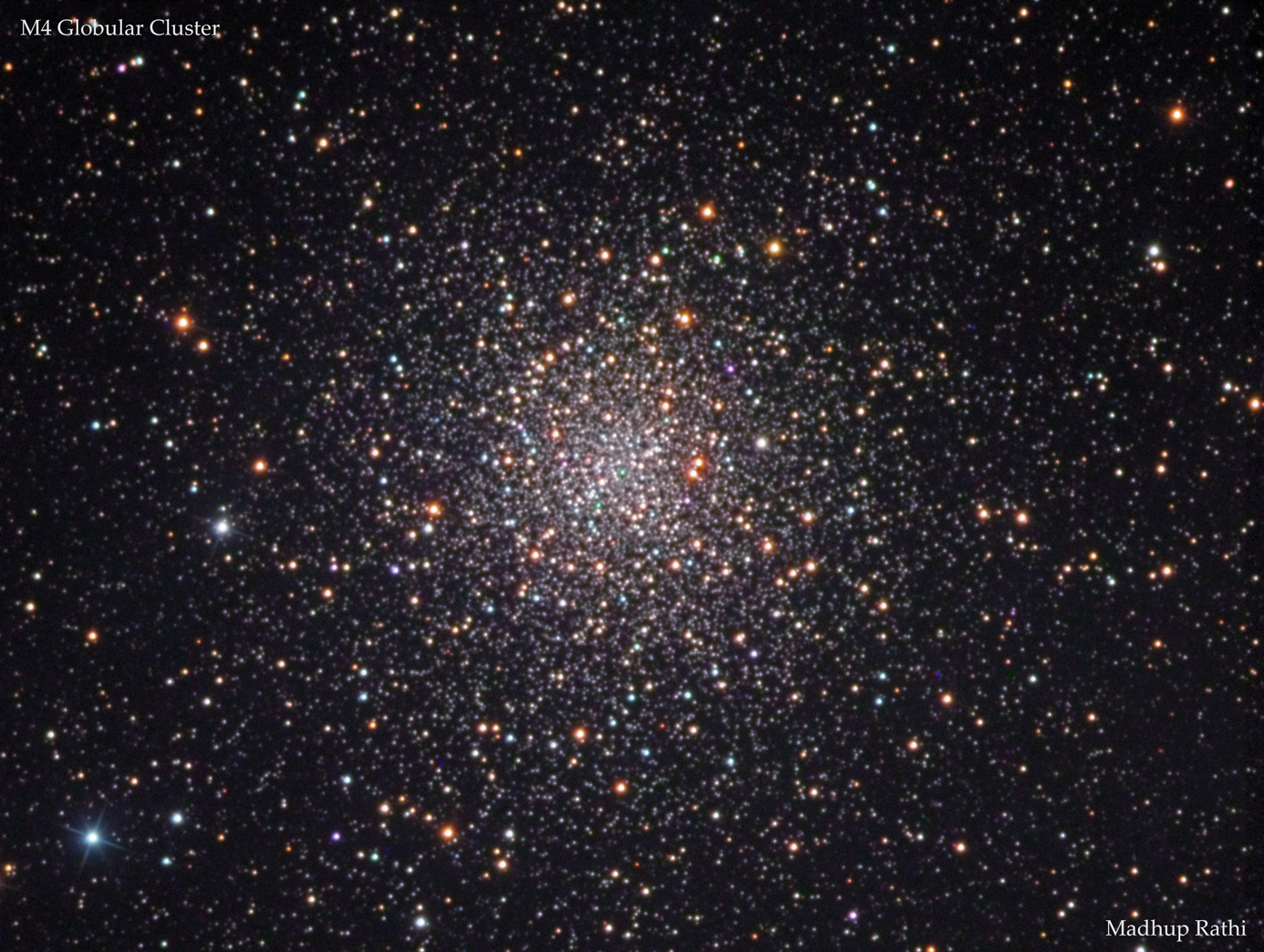
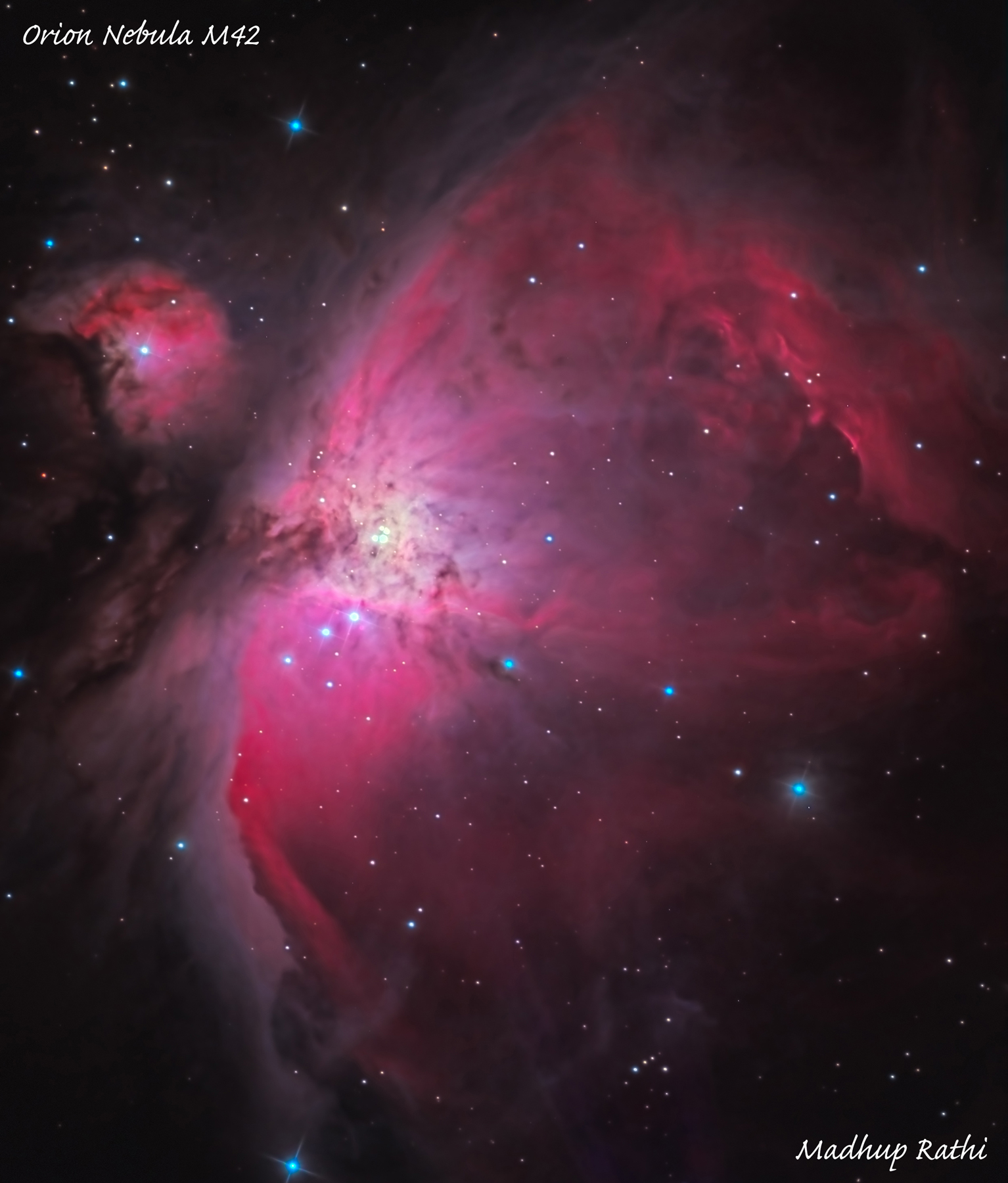
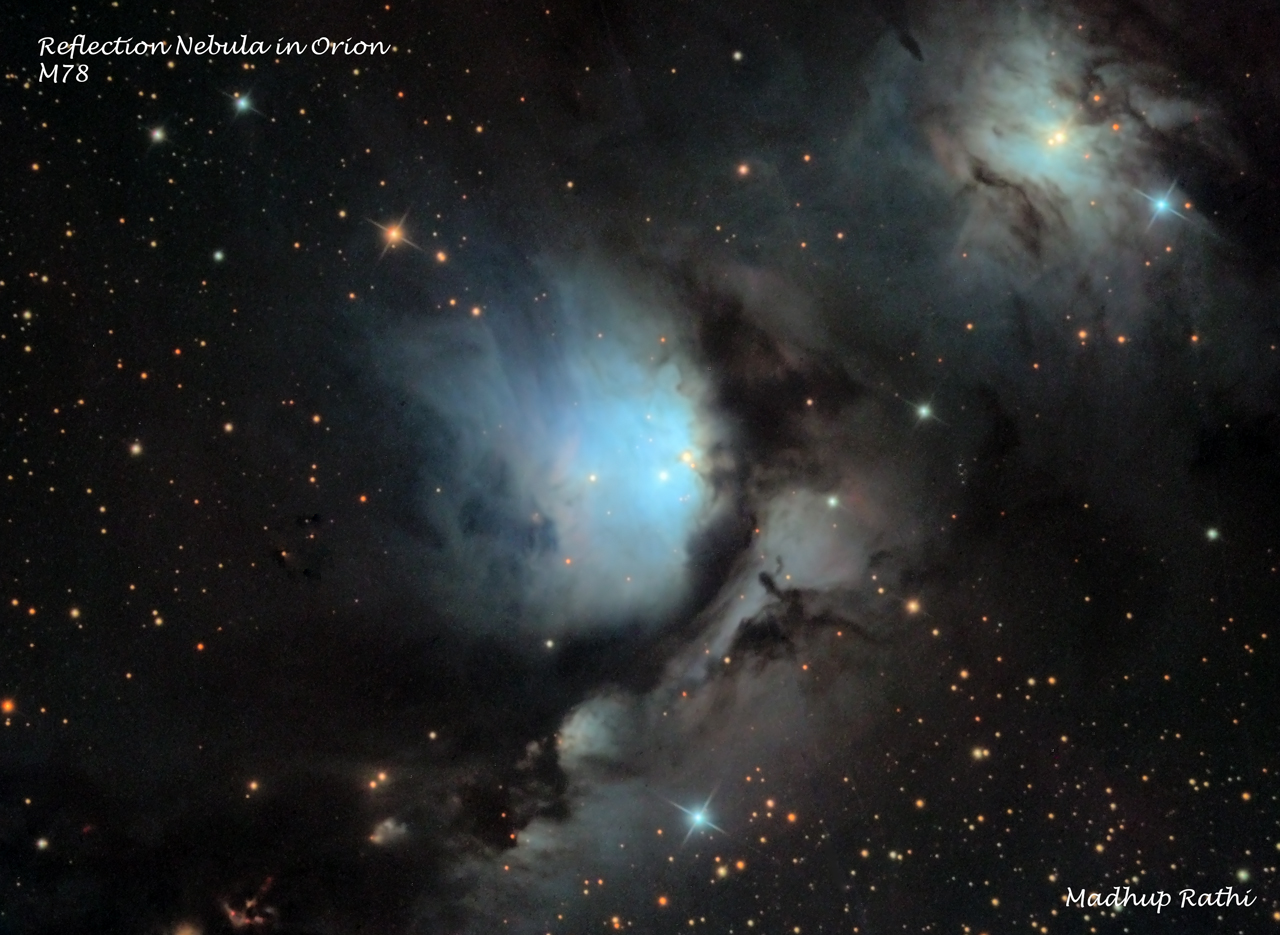
Madhup Rathi’s Amazing Images

Check out Madhup’s amazing images of the deep sky. The beauty of these pictures leaves one thirsting for more of them.

Posted in January 2022, Sidereal Times | Tagged , | 1 Comment

From the lens of Lisa

by Lisa Ann Fanning

“The best laid plans of mice and men often go awry.” I feel like this sums up the last 2 years and Comet Leonard too!  I’ve attempted to view the comet 9x and only had success twice.  Here is my best digiscoped photo.  

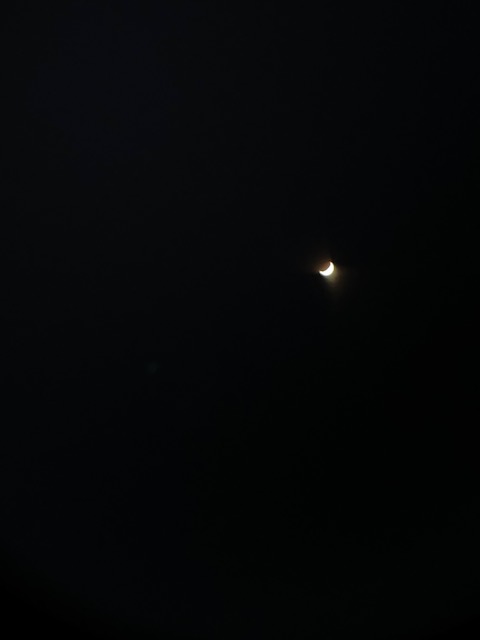
I have been enjoying Venus in its crescent phase very much. (Same specs as above)

Posted in January 2022, Sidereal Times | Tagged , , | 1 Comment

New Jersey State Planetarium – Sky Views December

Our member Bill Murray showing the December skies at the New Jersey State Planetarium where he is the Planetarium Technician.

Posted in January 2022, Sidereal Times | Tagged , , | Leave a comment

Snippets

compiled by Arlene & David Kaplan

-NYT

Metal Planet Orbits Its Star Every 7.7 Hours
Astronomers engaged in the sport of hunting exoplanets, or planets around other star systems have spotted a tiny world designated GJ 367 b with about half the mass of the Earth. Among the lightest exoplanets found to date, GJ 367 b zips around its parent star in a speedy…more

-NYT
-NYT

New NASA Telescope Will Provide X-Ray Views of the Universe A brand-new space telescope will soon reveal a hidden vision of the cosmos, potentially transforming our understanding of black holes, supernovas and even the nature of the universe itself. No, not that one. Much attention is being devoted this month to the James Webb Space Telescope…more

-NASA

NASA Returns Hubble to Full Science Operations NASA’s Hubble Space Telescope team recovered the Space Telescope Imaging Spectrograph on Monday, Dec. 6, and is now operating with all four active instruments collecting science. The team has still not detected any further synchronization message issues since monitoring began Nov. 1. The team will continue…more

-NYT

How Do You Tell the World That Doomsday Has Arrived? One of the thus-far theoretical duties of the astronomer is to inform the public that something very big and horrible is about to happen: The sun will soon explode, a black hole has just wandered into Earth’s path, hostile aliens have amassed an armada right behind the moon. In the new Netflix film “Don’t Look Up,” a pair of astronomers…more

-BBC

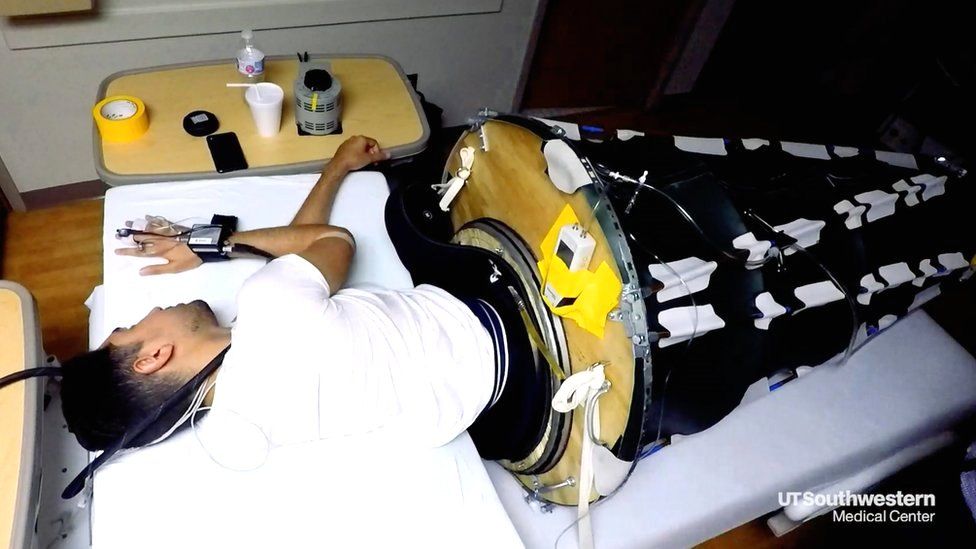
Space sleeping bag to solve astronauts’ squashed eyeball disorder Scientists have developed a hi-tech sleeping bag that could prevent the vision problems that some astronauts experience while living in space. In zero-gravity, fluids float into the head and squash the eyeball over time. It’s regarded as one of the riskiest medical problems affecting astronauts, with some experts concerned it could compromise missions to Mars…more

-BBC

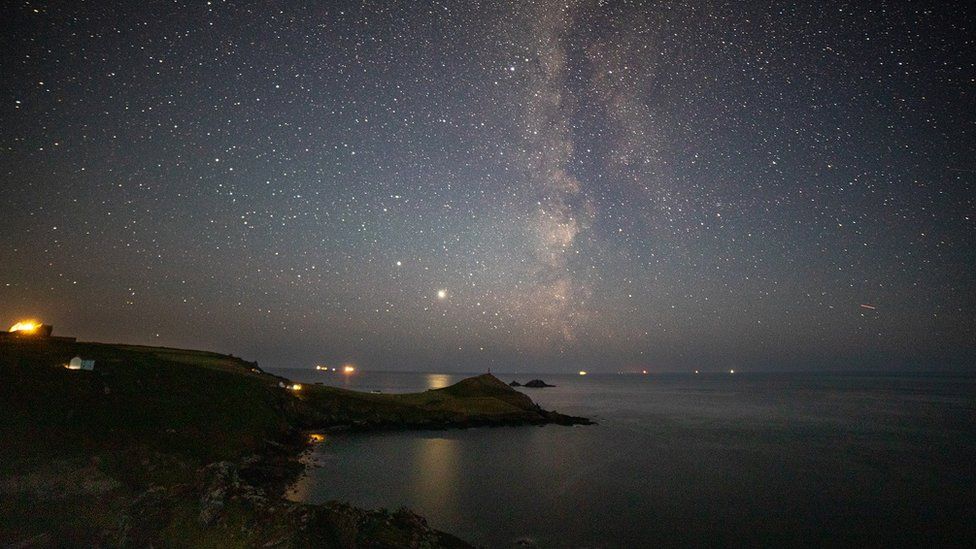
West Penwith recognized with Dark Sky Park designation An area of Cornwall scattered with ancient monuments has been officially recognized as one of the best places in the world to see the stars at night. West Penwith is now an International Dark Sky Park (IDSP) with minimal traces of light pollution. Cornwall Council encouraged a partnership between residents, businesses and councilors to achieve the nomination…more

-BBC

Portsmouth astronomers create audio map of the universe Astronomers have created an audio map of the universe by assigning different sounds to bodies in space. The work is a joint project between the University of Portsmouth and the Newcastle University and has been carried out to allow people who are visually impaired to explore space and to help astronomers with their research. Astronomer Dr Nic Bonne, who is visually impaired himself, says they are often…more

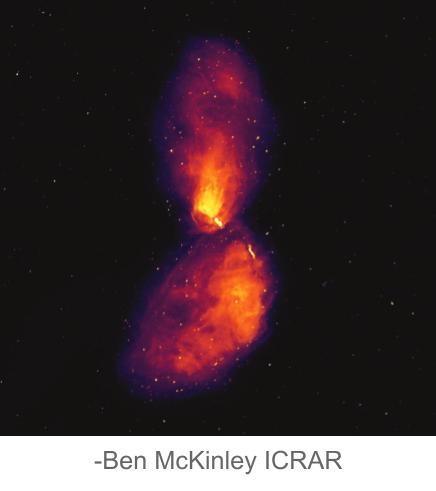
Astronomers Capture Supermassive Black Hole Eruption Near Earth Spanning 16 Times the Full Moon in the Sky Astronomers have produced the most comprehensive image of radio emission from the nearest actively feeding supermassive black hole to Earth. The emission is powered by a central black hole in the galaxy Centaurus A, about 12 million light years away. As the black hole feeds on in-falling gas, it ejects material at near light-speed, causing ‘radio bubbles’ to grow over hundreds of millions of years. When viewed from Earth, the eruption from Centaurus A now extends eight degrees across the sky—the length of 16 full Moons laid side by side…more

Posted in January 2022, Sidereal Times | Tagged , | Leave a comment

From The Director

by Rex Parker, PhD director@princetonastronomy.org

Reflections on 2021. Another year passes and we are wiser if not quite complete, and there is much to reflect upon. The year turned out well for AAAP, thanks to our members who gave time and energy to further amateur astronomy in the Princeton area. The Zoom approach to monthly meetings has been a hit even though we greatly miss Princeton’s Peyton Hall and have no clarity on when we might return. Our membership has in fact increased during the pandemic to over 100, and attendance at the monthly Zoom sessions has been around 50-60. Guest speakers, many from outside New Jersey, have been superb thanks to the efforts of the program committee (Victor Davis, Bill Thomas, and Ira Polans). We established the AAAP YouTube Channel with recordings of the meetings as well as the Astrovideo Live sessions for celestial events, such as the recent lunar eclipse and last year’s Mars opposition. Some progress on the much needed Observatory column repairs was made, though we still await the state’s issuing the construction permit. The construction funding campaign is ¾ of the way to our goal to cover expenses.

Meanwhile, public nights and member use of the AAAP Observatory at Washington Crossing State Park have seldom been better, thanks to the rapid adoption of video telescopic astronomy within AAAP driven by Observatory Chair Dave Skitt. Along with Jennifer Skitt, Tom Swords, and the Keyholders, the ingenious equipment setup now includes large LCD displays hanging from the walls inside and outside. This enabled us to show live astro images from the club’s Celestron 14 using the ZWO astro camera even in the midst of the social distancing. Our corps of trained Keyholders provided needed expertise and energy to make the Friday night public programs a huge success. We established formal COVID social distancing protocols which the state endorsed, and began to see larger public turnouts as the season progressed.

We are also making progress in 4 new initiatives with members stepping up to help move these forward (Merchandise, Rich Sherman; Social Media, Debbie Mayes; Telescope Loaner Program, Todd Reichart; Night Sky Network, Ira Polans). Finally, I give deep thanks to my fellow Board members Michael Mitrano, Victor Davis, Larry Kane, John Miller, Bill Murray, Gene Allen, and Dave Skitt, for helping make AAAP successful despite the challenges.

New Secretary of AAAPGene Allen has been appointed as the new Secretary with unanimous consent of the Board.  Please join me in welcoming Gene to this essential role in AAAP!

Beacons or Technosignatures? — Finding Evidence of Life beyond Earth, part 3 of AAAP Discussion.  A paradigm change is underway in the scientific search for extraterrestrial life and intelligence.  Scanning the sky for artificial radio transmissions for decades led to a few exciting false alarms, more sophistcated radio telecopes and algorithms, and tighter statistical limits, but no breakthrough. Then in 2017 the enigmatic extrasolar object Oumuamua drew serious attention to the possibility of finding alien artifacts rather than detecting radio waves or other electromagnetic signals.  This object’s anomalous acceleration, elongated shape, and other physical properties were bravely interpreted by Harvard astronomer and “Extraterrestrial” author Avi Loeb as a possible interstellar buoy or ancient derelict craft from a galactic culture perhaps long-expired. As Univ. of Rochester astrophysicist Adam Frank says, we are moving from beacon SETI to technosignature SETI.  Of course, deep consideration of how to interpret and communicate evidence of first contact with either is essential.  As I described in Sidereal Times last month, NASA Chief Scientist James Green and colleagues recently published a formal framework for reporting evidence for life beyond Earth (Nature, Oct 28, 2021). 

Linking beacons to probes, scientists are also considering searching for evidence of transmissions from within our solar system rather than only aiming outside. Michael Gillon (Univ. of Liege, Belgium) and Artem Burdanov (MIT) propose that if extraterrestrial intelligence exists, a communications network may have already been developed around numerous stars including the sun. In their proposal stars would be used as gravitational lenses to maximize communication efficiency from probe to home planet. So the idea is to search at the “solar gravitational line” of the nearest stars, which is at the opposite coordinates from us to the nearest stars. The gravity lensing of signals from a probe within our solar system, or from an exoplanet, would be detectable at the lensing focal distance from the respective star, which for the sun turns out to be near ~550AU distant from Earth. In fact, an early stage proposal for a spacecraft mission to send an imaging telescope to the solar gravity lens focus has already been made (see “Planetary Science Vision 2050 Workshop 2017”, LPI Contrib. No. 1989). The idea of Gillon and Burdanov extrapolates this concept to other extraterrestrial civilizations as well. For more on this topic, see https://phys.org/news/2021-11-alien-probes-solar-home.html.

Be Part of the Unjournal Club.  Doing astronomy as a club is a little different when we cannot meet in person for regular meetings.  For now, the best way to keep the comm channels active is to use our monthly Zoom meetings to highlight club activities and facilitate member conversations.  This takes place during the 2nd hour after the main speaker has finished, when the informal “Journal Club” presentation by a member is slotted each month.  The objective is to help break the boundaries set by Zooming.  Here I am asking you to volunteer to give an “unjournal” club session!  “Unjournal” because these short episodes don’t need scholarly, journal-like topics at all, they only need to engage members with what you care about in astronomy.  It works great with Zoom screen sharing with PowerPoint slides, JPEG’s, etc. from your home computer or mobile device.  To get on the schedule for an upcoming meeting, please contact me or program chair Victor Davis.

Posted in December 2021, Sidereal Times | Tagged , | Leave a comment

From the Program Chair

By Victor Davis

The December 2021 meeting of the AAAP will take place (virtually) on Tuesday, December 14th at 7:30 PM. (See How to Join the December Meeting below for details). This meeting is open to AAAP members and the general public. Participants will be able to log in to the meeting as early as 7:00 pm, and will be able to chat informally with others who log in early. In previous Zoom meetings, people joining the meeting before 7:30 pm were queued into the “waiting room.” Since the waiting room does not permit hobnobbing among participants, the host will now open access to the meeting as soon as participants log in. For the November meeting, we tried this scheme and it worked out pretty well. The one caution with this plan is that members enter the meeting unmuted. Please be mindful of your mute/unmute status and mute yourself before the meeting starts promptly at 7:30 pm.

For the Q&A session, you may ask your question using chat or may unmute yourself and ask your question directly to the speaker. To address background noise issues, we are going to follow the rules in the table below regarding audio. If you are not speaking, please remember to mute yourself. You are encouraged, but not required, to turn your video on.

Meeting EventParticipant Can Speak?Participant Can Self-Unmute?
Director Rex’s General RemarksYesYes
Program Chair Victor’s  Speaker IntroductionYesYes
Speaker PresentationNoNo
Q&A SessionStart All on MuteYes                                    
5-minute bio breakYesYes
Journal Club presentation (none scheduled)Start All on MuteNo
Business MeetingStart All on MuteYes
Director’s closing remarksNoNo
   
Only the Business part of the meeting will be locked.

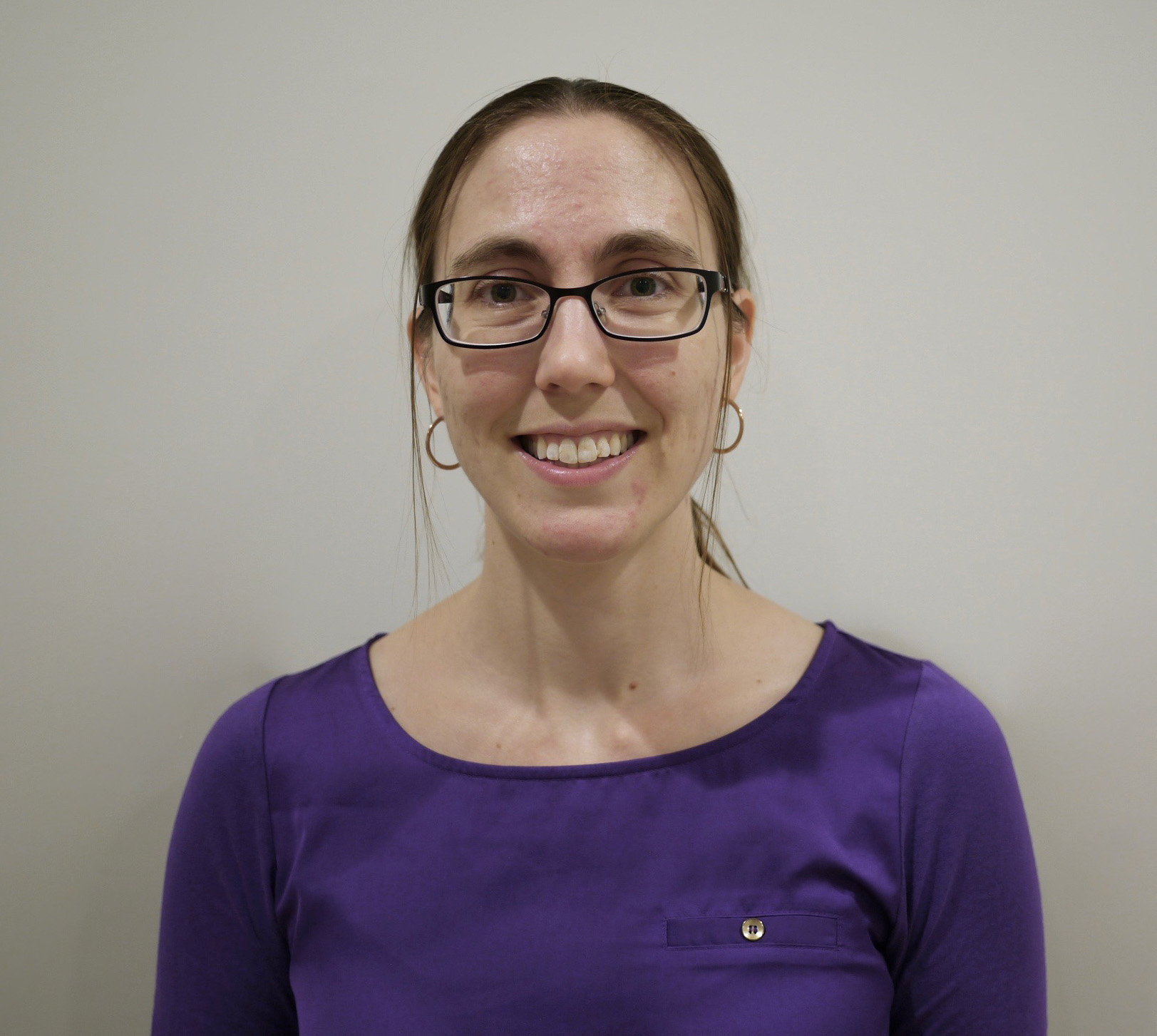
Featured Speaker:  Dr. Joleen Carlberg, STIS Branch Manager at the Space Telescope Science Institute (STScI)

The Fiery Fate of Exoplanets

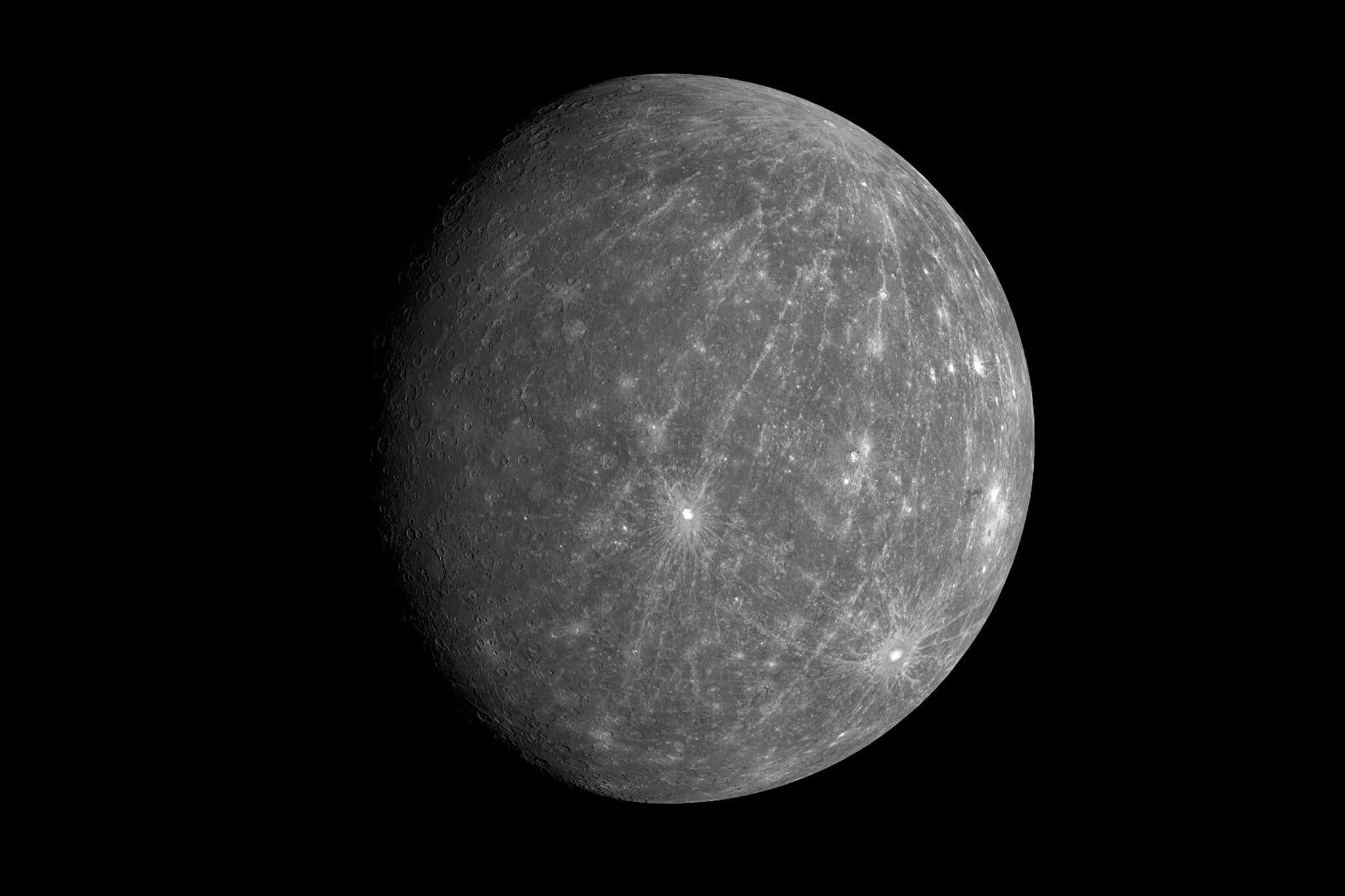
What happens to planets when their stars begin to die? For many of the planets we’ve discovered outside our Solar System, the answer is a trip into the fiery depths of their host star, particularly when that star becomes a red giant. What happens when a bloated star devours a Jupiter is quite different from what happens to a star that devours a Mercury! This engulfment should leave behind some easy-to-identify clues, but only if we know enough about the dying star. In this talk, Dr. Carlberg will share her investigations into what we know (or think we know) about the physical changes a star undergoes during its lifetime and how we can use this knowledge to search for evidence of planetary engulfment. One of her research goals is to disentangle the several processes that affect a red giant’s lithium abundance to identify stars for which “lithium enriched” translates into “ate a planet.”

Dr-Joleen-Carlberg

Dr. Carlberg earned a B.S. in Astronomy and Astrophysics at Villanova University, and her M.S. and Ph.D. in Astronomy from the University of Virginia. She was a Vera Rubin Postdoctoral Fellow in Astronomy at the Carnegie Institution of Washington, where she measured key characteristics of red giant stars in open clusters and verified new open cluster candidates in the Milky Way’s disk. She was a NASA Postdoctoral Program Fellow, studying the origins of lithium-rich red giant stars within open clusters. Currently, she supports users of HST’s Space Telescope Imaging Spectrograph (STIS). Her research interests include understanding the effects of stellar evolution on a star’s planets, and characterizing stellar properties such as rotation and composition using ultraviolet, optical, and infrared spectroscopy. Toward that end, she’s been awarded substantial observing time on some of the world’s premier telescopes, including HST.

Dr. Carlberg is active in astronomy outreach, leading public observing sessions, presenting in-school and after-school sessions at local schools, and conducting “Astronomy Chats” at the National Air and Space Museum.

AAAP webcast:  This month’s AAAP meeting, beginning with Rex’s opening remarks and ending at the break before the business meeting, will be webcast live on YouTube and recorded for subsequent public access on AAAP’s YouTube channel. Be aware that your interactions during this segment, including questions to our guest speaker, may be recorded for posterity. 

YouTube Link: https://youtu.be/QUdAhYbKgyg

This session will be recorded and saved on YouTube. Send me an email at program@princetonastronomy.org if you have any concerns. 

Using Zoom: While we are social distancing, the AAAP Board has chosen to use Zoom for our meetings, based our belief that many members have already have used Zoom and its ease of learning. One of its great features is you can choose whether you want to install the software on your computer or use it within your browser.

How to Join the December Meeting: For the meeting, we are going to follow a simple two-step process:

  1. Please make sure you have Zoom installed on your computer. You do not need a Zoom account or need to create one to join the meeting. Nor are you required to use a webcam.
  2. Please visit our website for the Zoom link.

This session will be recorded and saved on YouTube. Send me an email at program@princetonastronomy.org if you have any concerns.

NOTE: The Zoom site has many training videos. If you’re unsure how Zoom works you might want to view the videos on how to join a meeting or how to check your computer’s audio and video before the meeting.

Journal Club: Surabhi’s Icelandic Adventure This month, Surabhi Agarwal will recount her very recent experience of observing the spectacle of the Aurora Borealis from Iceland.

We hope to make these short presentations a regular feature of our monthly meetings. We’d like to know what members are doing or what members are thinking about in the broad range of topics encompassed by astronomy. A brief ten-minute (or so) presentation is a good way to introduce yourself and the topics you care about to other club members. If you are interested in presenting a topic of interest, please contact either director@princetonastronomy.org or program@princetonastronomy.org.

A look ahead at future guest speakers:

January 11, 2022 Robert Williams, former director of the Space Telescope Science Institute (STScI), will talk about his (at the time) controversial and courageous decision to commit about 100 hours of time on the HST to staring at what was at the time considered to be a relatively bare patch of sky, creating what is now known as the Hubble Deep Field.
February 8, 2022Chris Spalding, a 51 Pegasi b postdoctoral fellow in astronomy at Princeton University, will talk about his research to understand planet formation by way of simple theoretical descriptions of planetary dynamics.
March 8, 2022Rosanne Di Stefano, of the Center for Astrophysics/Harvard and Smithsonian, led a team who used the Chandra X-ray observatory to search for brightness dips in X-ray binaries. They may have detected a transiting exoplanet in the spiral galaxy M51. To date, all exoplanet candidates (4,000+ and counting) have been discovered within 3,000 light-years of Earth. An exoplanet in M51, 28 million light-years away, would be thousands of times farther away than those in the Milky Way.
June 14, 2022Bill Murray, AAAP Outreach Chair and astronomer at the New Jersey State Museum will once again (following a Covid hiatus) give club members a private sky tour at the museum’s planetarium. He’ll show off the refurbished planetarium’s state-of-the-art Digital Sky 2 8K projection system. This is an opportunity to put aside Zooming and commiserate with astro-buddies in the real world.

Thanks to Bill Thomas, Ira Polans, and Dave Skitt for their valuable advice and assistance.

As always, your comments and suggestions are gratefully accepted.

Posted in December 2021, Sidereal Times | Tagged , | Leave a comment

COMING SOON! 

The AAAP Merchandise shop is nearly ready to launch

Members (and public) will be able to securely purchase AAAP-emblazoned shirts and other wearables on-line.  In the future other items may be added as well.  Member Rich Sherman has been developing the on-line merchandise project, which may be launched at the upcoming Dec 14 meeting.  The link will be featured on the AAAP website for easy access.

Posted in December 2021, Sidereal Times | Tagged , | Leave a comment

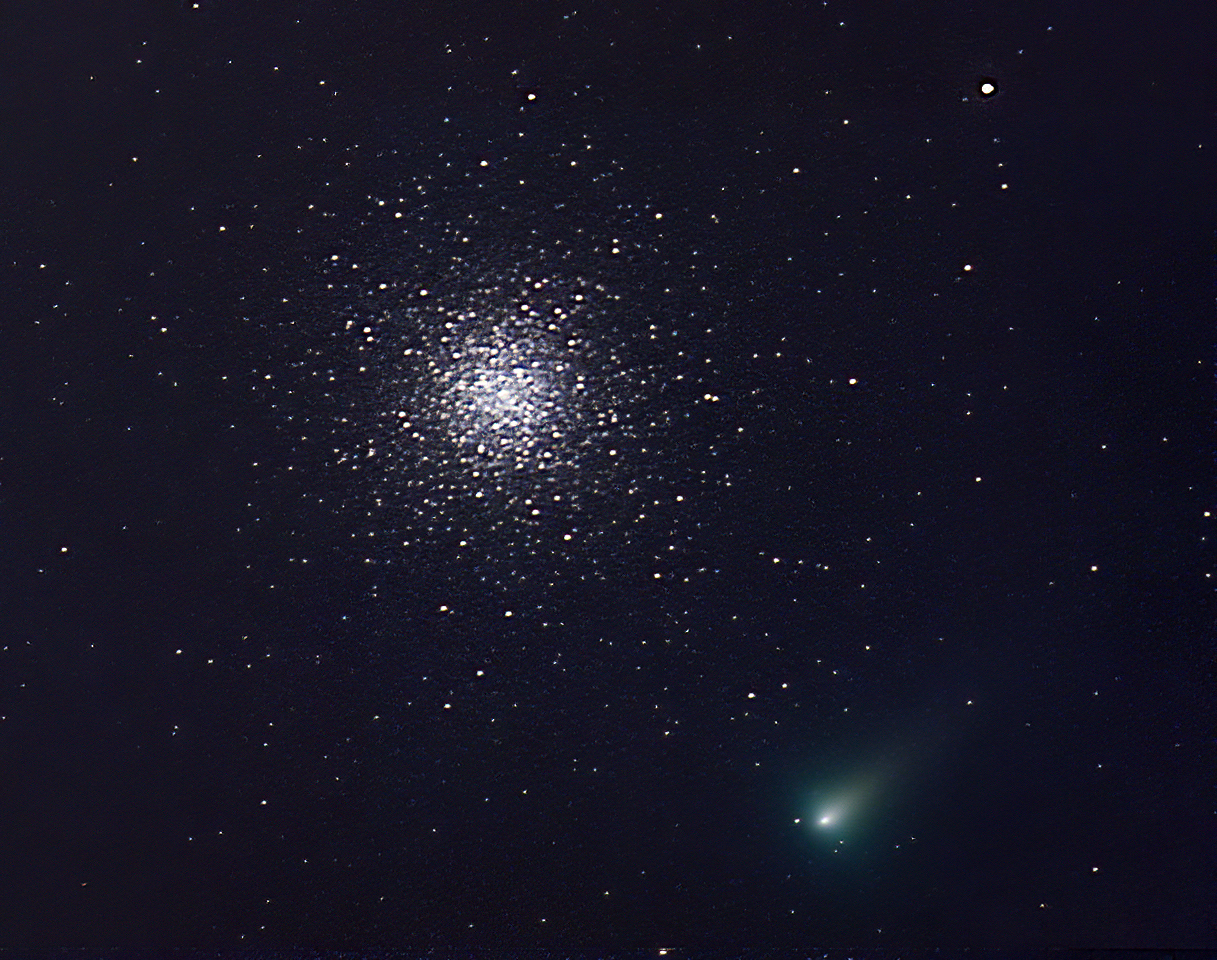
Comet Leonard on the morning of December 3, 2021

Straight from the oven, baked by our own esteemed member Prof. Robert Vanderbei, Princeton University.

Leonard and M3 

Posted in December 2021, Sidereal Times | Tagged , | Leave a comment

Postcard from Lisa Ann Fanning

Hello Fellow Members,

I wanted to share my compilation of images from the Partial Lunar Eclipse of Nov 19, 2021. I began photographing the moon through the clouds at around 2AM EST and took my last photo just prior to 6 AM EST.    

Equipment used – Canon SX70 HS – taken from Marlboro Twp, NJ.

Thank you, Lisa Ann Fanning

Posted in December 2021, Sidereal Times | Tagged , | 1 Comment