Director Rex Parker opened the meeting remotely on Zoom at 1930 while Assistant Director Bob Vanderbie presided in Peyton. There were 33 attending in the auditorium and 20-some online. Rex noted that Jupiter was in opposition just three days ago, so imaging opportunities are still great. He also acknowledged that the Artemis 2 mission launch is approaching. It will send four astronauts in a large orbit around the Moon, farther from Earth than any earthlings have ever been.
Program Chair Victor Davis remotely introduced our speaker for tonight, Dr Jamie Rankin, Research Scholar and Lecturer at Princeton University. Her talk was titled How Our Sun Interacts With the Interstellar Medium. She chronicled the data that the Voyager 1 and 2 missions have and continue to contribute, now 15 and 13 billion miles away. Their data will be supplemented by instruments on the IMAP spacecraft currently orbiting at L1. One of the ten packages on IMAP is Solar Wind and Pickup Ion (SWAPI), built by Dr Rankin and her team at Princeton University and for which she is the Instrument Lead.
After the question period Bob continued the meeting without a break. There were 16 remaining in the auditorium as he explained that he had convinced Princeton University to acquire eight Seestar S30 robotic telescopes in support of the astronomy course he teaches for freshmen. They were enthusiastic and successful in capturing some great images that he shared.
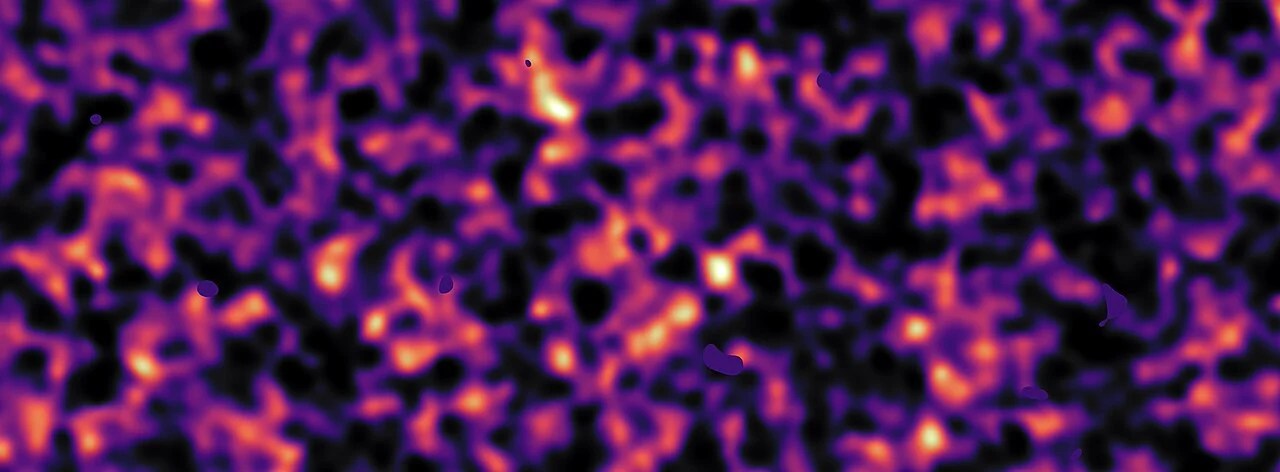
Rex followed with his Unjournal Presentation about dark matter and the newly discovered Cloud 9 near M94.
Outreach Chair Bill Murray reported that no one has volunteered to support the requested Boy Scout outreach event on the 20th so it had to be cancelled. The only volunteers for an event in Montgomery on February 1 are our student members, and we need some adult coverage. He will also be trying to find volunteers for an event for a Hamilton Cub Scout pack on February 20.
Secretary Gene Allen reported that the new AAAP website has more capability than originally planned which means some final tweaks are being made so the switchover has been delayed one more month.
The meeting was adjourned at 2152.
As of January 11, we have 206 active members. So far in CY2026, renewals number 3 and expirations number 4, giving us a 43% retention rate. We have added 2 new members.
Submitted by Secretary Gene Allen January 18, 2026
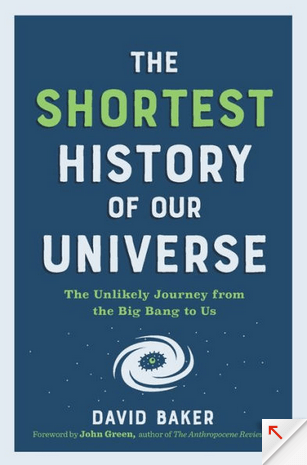
The Shortest History of the Universe by David Baker, Ph.D.
Published 2023
Grade: B+
$16.95, paperback, at Barnes & Noble
240 pages
A few months back I had some time to kill after an early dinner and swung by the Barnes & Noble bookstore on Route 1. Scanning the science shelves, I found this little book, thumbed through it for a bit and headed to the cash register. After sitting on my home bookshelf for many weeks, I finally got a chance to read the book.
I’ve been reading some long, not-so-easy-to-digest books on various subjects, and Baker’s short book was a nice relief. Short and to the point, it feels more like a small plate rather than a big meal. “The Shortest History of the Universe” addresses the evolution of the universe in simple language, but this is only part of the story. The title is actually misleading. Much of the book is dedicated to the geologic and anthropologic history of planet Earth. There is a lot of fascinating information here, but I think this section could be much shorter. For example, I don’t think we need to know the symptoms and sufferings of various plagues in detail.
The author finishes the book with a look forward and what might happen to Earth and the Universe. And this is what we would expect. To conclude, I would say I learned a lot (for example, I did not know the entire surface of the Earth was covered by ice three times in its history), I appreciated the brevity of the book, but got a little bored with the extraneous details about Earth’s anthropologic evolution.
This book is a love letter to astronomy. Written by an astronomer, for those of us who always find wonder looking up at a sparkling night sky. The book dives deeper into the profession of an observational astronomer over the years. They are the ones who collect their data using optical and/or radio telescopes. Emily explains how this data gathering has evolved over the decades – from peeping into the telescope’s eyepiece with your own eye (that’s what you did if you were Galileo), to recording on glass plates (remember film photography), to CCDs, and now to gigapixels of digital images captured by the recently unveiled Vera Rubin Observatory in Chile.
The author is an astrophysicist and her passion and enthusiasm for astronomy comes through in each chapter of the book. It is full of stories and incidents from her own experiences over the years. Imagine riding aboard a 747 with a telescope (that’s what the SOFIA airborne observatory is — Stratospheric Observatory for Infrared Astronomy) and as a bonus getting to enjoy a dazzling display of aurora in the southern skies. There is a chapter devoted to the fascinating Laser Interferometer Gravitational Observatory (LIGO) — you may recall we had a virtual tour of one of the LIGO facilities last year during one of our monthly meetings.
Towards the end of the book Emily laments about the lost sense of adventure and serendipity of operating the telescopes manually as they are now mostly remote and robotic. A well-written and enjoyable book to read even if you have a passing interest in astronomy.
Thanks to Surabhi for pointing me to this topic from the Astronomy magazine. I collected some more information and summarized the same here. Summarizing and packaging information helps me learn. The Gaia spacecraft was launched in 2013 by ESA (European Space Agency) to precisely measure the position, distance and motions of about a billion stars in our Milky Way galaxy and its neighbors. Gaia stands for “Global Astrometric Interferometer for Astrophysics”.
Gaia is the goddess of Earth in Greek mythology. Gaia also refers to a concept put forth by James Lovelock in the early 1970s which suggests that the Earth functions as a single breathing and living organism, due to the presence of life and the consequent dynamism. The first time I heard of Gaia was while reading Isaac Asimov’s “Foundation’s Edge”, a science fiction classic. Humans, having branched off to distant parts of our galaxy, are not able to find Earth in their ship’s navigation system, but can find “Gaia”, a world where the consciousnesses of all the living beings are interconnected!
The spacecraft of the same name was conceived and constructed by several European partners. It was launched in 2013 to be positioned at the L2 Lagrangian point on the Earth-Sun axis, about a million miles away from Earth on the opposite side from the Sun. The L2 point provides the spacecraft with a very stable gravitational and thermal environment. The gravitational pull of the Earth and Sun cancel each other out, so the spacecraft can maintain its position with minimal fuel. It was in an orbit around the L2 point called the “Lissajous orbit”. This orbit provides enough shade for astronomy while still getting enough sunlight to power the solar panels.
Gaia carried two twin telescopes, pointing in different directions, each with a primary mirror of about 7.5 square feet, which is much smaller than James Webb Telescope’s primary mirror. Gaia did a survey of a billion stars and produced a catalog. The catalog is still pending the last 2 datasets which will be released in the future.
Supplementing the primary mirror is an astrometric instrument which measures the position and movements of stars using the parallax method. The same star is observed from 2 positions on opposite sides of the Sun six months apart as the Earth revolves around the Sun. The distance is derived using the triangle formed by the 2 separate positions and the star. The accuracy of the distance depends on the accuracy of the atomic clocks onboard.
The second instrument is a photometric instrument that records the colors of the star. The colors tell us a star’s temperature, composition, and mass. The third instrument is a spectroscopic instrument which measures the doppler shift of stars, also known as redshift, which compares the known position of the colored bands with the observed ones. The greater the redshift, the faster the star is moving away from us.
Using these three instruments, Gaia has produced the most accurate maps of the Milky Way to date, and has also made some discoveries such as that of a 9,000 lightyear long ribbon of gas which oscillates like a wave in the plane of the galaxy. It has been named the Radcliffe Wave. The nearest point of this structure is only 500 light-years from Earth, in our local spiral arm. Gaia also discovered many stars that appear close together in the sky from the Earth but are actually separated by many light-years, lying at vastly different distances away from us. In addition, Gaia found some new exoplanets, with more exoplanets potentially lurking in the yet to be released data.
Another discovery in November 2018 was the neighboring galaxy Antlia 2. It is similar in size to another neighboring galaxy the Large Magellanic Cloud but is 10,000 times fainter. After all these magnificent discoveries, the mission came to an end in 2025. The limitation was the fuel, cold nitrogen, required to power the micro propulsion system which is needed to stabilize the spacecraft to a high degree of accuracy. If the spacecraft itself is wobbly, it cannot accurately determine the position and movement of the stars. The fuel ran out and the mission had to come to a great end.
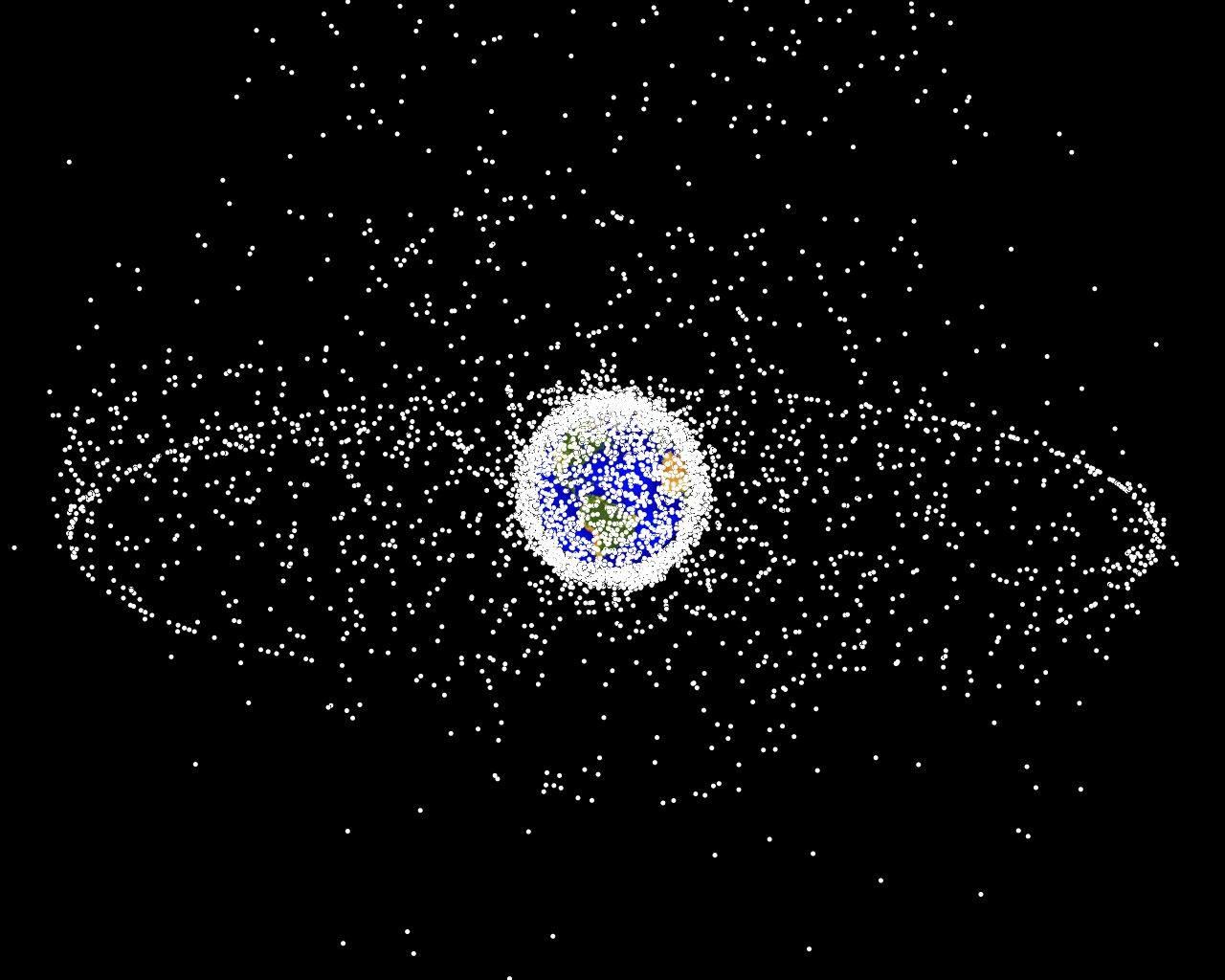
Now we can track space junk as it falls to Earth Seismometers — equipment designed to pinpoint earthquakes — are now being used to track the thousands of pieces of human-made objects abandoned in Earth’s orbit. Some of those items pose a risk to humans when they fall to the ground. To locate possible crash sites, Benjamin Fernando…more
-astronomy.com
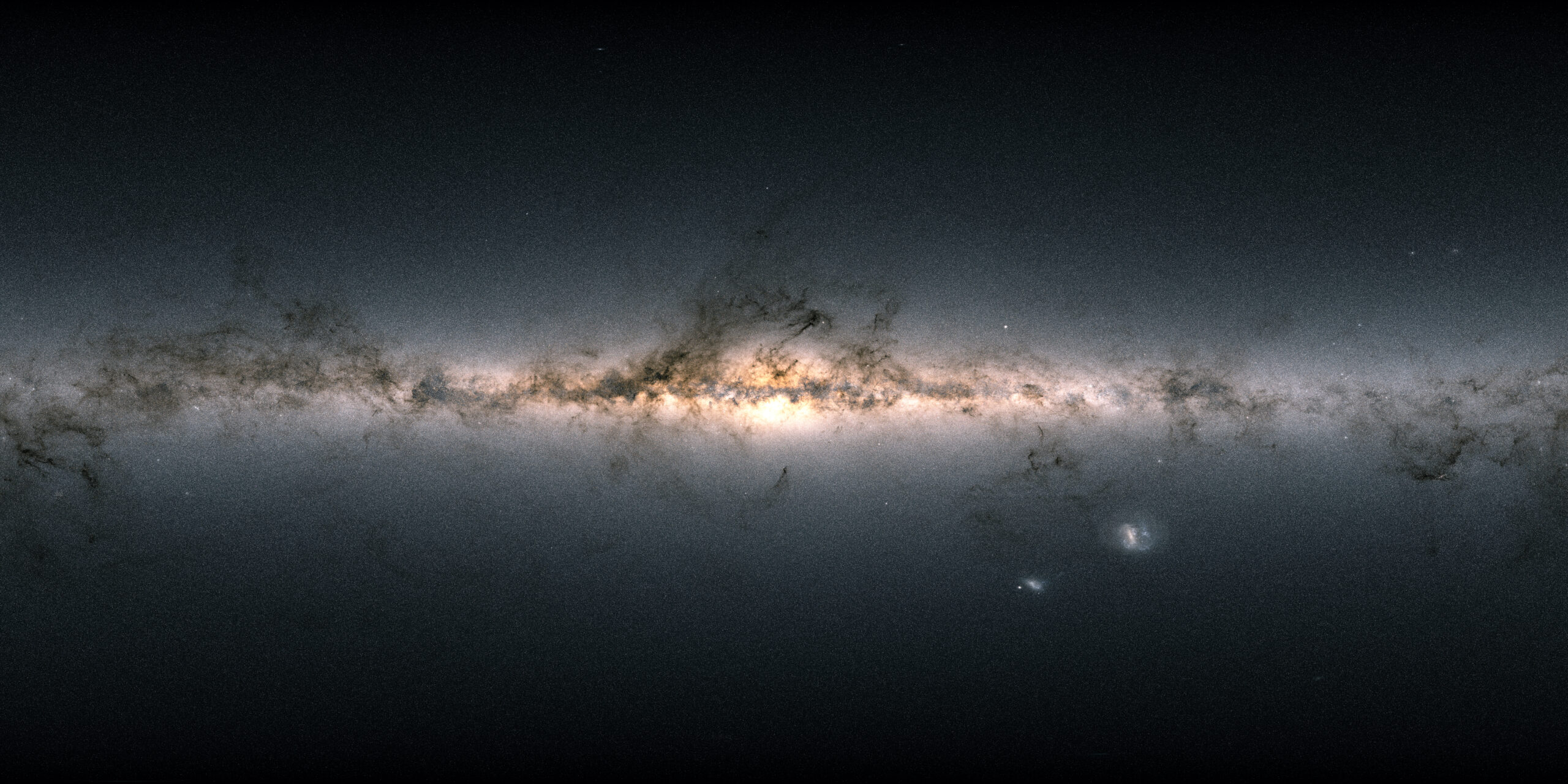
How Gaia revealed the Milky Way For more than a decade, Gaia mapped the brightness, motion, and composition of 2 billion stars. Its legacy is just beginning. On Jan. 15, 2025, the Gaia spacecraft took its last image. Then the craft ran a final round of engineering tests, fired its thrusters to leave Earth behind, and slipped into an orbit around the Sun, finally turning off on March 27…more
-astronomy.com
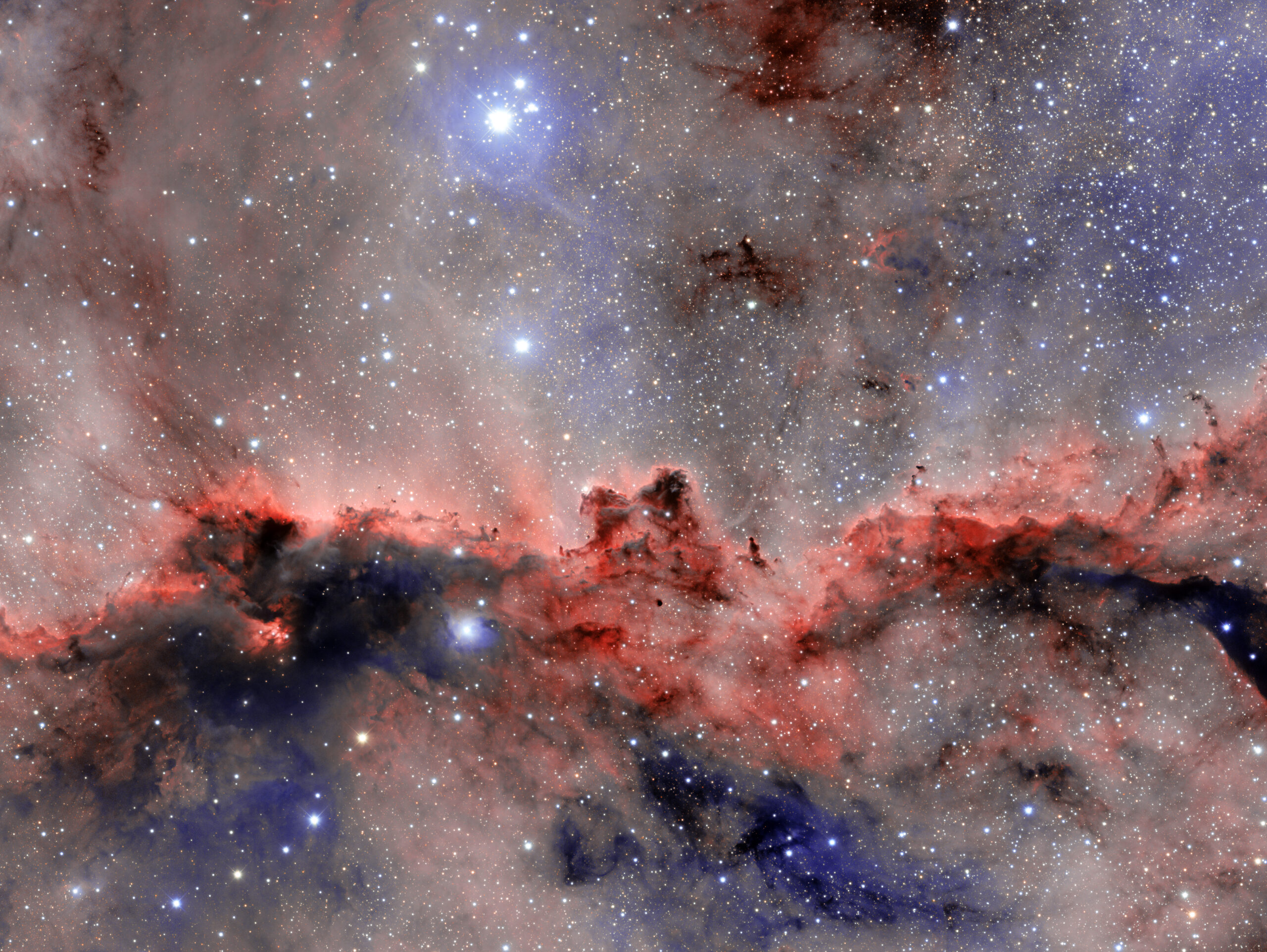
NGC 6188: A nebula or a dragon fight to the death? The Fighting Dragons of Ara, also called the Rim Nebula and cataloged as NGC 6188, comprises dark, star-forming clouds and bright young suns. The Milky Way’s plane cuts through the northwestern corner of Ara the Altar, blessing this southern constellation with a surplus of deep-sky delights….more
-astronomy.com
Has Mars had an effect on Earth’s climate? Stephen Kane, a professor of planetary astrophysics at UC Riverside, was skeptical when he read recent studies that showed the gravitational pull from Mars being connected to Earth’s long-term climate patterns. These studies suggested that sediment layers on the floor of our oceans have recorded climate cycles influenced by the Red Planet despite its distance from Earth and small size…more
-astronomy.com
How can the Sun contain so many elements without its heat destroying them? Since the Sun is so hot, how can it contain oxygen, carbon, and other elements without destroying them? If you were to take a random blob of gas and heat it to solar temperatures (roughly 10,000 degrees Fahrenheit [5,500 degrees Celsius] at the surface or over 27 million F [15 million C] in the core), two things would happen. …more
-astronomy.com
Why don’t planets fall into the stars they orbit if they’re constantly being pulled by gravity? This is a brilliant question because the notion of an orbit is counterintuitive. We know that massive objects (really, any objects with mass) gravitationally attract other massive objects; Newton’s law of universal gravitation is firmly established on this point…more
-astronomy.com
Does Titan have an ocean or not? The Cassini-Huygens mission, which launched in 1997 and arrived at Saturn in 2004, sent back lots of data. Some of it led scientists to think that Titan, the Ringed Planet’s largest moon, had a large underground ocean of liquid water. But recent reanalysis of the data indicates that under its surface ice, Saturn instead hosts a large region of slush…more
-astronomy.com
Which stars near the Sun have the best chance to host life? A new survey led by Sebastián Carrazco-Gaxiola, an astronomy graduate student at Georgia State University, has identified a large number of stars around which Earth-like planets could orbit. Such planets, researchers think, could be places where life might develop. Carrazco-Gaxiola shared the results at the 247th meeting of the American Astronomical Society (AAS), which was held in Phoenix, Arizona, earlier this month….more
-universetoday
Intermittent Black Hole Jets Are Like A ‘Cosmic Volcano’ When astronomers look out into the cosmos, they see supermassive black holes (SMBH) in two different states. In one state, they’re dormant. They’re actively accreting only a tiny amount of matter and emit only faint, weak radiation. In the other, they’re more actively accreting matter and emitting extremely powerful radiation. These are normally called active galactic nuclei (AGN)…more
-universetoday
Mapping the Invisible Dark matter doesn’t emit light, it doesn’t absorb light and it doesn’t even block it, passing through ordinary matter like a ghost through walls (I’m very proud of that sentence.) Yet this invisible substance makes up roughly 85% of all matter in the universe, and its gravitational influence has shaped everything from galaxy clusters millions of light years across down to the rocky planet beneath our feet…more
-universetoday
Researchers Use AI To Find Astronomical Anomalies Buried In Archives AI faces daily criticism from people worried about its ill-effects. But the type of AI that draws this ire are Large Language Models (LLMs). There are other types of AI with specialized functions that don’t make it onto the front pages. Combing through vast troves of astronomical data is a perfect task for AI that is unlikely to be replicated by human minds…more
-universetoday
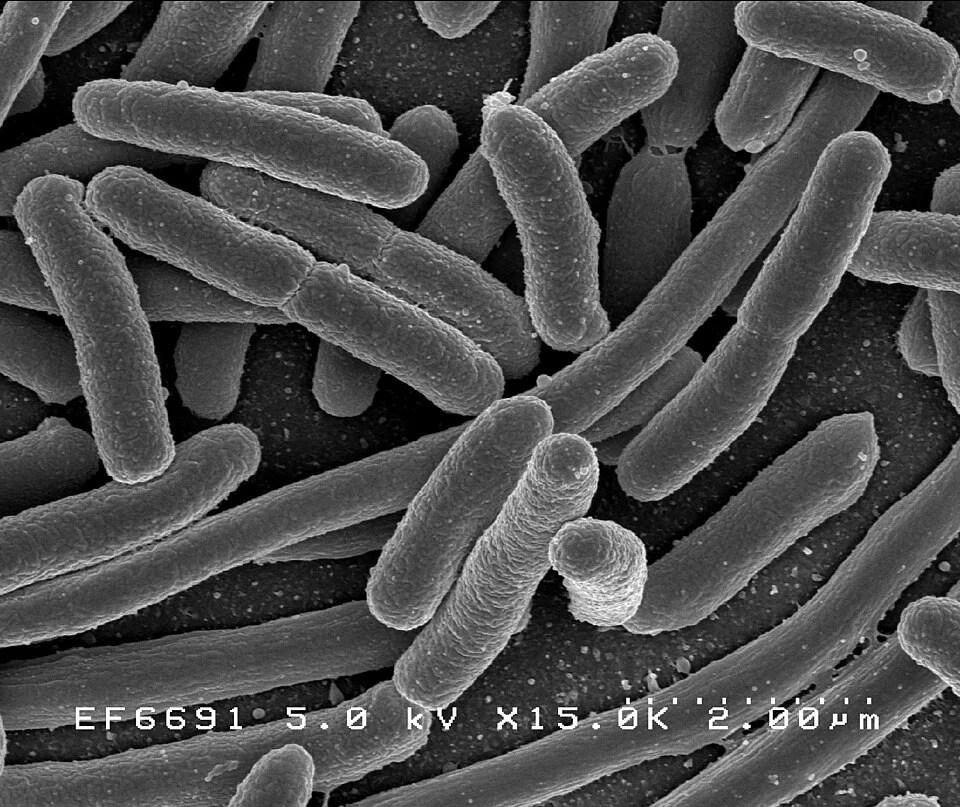
The Unexpected Evolution Aboard the ISSBacteria and the viruses that infect them have been locked in an evolutionary battle for billions of years. Bacteria evolve defences against viral infection and viruses develop new ways to breach those defences. This process shapes microbial ecosystems across Earth, from ocean depths to soil communities. But what happens when you take that battle to space?…more
January 13, 2026 Meeting at Peyton Hall. Despite the unknowns of January weather in central Jersey, let’s aim for a strong turnout in person if possible for the first monthly meeting of the new year. As usual we will run a hybrid meeting via Zoom, so join us virtually (as I will) if you cannot physically attend. For more on the guest speaker, please see Victor’s section below. Closer parking update: While I personally have been parking in the Stadium Drive Garage, be aware that advances in campus construction have made parking closer to Peyton Hall available and walkable. Here is the university’s official statement: After 4 PM on weekdays and all day on weekends, University visitors may park in any numbered and non-restricted parking lots, including Theater Drive Garage, Prospect Ave Garage (near Engineering Quad), and Stadium Drive Garage. Motorists must be parked in a legal space between two white lines and adhere to signage. Prospect Ave Garage seems to be a good choice. See the map here: https://transportation.princeton.edu/sites/g/files/toruqf611/files/documents/2025-visitor-parking-sp2025.pdf
Hot Topics for 2026? You are probably the go-to person in your family and circle of friends when it comes to emerging astronomy themes. The popular press and media have been providing abundant PR for supermoons, planet alignments, and meteor showers, but they don’t usually go into the physics. I suggest that we start up a regular monthly review to discuss timely and interesting astronomy events during the second half of our meetings at Peyton Hall and via Zoom. We could go a bit deeper than some of the media do, which might help all of us be ready to prime family and friends about the hot topics. I am proposing that each month we identify in advance the upcoming astro topics soon to emerge in the popular press and media. Please send your thoughts and themes for hot topics over the next couple months by email to me at director@princeonastronomy.org.
Dark Matter Illuminated. My 2026 resolution is to come to grips with the challenge of better understanding cosmology and astrophysics through reading some of the history of the science. Here I would like to discuss the intertwined theories of the hot big bang origin and dark matter. This “standard model of cosmology” is remarkably elegant in its simplicity, but paradoxically highly complex and incomplete. It relies strongly on the mysterious dark energy (lambda, Λ) and cold dark matter (CDM) that supposedly make up over 90% of the universe. This keeps me up at night because it is not really so understandable by non-professional physicists. By following the trail of thought from the late 1800’s through early 1900’s, then on to the 1960’s and 70’s, it is possible to trace the emergence of this model, today’s orthodox view in physics.
Theories and accepted models in science are based on decades of careful observations, experiments, and deductions by the smartest minds. Yet results can be consistent with more than one interpretation, and solidification of hypotheses into theory and eventually paradigm is not straightforward — a subject for historians and philosophers. It should be kept in mind that there are other serious alternative cosmologic models beyond the mostly disregarded steady state theory of Hoyle. These include modified Newtonian Dynamics (MOND) and hybrid variants of the tired light proposal of Zwicky. Constructing a model explaining physical reality from observations, rather than from hypothesis driven experiments as elsewhere in science, means that alternative explanations are not always completely falsifiable. One may then keep an open mind while still embracing the advances the standard cosmology model provides.
Alternative models have been developed in our lifetime with the emergence of data that reshaped the hot big bang cosmology model, first proposed by Fritz Zwicky in the 1930s to explain galaxy cluster dynamics. Vera Rubin (a friend and colleague of Princeton Prof Neta Bahcall) and Kent Ford, starting in 1965 with instruments at Kitt Peak and Lowell Observatory in Arizona, found that the far outer regions of giant spiral galaxies revolve at the same speed as the regions near the center. Surprisingly the outer region velocity was not slower as predicted by then current gravitational models. The new data supported the interpretation that there must be vast amounts of invisible mass around galaxies to account for the gravity to produce the faster rotation speed. At this stage, dark matter was a galactic‑scale gravity anomaly.
During this same period the astounding discovery of the cosmic microwave background (CMB) came serendipitously to Penzias and Wilson at Bell Labs. The “interference” detected by their antenna in Holmdel NJ was interpreted as relic radiation of the early universe, a signature of the hot big bang origin. But it was only gradually connected to dark matter in subsequent publications. It took more precise measurements of the CMB’s thermal anisotropies (big word, here it means variations in temperature in different locations in space) which required major advances in instrumentation, such as the WMAP orbiting microwave telescope championed by David Wilkinson of Princeton (you can see NJ has real claims to fame here). With these data it eventually became clear that features of the CMB cannot be produced with baryonic matter alone. Dark matter was seen as the best explanation for the shape of the CMB temperature pattern. In this theory, very early after the big bang event gravitational wells from cold dark matter began “clumping” before electrons and protons combined to form normal (baryonic) matter, shaping the CMB’s measured temperature pattern. If this is indeed an image of the density fluctuations of early dark matter, it provides a way to calculate precisely the value of the dark matter fraction of the universe. So dark matter did more than add a new parameter to cosmology, it reshaped the interpretation of the universe’s history. The modern Big Bang model moved from the hot dense early universe picture of the 1960s to today’s ΛCDM model (Lambda–Cold Dark Matter), the standard cosmological model: roughly 68% dark energy, 27% dark matter, and only about 5% normal matter. Dark matter provides the gravitational scaffolding for galaxies, while dark energy is even more enigmatic — and for me will require more delving into the history of science to begin to understand.
New AAAP Website. Just another reminder here, that the new AAAP website will be going on line and the old site being will be turned off this month. You can access the new site using the same web URL as before (www.princetonastronomy.org). There are many features of the redesigned site that are much more useful, and we ask that you take some time to get familiar with it. Stay tuned for emails in January with instructions on setting up your own member account with password for member-exclusive content access.
A Musician Investigates Space Weather The AAAP’s first meeting of the new year 2026 will take place in Peyton Hall on the campus of Princeton University on Tuesday, January 13th at 7:30 PM. As usual, the meeting is open to AAAP members and the public. Participants can join the meeting in-person at Peyton Hall or log in to the Zoom session as early as 7:00 pm to chat informally before the meeting begins. The evening’s guest speaker will be Dr. Jamie Rankin, Research Scholar and lecturer in astrophysical sciences at Princeton University. Dr. Rankin will talk about her work as Project Manager for the Voyagers’ last gasp; observing the interaction between the solar wind and interstellar medium as these spacecraft (still transmitting data since their launch in 1977!) leave the Sun’s influence. She’ll also speak more broadly about how the Sun interacts with the interstellar medium and about the Princeton-led Interstellar Mapping and Acceleration Probe (IMAP) mission launched this past September.
Options for Attending the Meeting You may choose to attend the meeting in person or participate via Zoom or YouTube as we’ve been doing for the past few years. (See How to Participate below for details). Due to security concerns, if you log in before the host has set up internet connectivity in Peyton Hall, you may need to wait in the Waiting Room for a few minutes until the host is prepared to admit you into the meeting. You’ll need to unmute yourself to make comments or ask questions. It’s polite, though not required, for you to enable your camera so other participants can see you. The meeting will be recorded and edited for posting to our club’s YouTube channel.
Join us for our “meet the speaker” dinner Dr. Rankin will be joining us for our traditional “meet the speaker” dinner at Winberie’s before the meeting. Our reservation is for 5:45 pm Tuesday, January 13th. Please contact the Program Chair if you plan to attend.
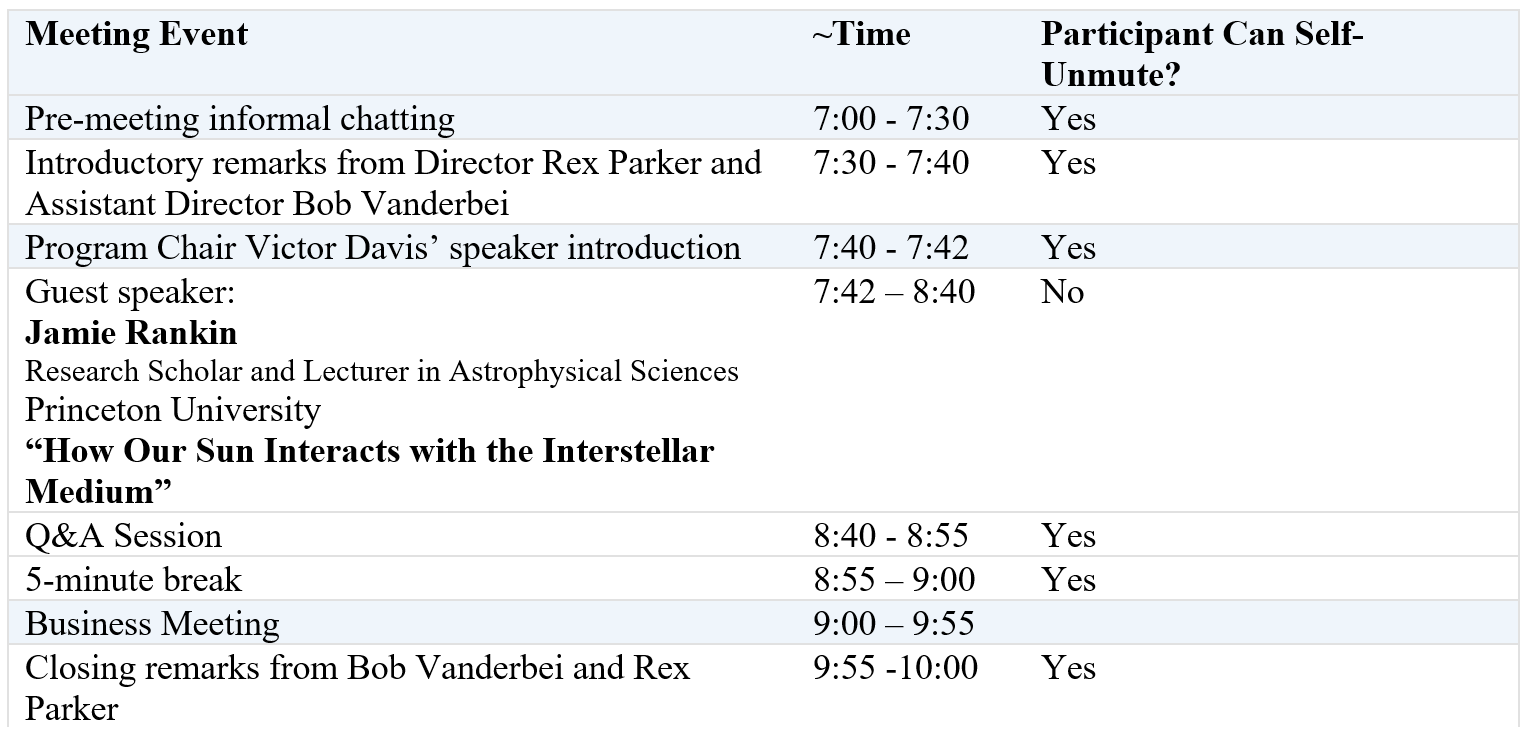
Here’s the anticipated agenda for January 13, 2026’s monthly meeting of the AAAP:
(Times are approximate)
Getting to Peyton Hall The parking lots across the street (Ivy Lane) from Peyton Hall are now construction sites, unavailable for parking. We’ve been advised by the administration of the astrophysics department that we should park in the new enclosed parking garage off Fitzrandolph street and walk around the stadium and athletic fields. Here’s a map of the campus and walking routes from the parking garage to Peyton Hall. The map shows the recently completed East Garage. Not shown is an access road Sweet Gum that connects from Faculty Road to an entrance at the lower left corner of the garage. Stadium Road connects from Fitzrandolph Road to another entrance at the opposite corner (and higher level) of the garage. It’s about a 10-15 minute walk from the parking garage to Peyton Hall.
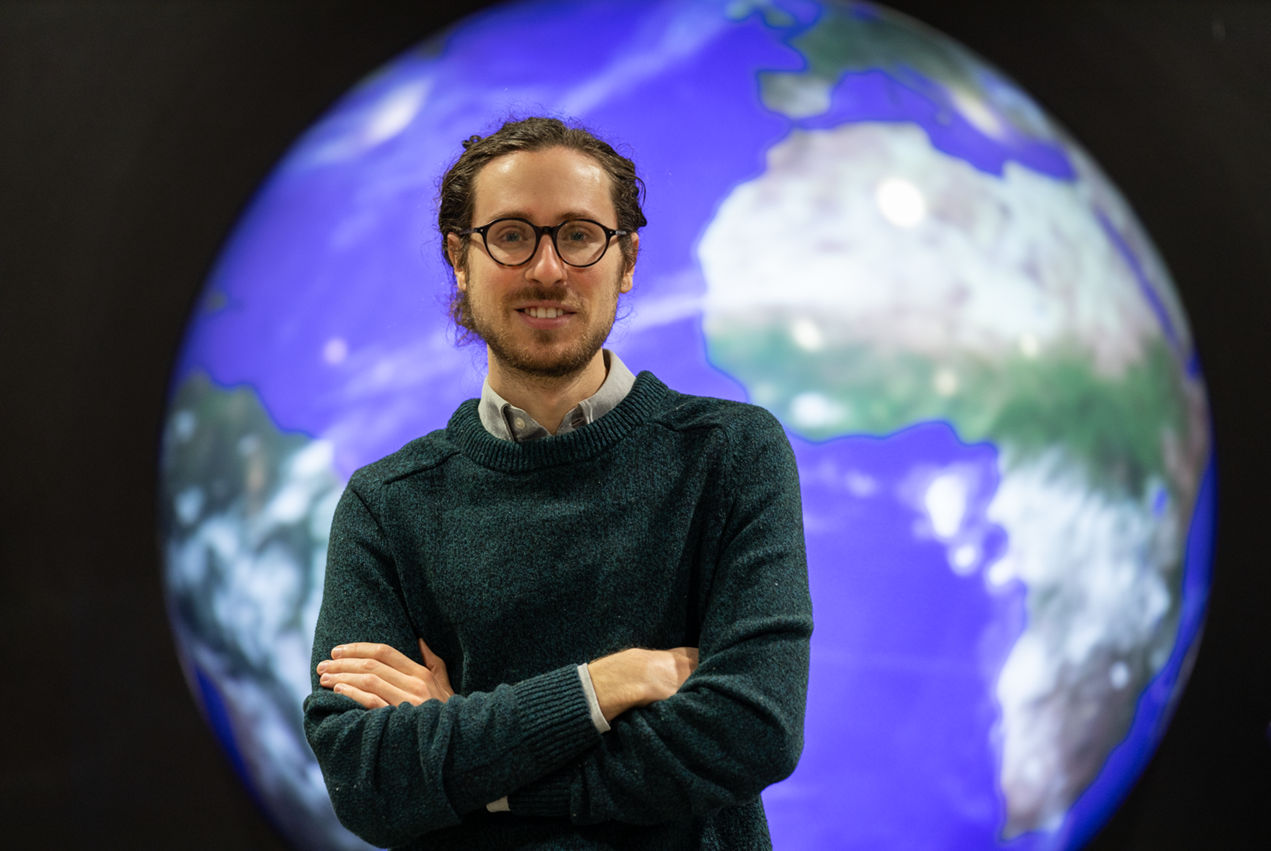
Featured Speaker: Jamie Rankin, PhD jsrankin@princeton.edu
Research Scholar and lecturer in astrophysical sciences
Princeton University
How Our Sun Interacts with the Interstellar Medium This past September 24th, a Falcon 9 rocket lifted off from Kennedy Space Center in Florida carrying, in carpool-like fashion with two other “ride along” missions, NASA’s IMAP spacecraft. The Princeton-led mission, involving an international team of suppliers and institutions, will examine how solar dynamics interact with the interstellar medium. Dr. Rankin is the instrument lead for SWAPI (Solar Wind and Pickup Ion), one of ten instruments carried by IMAP. In the coming months, IMAP and its accompanying spacecraft will take up residence at L1, a stable location about a million miles sunward of the Earth. From there, IMAP will investigate how the solar wind, a continuous stream of particles emitted by the Sun, interacts with the interstellar medium; how these particles mysteriously get accelerated from their origins to the farthest reaches of the solar system, and the outermost boundary of the heliosphere. Dr. Rankin will discuss the objectives and observations of IMAP, and her role as Project Manager for Voyager data as it passes the outer boundaries of our Sun’s influence.
Jamie Rankin, PhD Still in her mid-30s, Dr. Rankin is young to be an instrument lead on such a major NASA mission as IMAP. She supervises the instrument from a technical perspective, and leads the team interpreting and analyzing the data it collects.
Dr. Rankin earned bachelors’ degrees in music composition and physics from the University of Utah. She’s a talented musician. Conversations with other musicians and also with academics convinced her that a “day job” as a scientist would give her “the freedom to explore and pursue musical endeavors as I wish, without the concerns for trying to make ends meet.” She went to graduate school at Caltech, where she helped build EPI-Hi, ( a charged particle detector quantifying high energy particles ) now flying through the Sun’s corona on the Parker Solar Probe. Her work on this instrument introduced her to Princeton astrophysicist David McComas, original instrument lead on SWAPI, who promoted her into his original role and invited her to join his research team at Princeton. Dr. Rankin sees it as part of her role to play that mentorship forward.
How to Participate (Links) Zoom& YouTube Live Amateur Astronomers Association of Princeton is inviting you to a scheduled Zoom meeting. Time: January 13th, 07:00 PM Eastern Time (US and Canada)
Join Zoom Meeting Topic: AAAP January Meeting-Prof. Jamie Rankin, Princeton Univ, Voyagers, the Sun and the Interstellar medium Time: January 13th, 07:00 PM Eastern Time (US and Canada) Meeting ID: 894 5145 9993 Passcode: 663422 Join instructions
AAAP’s library of monthly meetings is available on the club’s YouTube channel. December’s edited meeting featuring a presentation by Princeton University PhD candidate Janxuan Li “A Newly Discovered Distant World: The Dwarf Planet Candidate 2017 OF201” can be viewed at https://youtu.be/phdoqL2ql
A look ahead at future guest speakers:
Date
Featured Speaker
Topic
Feb. 12, 2026
John Bochanski Associate Professor and Chair, Department of Computer Science and Physics Rider University
Dr. Bochanski has been connected to the Legacy Survey of Space and Time Discovery Alliance since his graduate studies more than 15 years ago. Rider University is part of the global effort using the Vera C. Rubin Observatory to map the optical sky. The Rubin observatory (formerly the Large Synoptic Survey Telescope, LSST) will capture more information about our Universe than all other optical telescopes throughout history combined. The observatory released its first images this past June. Prof. Bochanski will discuss the project’s history and discoveries.
Thanks to Nick Mellis for suggesting this speaker.
Mar. 10, 2026
Robert Vanderbei Emeritus Professor in the Department of Operations Research and Financial Engineering Princeton University
Prof. Bob Vanderbei will talk about stellar dynamics.
Apr. 14, 2026
Astronomer Berkeley SETI Research Center astrobrianlacki@gmail.com
September’s guest speaker Edwin Turner voiced his less-than-optimistic view of the prospect for discovering extraterrestrial life. Dr. Lacki, affiliated with Breakthrough Listen, a SETI initiative, recently submitted for publication a catalog of objects he and his team consider to be realistic and valuable observation targets. Dr. Lacki will talk about the catalog, “One of Everything: The Breakthrough Listen Exotica Catalog” and opine on the prospects of finding technosignatures and extraterrestrial intelligence.
Mr. Horgan will discuss his controversial 1996 book The End of Science, in which he argues that pure science, defined as “the primordial human quest to understand the universe and our place in it,” may be coming to an end. Horgan claims that science will not achieve insights into nature as profound as evolution by natural selection, the double helix, the Big Bang, relativity theory or quantum mechanics. In the future, he suggests, scientists will refine, extend and apply this pre-existing knowledge but will not achieve any more great “revolutions or revelations.” Shades of Auguste Comte, perhaps?
We expect to have copies of his book(s) for sale for the author to sign at the conclusion of his presentation.
As usual, the June meeting will take place in the planetarium at the NJ State Museum in Trenton. There will be no streaming of this live-only sky show and PowerPoint presentation. Topic to be announced.
Dr. DiMario will present a primer on astro-imaging.
Oct. 13, 2026
Becka Phillipson Assistant Professor in Physics Villanova University
Prof. Phillipson, originally scheduled to be October 2025’s guest speaker, is an unconfirmed prospect to try again in 2026.
As always, members’ comments and suggestions are gratefully accepted and much appreciated. Thanks to Ira Polans and Dave Skitt for setting up the online links and connecting the meeting to the world outside Peyton Hall.
“In the beginning, the universe was created. This has made a lot of people very angry, and has been widely regarded as a bad move.” Douglas Adams “The Restaurant at the End of the Universe”
Director Rex Parker opened the meeting remotely on Zoom at 1934 while Assistant Director Bob Vanderbie presided in Peyton. There were 29 attending in the auditorium, in spite of a cold 30 degree walk from the Stadium Garage, and 20 online. Rex recommended the DemystifySci Podcast, available on YouTube, Apple, and Spotify. He noted that billionaire private astronaut Jared Isaacman had been re-nominated to head NASA and called our attention to the upcoming Geminid meteor shower peaking on December 13-14. He reported that development of a new AAAP website is on track to swap over from the current one in January. Bob showed the walking route from what may be a closer parking location in the PU North Garage and suggested it could be substantially reduced by cutting through the new engineering building behind Peyton. He shared some aurora images and noted the public observing session held in Peyton each month, with the next in just two days.
Program Chair Victor Davis introduced our speaker for tonight, Jiaxuan Li, who is pursuing a PhD in astrophysics at Princeton University. He spoke about finding a dwarf planet candidate, a trans-Neptunian object that challenges the possibility of a 9th planet. The first 35 minutes of his presentation detailed the history of planetary discovery. His hour long talk was followed by 12 minutes of questions.
Rex continued the meeting at 2105 without a break so 26 were still attending in Peyton. Student Member Hasan Hafiz gave an Unjournal Presentation about creating a light curve from 3 observations of a variable star.
The business meeting convened at 2131 with 12 remaining in the auditorium. Rex noted that the Geminid count could reach 200 an hour
Outreach Chair Bill Murray reported that an appeal for volunteers would be issued in January for a star gazing request from a Boy Scout troop on the 20th.
Observatory Co-Chair Dave Skitt reported that the Washington Crossing Park personnel had invited the AAAP to staff a table and bring solar scopes at a park event on Dec 14 but the Board had not responded. He congratulated new Keyholders MaggieRao and Hasan Hafiz.
The meeting was adjourned at 2147.
As of December 6, we have 214 active members. So far in CY2025, renewals number 126 and expirations number 51, giving us a 71% retention rate. We have added 43 new members.
Submitted by Secretary Gene Allen December 21, 2025
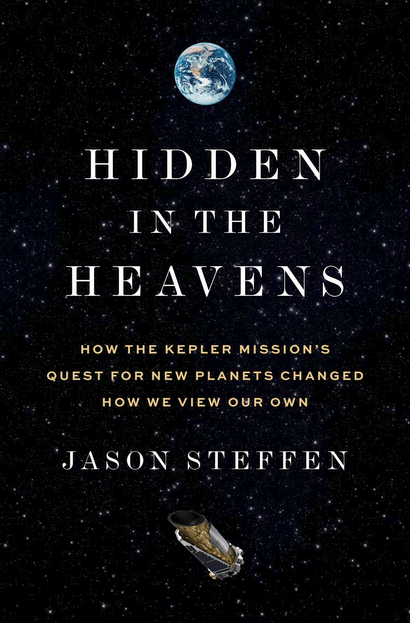
Book Review: Hidden in the Heavens: How the Kepler Mission’s Quest for New Planets Changed How We View Our Own
By Jason Steffen
Publisher: Princeton University Press
Date: 2024
Price on Amazon: $14.89 (hardcover)
Grade A-
This is a very good book with lots of details about the Kepler Mission and how it opened our eyes to the abundance, the complexity, and the divergence of planetary systems from our own solar system.
We have had author and Princeton University professor Dr. Joshua Winn speak at AAAP meetings a couple times about his work with TESS, the Transiting Exoplanet Survey Satellite. But Kepler was the first mission, and the findings from Kepler led to TESS and our current-but-evolving understanding of planetary systems. If you want to learn more about how the Kepler telescope was designed, how it worked, and its revelations about Hot Jupiters and Hot Earths then by all means purchase this book. But I would add: don’t expect any Hubble-like photographs, because that is not how Kepler worked, and certainly don’t expect to read this book in a weekend. There is a lot of terminology that makes it a bit challenging and I think the book would have greatly benefited from a glossary. On a positive note, Professor Steffen does a nice job reviewing the key concepts and key discoveries in the final chapter.
In conclusion, I learned a lot from reading “Hidden in the Heavens.” I have come to better appreciate the uniqueness of our solar system (at least based on our technological limitations in finding and measuring planetary systems like ours) and our peculiar home planet. In addition, I gained an even deeper respect for the great minds that blend mathematics, chemistry, astronomy, and physics to find and analyze exoplanets. It is remarkable how professional scientists can determine what happened, how it happened, and what will happen next in planetary systems using the Kepler and TESS data.
Telescope: Atrotech AT 72ED II 72mm aperture 430mm focal length f/6 Mount: Iopteron CEM 25 hypertuned Exposures: 60 subframes @ 60 sec each over 1 nights for 1 hour of integration; ASI533MC-P; UV/IR filter Processing software: Siril Location, Bortle, and Date: Washington Crossing Park soccer fields; Bortle 6; October, 2025 Description and Story: Comet C/2025 A6 (Lemmon) is a long-period, non-periodic comet discovered on January 3, 2025 by the Mount Lemmon Survey in Arizona. It follows a highly eccentric, retrograde orbit, meaning it moves opposite the direction of the planets, and it likely originated in the distant Oort Cloud. The comet reached perihelion on November 8, 2025 at about 0.53 AU from the Sun and made its closest approach to Earth in late October 2025 at roughly 0.60 AU. Although it was extremely faint at discovery, it brightened far more than early predictions, reaching around magnitude 3.5–4 at peak, making it visible to the naked eye under dark skies and a strong binocular target. As it approached the Sun, heating drove strong outgassing that produced a prominent coma and both dust and ion tails, with spectroscopic observations revealing typical cometary gases such as carbon-based species and sodium. Scientifically, Lemmon is valuable because comets like it preserve primitive material from the early solar system, offering insight into its original composition and the processes that shaped planetary formation.
A recent article in Scientific American about the Celestial transients piqued my mind. To quote “Transients are astronomically sized objects that change on human timescales—in seconds, hours, days. Transients, which are astronomical objects that appear suddenly from nowhere and usually disappear soon after, contradict the standard truth that the universe changes predictably and slowly over billions of years.” I will describe some transients and the telescopes to track them.
Examples of transients are fast radio bursts, gamma ray bursts, supernovae, core collapses, magnetars etc. Of these, supernovas are well known as they indicate a dying star which sheds all the accumulated elements due to an explosive surge as a pushback against gravity. Supernovae cook higher elements in the periodic table. A Supernovae’s brightness outshines a galaxy and lasts for a few days to months before dying. These shed elements will be inputs for formation of the next generation of stars, like our Sun.
When a massive star collapses on itself, its electrons fuse with the nuclei of its atoms until the star is made mostly of neutrons—a neutron star—and it shrinks in the space of one second from a radius of about 6,000 kilometers to about 10 kilometers. The collapse causes a shock wave that breaks out and minutes later the star is as bright as 10 billion suns. It fades over months. This is the birth of a neutron star. Our Sun will not end up being a neutron star or a black hole. It is comparatively less massive.
Another example of transients is Magnetars which existed only in theory until they were observed in 1998. A magnetar is a neutron star that rotates very fast in a few milliseconds. The magnetic field is very high. Our Sun’s magnetic field is about 10 gauss. Comparatively the strength of Magnetar’s magnetic field is 1000 gauss. Hence the name Magnetar. It is highly unstable and reconfigures itself quickly.
Now that we looked at a few examples of transients, let us look at the kind of telescopes and the facilities needed.It needs a different type of telescope to look for transients. The discovery telescopes, as they are known, need to observe a large swath of the sky in one shot. A wide field camera is required to detect such images. An example is the 48 inch Samuel Oschin Telescope at the Mount Palomar observatory. It is part of a facility called the Zwicky Transient Facility, named for the famous 20th century astronomer Fritz Zwicky.
The Zwicky Transient Facility consists of 3 telescopes – one is the 48 inch which is the discovery scope, next is the 60 inch which is used to follow up on the finds of the 48 inch. And further follow up is done using the famous 200 inch at Mount Palomar in Southern California. The 48 inch telescope is fully automated which scans wide parts of the sky every night. It is what is referred to as industrial scale operation – night after night with almost no human intervention.
Although the 48 inch dates from last century, everything else about the telescope is modern. The wide field camera which captures 47 square degrees of the sky in one shot. And each shot lasts about 30 secs. There is a robot arm which places the filters in the path of the camera to capture a part of the spectrum. At that speed, it requires 2 nights to capture the whole northern sky. The whole electronics are maintained at a very low temperature of 100 degree kelvin using liquid nitrogen. To minimize any hardware related noise.
Southern skies are still unknown but there are other telescopes like the new Vera Rubin telescope, located high up in the Andes mountains of Chile, which does some of the same functions. In addition, it does a lot more.
Software then compares the images from 2 days back for the same part of the sky to detect what is different. If a difference is detected then it is likely to be a transient. But first, any spurious streaks like satellites or meteor showers should be eliminated. If genuine, an alert is generated for further follow up. Machine Learning is used for classification of events. All the data and the alerts are uploaded to Alert brokers so that different groups of scientists can filter out what is of interest to them.
Astronomy is as much of a data science as it is just peeping into a telescope. Leading to “Time-Domain astronomy” in which the skies are photographed continuously in the night and interpretations of data are made thereof. And Python is the language used extensively in astronomy (Information Technology professionals, please note).
Since its inception in 2017 Zwicky Transient Facility has discovered around 10,000 transients. And more importantly, its comparison software and the alert broker infrastructure formed the basis for the recent Vera Rubin telescope in Chile. This seems to be the trend for broader survey telescopes. They scan the skies and store the data so that astronomers can download and interpret them.






 .
.






 Amateur Astronomers Association of Princeton