
by Victor Davis, Program Chair
A Dynamic Presentation
The March, 2026 monthly meeting of the Amateur Astronomers Association of Princeton will take place in Peyton Hall on the campus of Princeton University on Tuesday, March 10th at 7:30 PM. As usual, the meeting is open to AAAP members and the public. Participants can join the meeting in-person at Peyton Hall or log in to the Zoom session as early as 7:00 pm to chat informally before the meeting begins. The evening’s guest speaker will be AAAP Assistant Director and Princeton University Emeritus Professor Robert Vanderbei. Dr. Vanderbei will present “Dynamic Astronomical Things: From Supernovae to Moving Stars, Eclipses, Occultations, etc.”
Options for Attending the Meeting
You may choose to attend the meeting in person or participate via Zoom or YouTube as we’ve been doing for the past few years. (See How to Participate below for details). Due to security concerns, if you log in before the host has set up internet connectivity in Peyton Hall, you may need to wait in the Waiting Room for a few minutes until the host is prepared to admit you into the meeting. You’ll need to unmute yourself to make comments or ask questions. It’s polite, though not required, for you to enable your camera so other participants can see you. The meeting will be recorded and edited for posting to our club’s YouTube channel.
Join us for our “meet the speaker” dinner
Prof. Vanderbei will be joining us for our traditional “meet the speaker” dinner at Winberie’s before the meeting. Our reservation is for 5:45 pm Tuesday, March 10th. Please contact the Program Chair if you plan to attend.
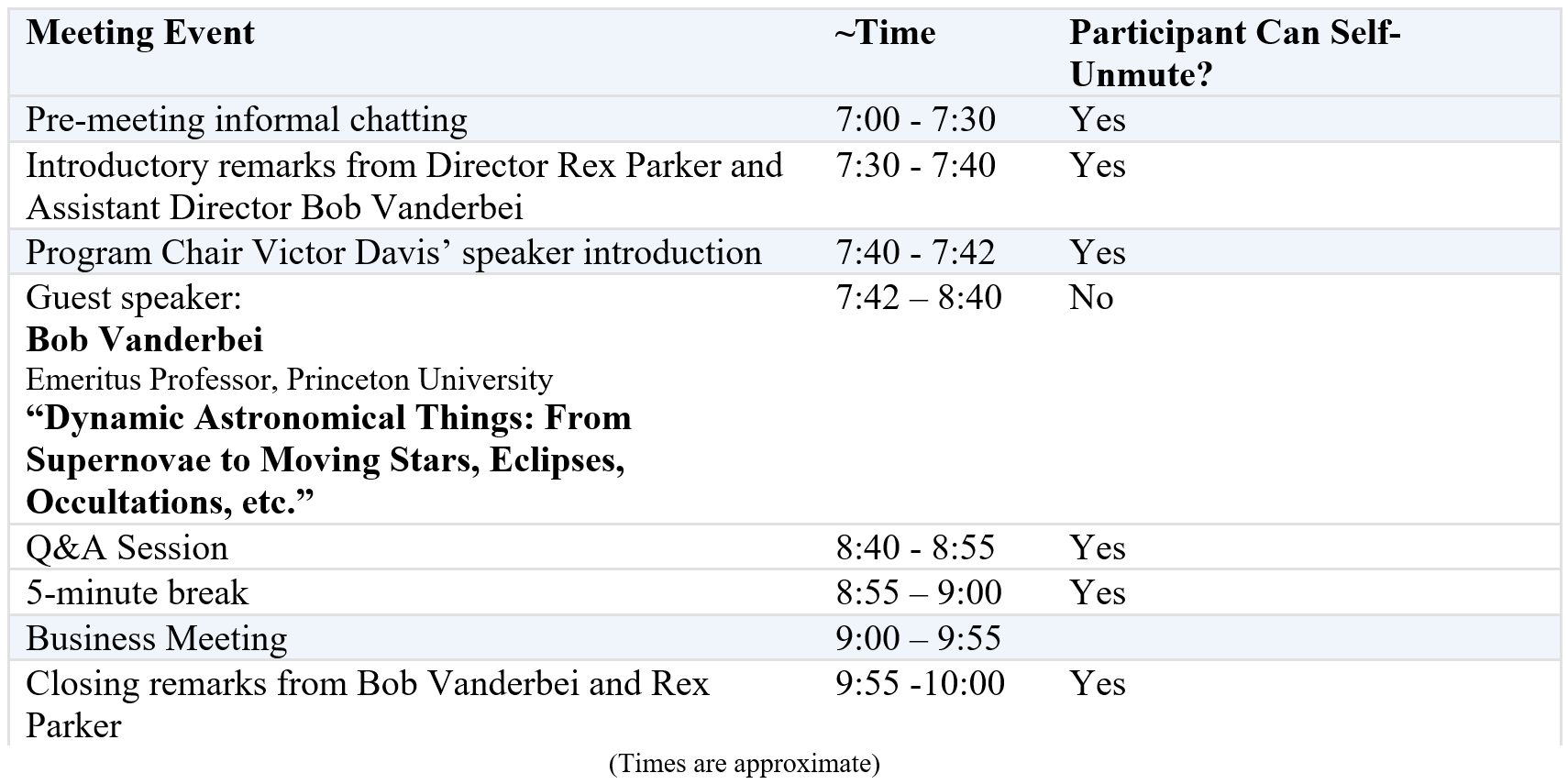
Here’s the anticipated agenda for March 10, 2026’s monthly meeting of the AAAP:
Getting to Peyton Hall
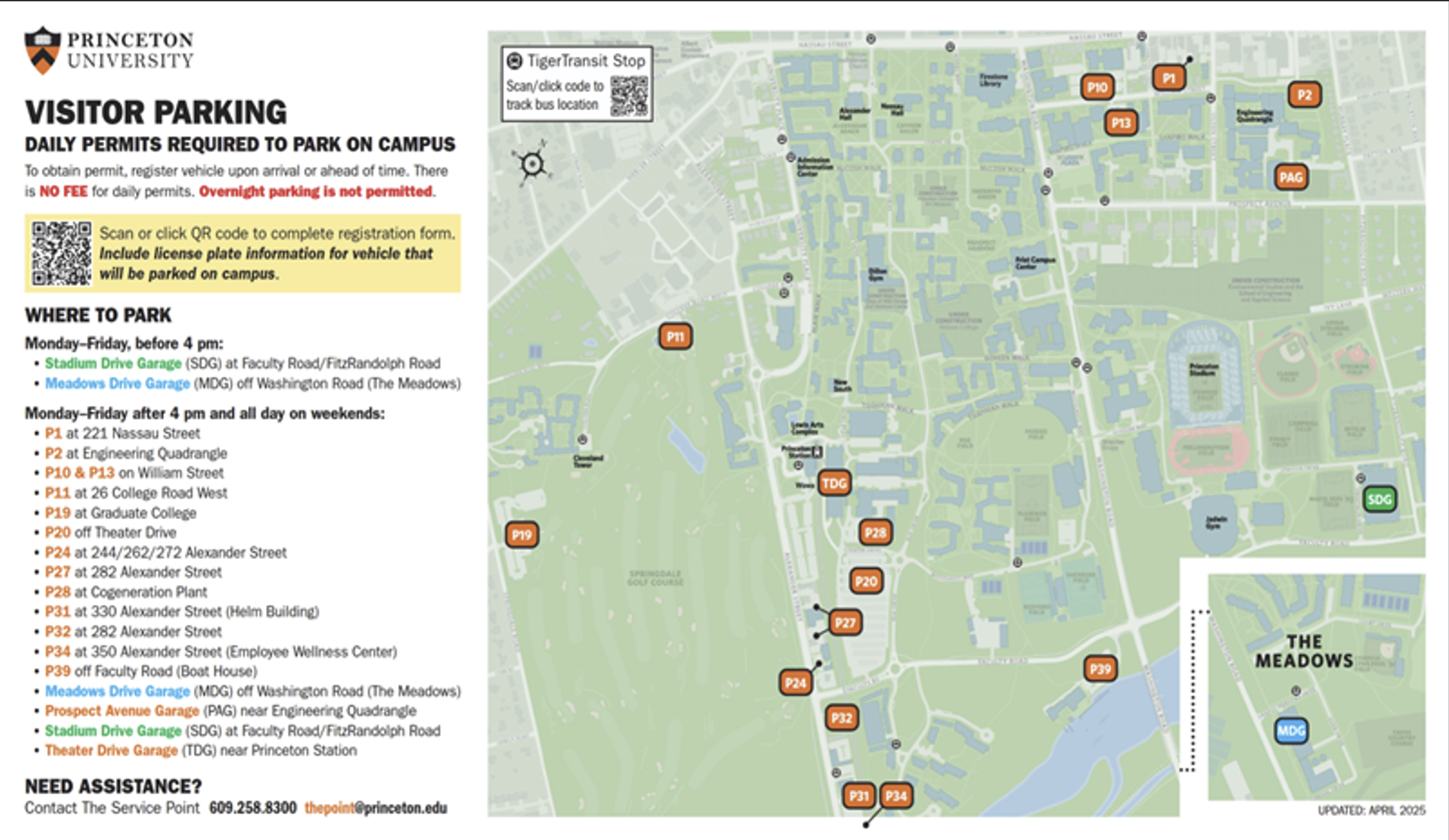
The parking lots across the street (Ivy Lane) from Peyton Hall are now construction sites, unavailable for parking. We’ve been advised by the administration of the astrophysics department that we should park in the new enclosed parking garage off Fitzrandolph street and walk around the stadium and athletic fields. Here’s a map of the campus and walking routes from the parking garage to Peyton Hall. The map shows the recently completed East Garage. Not shown is an access road Sweet Gum that connects from Faculty Road to an entrance at the lower left corner of the garage. Stadium Road connects from Fitzrandolph Road to another entrance at the opposite corner (and higher level) of the garage. It’s about a 10-15 minute walk from the parking garage to Peyton Hall.

Featured Speaker:
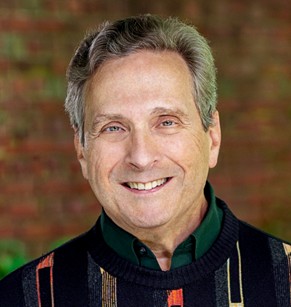
Robert Vanderbei, PhD
Emeritus Professor in the Department of Operations Research and Financial Engineering
Princeton University
rvdb@princeton.edu
Dynamic Astronomical Things: From Supernovae to Moving Stars, Eclipses, Occultations, etc.
Dynamic Astronomical Things: From Supernovae to Moving Stars, Eclipses, Occultations, etc.
Most people think of the celestial sphere as a mostly static thing made of unmoving stars, nebulae, and galaxies. But, of course many people also know that the Earth rotates around its polar axis once a day, and that can be thought of as a dynamic process. But there’s a lot more motions besides Earth’s rotation:
We’re standing on a planet that’s evolving,
And rotating at nine hundred miles an hour.
It’s orbiting at nineteen miles a second, so it’s reckoned,
A sun that is the source of all our power.
The Sun and you and me, and all the stars that we can see
Are moving at eleven million miles a day,
In an outer spiral arm at four hundred fifty thousand miles an hour,
Of the galaxy we call the Milky Way.
Our galaxy itself contains a hundred billion stars.
It’s a hundred thousand light-years side to side.
It bulges in the middle, sixteen thousand light-years thick,
But out by us it’s just three thousand light-years wide.
We’re thirty thousand light-years from galactic central point,
We go ‘round every two hundred twenty-five million years.
And our galaxy is only one of trillions
In this amazing and accelerating universe.
The universe itself keeps on expanding and expanding
In all of the directions it can whiz.
As fast as it can go, the speed of light you know,
Twelve million miles a minute and that’s the fastest speed for matter that there is.
Monty Python (Eric Idle), Galaxy Song
There are also supernovae, stars whose brightness vary on a regular basis, and many other dynamical events. In this talk, Prof. Vanderbei will discuss many of these motions and events, why they exist, and how to see and photograph them.
Note: Eric Idle’s Galaxy Song was surprisingly accurate for its time, but recent discoveries since it was written in 1983 have made it inaccurate beyond rounding errors. I (Victor) have changed some numbers, and apologize for the disruptions in rhyme and rhythm.
Prof. Robert Vanderbei
Bob Vanderbei grew up in Grand Rapids, Michigan. He first became interested in the stars at the age of six, when he and his family took a camping trip around Lake Superior. Late one night on that trip, Bob looked up at the sky and was astonished by the beauty of the stars. He was enthralled by the idea of space exploration, but a high school teacher convinced him that the Apollo era would be short-lived, and that a career with NASA was a suboptimal career path. Nevertheless, he joined a local astronomy club and immersed himself in math and science. Bob earned a BS in chemistry at Rensselaer Polytechnic Institute and a PhD in applied math at Cornell. A few postdocs later, he took a job at AT&T Bell Labs, where he emerged as the lead developer behind Korbx, a groundbreaking optimization tool. He received an offer to come to Princeton in 1990. Among the courses Bob taught were undergraduate and graduate courses that were required for Operations Research and Financial Engineering students. His textbook for the course is currently in its fifth edition. He collaborated with Princeton astrophysicist J. Richard Gott on several publishing projects, including “Sizing Up the Universe” published by National Geographic. The book has become the basis for a freshman astronomy course Bob continues to teach. More recently, Bob and Richard, along with Michael Strauss and Neil DeGrasse Tyson coauthored “Welcome to the Universe in 3D.” The day it was released, Tyson promoted the book on The Late Show with Stephen Colbert. The next day, the book was the number one bestseller on Amazon.com.
Bob’s sense of adventure and curiosity have been constants. He became a National Ski Patrolman in his senior year of high school. At Cornell, he trained as a glider pilot, later becoming the chief flight instructor at the Central Jersey Soaring Club. A friendship with a colleague and former director of AAAP and a visit to a star party led Bob to join our club and eventually to become its Assistant Director. Bob is a prolific and expert astro-photographer. His work is on view at vanderbei.princeton.edu.
How to Participate (Links)
Zoom & YouTube Live
Amateur Astronomers Association of Princeton is inviting you to a scheduled Zoom meeting.
Join Zoom Meeting
Topic: AAAP March Meeting-Robert Vanderbei, Princeton Univ, Stellar Dynamics
Time: March10th, 07:00 PM Eastern Time (US and Canada)
Meeting ID: 853 2157 6662
Passcode: 001601
Join instructions ....
....
Click the above icons for Zoom and YouTube
AAAP’s library of monthly meetings is available on the club’s YouTube channel. February’s edited meeting featuring a presentation by Dr. John Bochanski, member of the LSST Discovery Alliance “From Sloan to Rubin: A Journey Through the Age of Sky Surveys” can be viewed at https://youtu.be/3PwJ3MirNOo. Runtime is 1:40:46.
A look ahead at future guest speakers:
| Date | Featured Speaker | Topic | |
| Apr. 14, 2026 | Astronomer Brian Lacki Berkeley SETI Research Center astrobrianlacki@gmail.com  | Dr. Lacki, affiliated with Breakthrough Listen, a SETI initiative, recently submitted for publication a catalog of objects he and his team consider to be realistic and valuable observation targets. Dr. Lacki will talk about the catalog, “One of Everything: The Breakthrough Listen Exotica Catalog” and opine on the prospects of finding technosignatures and extraterrestrial intelligence. Thanks to Ira Polans for suggesting this speaker. | |
| May 12, 2026 |  John Horgan Science Writer horganism3@gmail.com | Mr. Horgan will discuss his controversial 1996 book The End of Science, in which he argues that pure science, defined as “the primordial human quest to understand the universe and our place in it,” may be coming to an end. Horgan claims that science will not achieve insights into nature as profound as evolution by natural selection, the double helix, the Big Bang, relativity theory or quantum mechanics. In the future, he suggests, scientists will refine, extend and apply this pre-existing knowledge but will not achieve any more great “revolutions or revelations.” Shades of Auguste Comte, perhaps? We expect to have copies of his book(s) for sale for the author to sign at the conclusion of his presentation. Thanks to Rex Parker for engaging this speaker. | |
| Jun 9, 2026 | 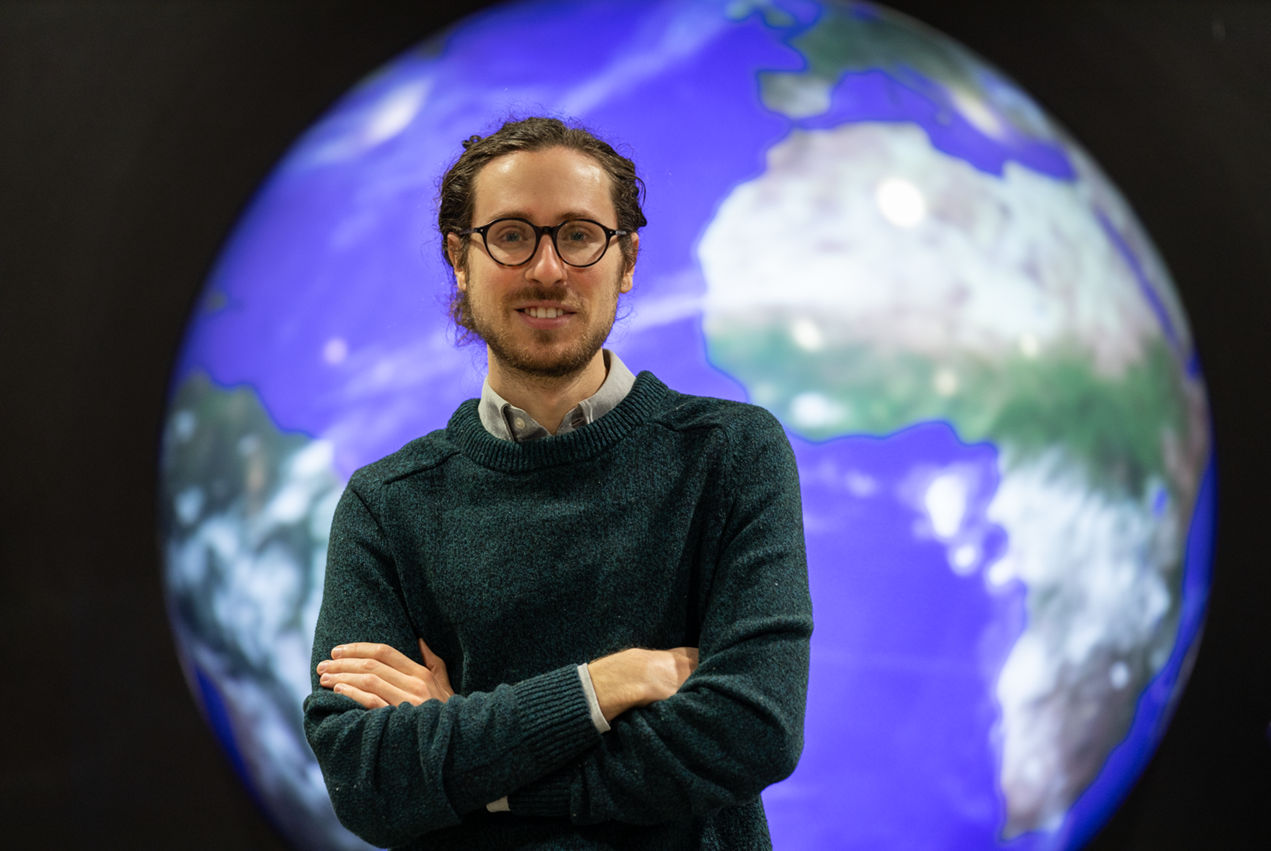 Jacob Hamer Assistant Curator NJ State Museum Planetarium Jacob.Hamer@sos.nj.gov | As usual, the June meeting will take place in the planetarium at the NJ State Museum in Trenton. There will be no streaming of this live-only sky show and PowerPoint presentation. Topic to be announced. | |
| Sep. 8, 2026 | Michael DiMario Chair of AAAP’s Astro-imaging SIG K2mjd@outlook.com  | Dr. DiMario will present a primer on astro-imaging. | |
| Oct. 13, 2026 | Becka Phillipson Assistant Professor in Physics Villanova University | Prof. Phillipson, originally scheduled to be October 2025’s guest speaker, is an unconfirmed prospect to try again in 2026. |
As always, members’ comments and suggestions are gratefully accepted and much appreciated. Thanks to Ira Polans and Dave Skitt for setting up the online links and connecting the meeting to the world outside Peyton Hall.
victor.davis@verizon.net
program@princetonastronomers.org
(908) 581-1780 cell

 Amateur Astronomers Association of Princeton