
by S. Prasad Ganti
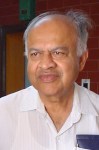
Famed Indian astrophysicist and cosmologist Dr. Jayant Narlikar has recently passed away. What follows is my tribute to this great scientist. Narlikar worked under the tutelage of Fred Hoyle, the eminent British astrophysicist and cosmologist at Cambridge. Narlikar and Hoyle were two main backers of the Steady State Theory that attempted to explain the history of our universe, claiming that the universe was always expanding and new matter was being created to keep the universe at a constant density. The theory lost ground to the Big Bang theory when more evidence came to light in the form of Cosmic Microwave Background (CMB) radiation, and Narlikar and Hoyle eventually accepted the Big Bang theory and redeemed their careers with other significant contributions.
Backing the wrong horse is not a sin in itself. Until strong evidence is discovered for a particular theory, other competing theories are fair game. That is how scientific research thrives and should be conducted. Groupthink has no place in such endeavors.
Narlikar was the son of an eminent mathematician. After his stint at Cambridge with Hoyle, he came back to India to work at TIFR (Tata Institute of Fundamental Research). He popularized cosmology in India and fostered a new generation of cosmologists. He set up the Inter-University Center for Astronomy and Astrophysics (IUCAA), which created collaborations between different universities. Narlikar was a prolific writer who wrote numerous articles, books and TV programs, covering popular science as well as science fiction. I call him the Carl Sagan of India, since Sagan is known for popularizing astronomy in the US via his books, lectures and famous TV series, “Cosmos”.
During the later part of his career, Narlikar worked on finding the origins of life. He conducted experiments to find out if life existed higher up in earth’s atmosphere. By putting bio sensors in hot air balloons rising to the stratosphere, he detected 3 species of microbes which survive in the ultra violet (UV) ray filled environment. They had become UV tolerant in an extraordinary demonstration of evolutionary adaptation. Narlikar’s premise was “panspermia”, the hypothesis that life on earth originated from outside and was transported here. It was a profound contribution that enriched the fields of microbiology, astrobiology, and environmental science.
Around the same time, Hoyle worked and contributed significantly to understanding the nucleosynthesis process which powers the Sun. Until then, people were unsure whether it was chemical processes like burning of coal or atomic/nuclear processes that fired the Sun. Hoyle proposed that nuclear fusion combines hydrogen atoms to form helium, creating energy. Hoyle also came up with an explanation of how stars can create all the elements heavier than helium. Hoyle predicted that an unstable form of carbon was a stepping stone to produce heavier elements all the way up to iron in stars. This form of carbon has now been recreated in labs. Hoyle’s work helped us understand the powering of the sun and other stars of all sizes in our universe.
To conclude, here is a little known work of Narlikar and Hoyle: as late as 1993, they worked with another scientist, Geoffrey Burbidge, and proposed a model which tried to attribute the CMB to thermalized starlight instead of the Big Bang. Called ‘Quasi Steady State Cosmology’ (QSSC), it proved to be mathematically elegant. It is still a fringe theory which did not cause any revolutions, but the thinking behind it was sophisticated.
Although neither Narlikar nor Hoyle won a Nobel prize, they had significant contributions to astrophysics and cosmology. Narlikar is remembered as one of the great Indian cosmologists, and his legacy will endure in our minds forever.

 Amateur Astronomers Association of Princeton